Malawi Economic Justice Network (Mejn) has linked exchange rate fluctuations to amplifying inflationary pressures in the country, with every depreciation of the kwacha quickly feeding into the cost of imported goods and production inputs.
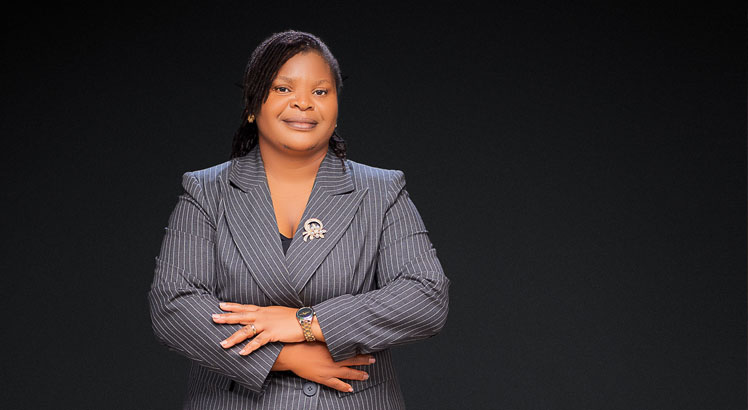
Mejn executive director Bertha Phiri, in a written response to The Nation questionnaire on Saturday, said Reserve Bank of Malawi (RBM) and International Monetary Fund (IMF) studies estimate Malawi’s exchange rate pass-through of 0.3 to 0.5 within 12 months, which translates to a 10 percent depreciation of the kwacha that can raise non-food inflation by between three and five percent.
“This is very high because of the high import content in the Consumer Price Index, including fuel, transport, packaging and spare parts,” she said.
enough commodities.
Phiri said the situation is worsened by a thin foreign exchange market where businesses often raise prices in anticipation of higher import costs while fuel and fertiliser price increases eventually spill over into food inflation.
She cautioned that any devaluation without adequate foreign exchange supply and measures to boost production can only intensify inflationary pressures.
“Devaluation without supply-side reform just became an inflation shock. Malawi’s problem isn’t the price. It’s that we don’t have enough commodities to sell at that price yet,” said Phiri.
The development comes at a time Malawi Confederation of Chambers of Commerce and Industry (MCCCI) has been pushing for a phased exchange rate unification programme to attain a market-determined rate to restore forex availability, boost exports and attract investment.
In a position paper on exchange rate reform, the private sector lobby group said the gap between official and parallel market rates has widened in the past five years, with the official rate moving from K806 per dollar in 2021 to K1 750 against the dollar in 2025.
During the same period, the parallel market rate jumped from K900 to the dollar to between K3 500 and K4 500 against the greenback.
Resultantly, the premium has widened from less than 25 percent to about 157 percent, a situation MCCCI says “effectively operates as a tax on exporters and a subsidy for privileged access to foreign exchange”.
Ironically, during the first half of 2026, MCCCI data shows that 88.2 percent of businesses cited foreign exchange scarcity as their biggest challenge, up from 74.1 percent during the same period last year,
Prior to securing the previous Extended Credit Facility (ECF) with IMF in November 2023, Malawi devalued the kwacha twice. Firstly by 25 percent in May 2022 and secondly in November 2023 by 44 percent.
Malawi is currently discussing a new ECF with the IMF amid assurance from Minister of Finance, Economic Planning and Decentralisation Joseph Mwanamvekha that the government will prioritise conditions that will not hurt the masses already reeling under a burden of high cost of living.
“We need to have policies that can address foreign exchange shortages both on the supply and demand side as devaluation is not a panacea. Devaluation without supply will not address the problem,” he said.
RBM Governor George Partridge, speaking during the consultation session on National Economic Recovery Plan in Lilongwe last month, said foreign currency continues to circulate within the economy, but distortions in pricing and demand have created severe market pressures.