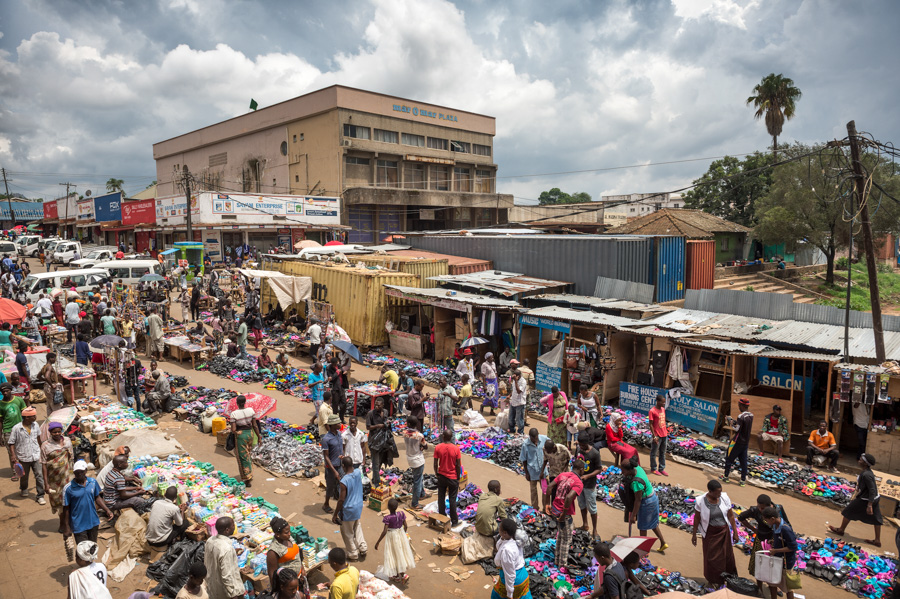
Thokozani Banda, a phone dealer in Blantyre, dutifully pays his city rates, market fees, and business licences every year. Yet, much like his counterparts in Lilongwe, Mzuzu, Zomba, and Luchenza, he holds zero power over who sits in the mayoral chair to govern his city.
And according to government, the situation will remain that way after the Ministry of Local Government officially rejected a long-standing proposal that would have granted urban residents the democratic right to directly elect their mayors, Nation on Sunday has established.
Ministry Spokesperson Chimwemwe Njoloma confirmed last week that the proposal, which was first floated back in 2022, was dropped from the ongoing review of the Local Government Act.
For ordinary residents who foot the municipal bills, the decision feels like a profound betrayal of grassroots democracy.
“If we were allowed to vote for mayors, we would be guaranteed our interests would be promoted,” said Banda.
“Sadly, most of these mayors don’t do anything tangible for us.”
His sentiments are echoed nationwide. In Zomba, artisan Emmanuel Laban argued that current mayors are entirely unaccountable to the people.
Luchenza resident James Mwanza contended that the ministry should have consulted citizens directly before shelving the reform, a view Vanani Nyirenda, a farmer in Mzuzu shared
Behind the closed doors of municipal chambers, however, the real reason for the rejection is an open secret.
Speaking on condition of anonymity, a seasoned councillor admitted that political parties are fiercely protective of their patronage networks and refuse to surrender control over key local positions.
“Politicians want to have their own trusted individuals in such key local positions as part of expanding their political footprint,” the councillor explained. “So, that proposal was never going to pass, even if a million more public consultations were held.”
But Njoloma maintained that direct mayoral elections are synonymous with an “executive mayoral system,” which fundamentally conflicts with the institutional architecture of Malawi’s existing local government framework.
“Consequently, they would require careful consideration of their implications for the structure, functions and accountability arrangements of local authorities,” Njoloma stated, adding that any future shift would necessitate deeper stakeholder consultations and comparative legal analysis across other jurisdictions.
She further argued that introducing direct mayoral polls would require messy consequential amendments to the Presidential, Parliamentary and Local Government Elections Act, demanding complex coordination with the Malawi Electoral Commission (MEC) to ensure legal harmonization.
“However, it remains a matter that may be considered further, subject to additional consultations and a comprehensive assessment of its legal, institutional and governance implications,” she added.
Political Scientist Ernest Thindwa slammed the government’s regression, arguing that direct mayoral elections are vital to conferring genuine democratic legitimacy upon the office.
“To the extent that the mayor would be directly elected, the mayoral office is likely to be more accountable and responsive to city and municipality residents than to the council or party that sponsored them, as is currently the case,” Thindwa noted.
He added that direct elections would incentivise capable, independent-minded citizens without party affiliations to enter public service, dramatically expanding the pool of leadership talent available to urban voters.
While acknowledging that Malawi can draw lessons from Zambia, Senegal, Madagascar, and Kenya or observe how countries like Mozambique and Zimbabwe experimented with and later altered their systems, Thindwa stressed that Malawi must craft a home-grown solution tailored to its unique governance values.
“We should be innovative and bold enough to fashion something that responds to Malawi’s unique needs and manages strategic interests from diverse actors which may interfere with the national agenda for enhanced governance at the local level,” Thindwa urged.
With the reform dead in the water, councillors, largely aligned to political parties alongside a handful of independents, retain absolute authority to elect mayors and deputies.
Members of Parliament, whose constituencies fall within municipal boundaries, also continue to serve as ex-officio voting members.
This indirect system severs any direct accountability loop between metropolitan residents and their civic leaders. Mayors answer to the political parties and councillors who stitch together backroom coalitions, rather than the citizens whose streets they manage and whose rates they spend.
Malawi currently operates four city councils (Blantyre, Zomba, Lilongwe, and Mzuzu) and three municipal councils (Luchenza, Mangochi, and Kasungu). Mayorships and chairmanships are governed under Sections 7(4) and 9 of the Local Government Act, which stipulate terms ranging from one to two-and-a-half years.
. Mayors were triumphantly re-introduced during the 2014 Tripartite Elections to heal a nine-year vacuum left by the dissolution of local councils in 2005, aimed specifically at driving grassroots development and public participation.