The decision to move Department of Disaster Management Affairs (Dodma) from the Office of the Vice-President to the Office of the President and Cabinet (OPC), has triggered speculation about early cracks between President Peter Mutharika and his deputy.
In a statement dated January 10, 2026, Chief Secretary to the Government Justin Saidi said President Mutharika ordered the immediate transfer to improve coordination, decision-making and speed in disaster response.

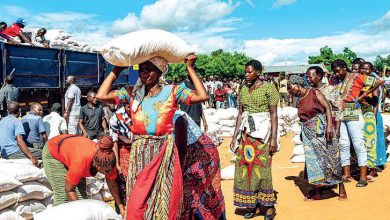
The move comes as floods batter 29 district councils, leaving at least 36 people dead, 168 injured and two missing.
“The relocation is intended to strengthen coordination and speed up the mobilisation and allocation of resources during disasters and emergencies,” reads part of the statement.
It adds that OPC’s central coordinating role would enable quicker responses to emerging disasters, while Dodma would continue working with stakeholders across districts to mitigate risks, promote resilience and support affected communities.
Dodma had been under the supervision of Vice-President Jane Ansah, who is currently in the United Kingdom on a private trip that ignited debate over the use of public resources.
This is also not the first time Mutharika has withdrawn Dodma from the Office of the Vice-President. During his first term, he made a similar move after relations with his then vice president, the late Saulos Chilima, deteriorated.
Reacting to the development, University of Malawi political scientist Boniface Dulani said the decision could signal emerging tensions between the President and his deputy.
He said: “On its own, this might not attract much attention. But against the backdrop of the President’s recent remarks about the Vice-President’s UK trip, after earlier indications that it was State-funded, it creates the impression that the President is gradually chipping away at the Vice-President’s functions.”
Political commentator George Phiri said the move may have been driven by the urgency of the ongoing disasters, but questioned Dodma’s placement under political offices.
“Dodma was meant to be a stand-alone institution. Over time, political attachment has affected its effectiveness and response capacity,” he observed.
National Advocacy Platform chairperson Benedicto Kondowe said the decision reflects overdue recognition that the scale of the disaster requires emergency-level coordination.
“Activating emergency mechanisms is not a policy choice but a legal and moral obligation when lives and livelihoods are at stake,” said Kondowe, cautioning that directives alone would not protect affected communities without disciplined execution, transparency and strong coordination.
Stormy rains, flash floods, strong winds and lightning have affected 35 758 households, representing about 160011 people nationwide.