The year 2025 will be etched in Malawi’s history as the year of the great return.
The political landscape shifted by the September 16 General Election, an event that saw a 76.4 percent voter turnout and a decisive return of Peter Mutharika.

In a result that mirrored the frustration of the streets, Mutharika, the 85-year-old Yale-trained law professor and leader of the Democratic Progressive Party (DPP), secured a dramatic comeback.
With 3 035 249 votes (56.8%), Mutharika comfortably crossed the 50-percent-plus-one threshold, ousting Lazarus Chakwera who managed 1 765 170 votes (33.0%).
Chakwera, who famously quit the pulpit in 2013 to lead the Malawi Congress Party (MCP), saw his “Promised Land of Canaan” narrative crumble under the weight of a staggering economy and perceived leadership indecisiveness.
Malawians, battered by inflation and fiscal instability, opted for what many termed the “known entity,” returning the mandate to Mutharika based on his promises of economic restoration and strict adherence to the rule of law.

While Malawians looked forward to a “New Dawn” under Mutharika, the closing months of 2025 have been marked by legal battles and corporate instability as “restoration” promised by the DPP began to look, to some critics, more like retribution.
Within a month of taking the oath, the Mutharika administration initiated a sweeping overhaul of State-owned Enterprises (SOEs).
Boards of directors across the board were dissolved and several chief executive officers were abruptly redeployed while others were sent to public universities to serve as lecturers.
For instance, the director general of Malawi Broadcasting Corporation (MBC), the country’s sole public broadcaster, and that of Malawi Communications Regulatory Authority (Macra), Daud Suleman, were suspended with vague reasons given.
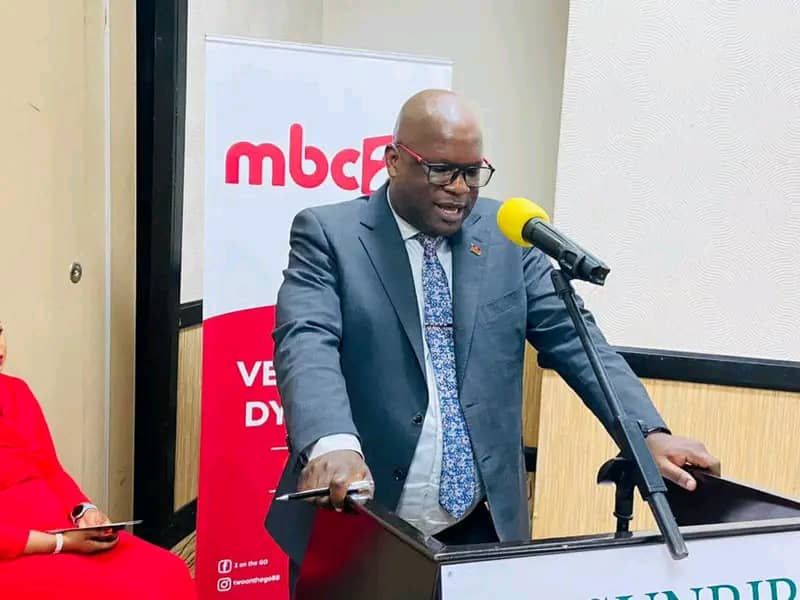
Worse still, for MBC director general George Kasakula, he was forced by some DPP enthusiasts to apologise to Mutharika in a televised broadcast.
They felt offended by Kasakula’s pre-campaign and official campaign period conduct in castigating Mutharika in a series of programmes.
Mutharika’s administration has since started replacing these corporate executives with individuals appointed in acting capacity and others on permanent basis.
Governance expert Undule Mwakasungula said in an interview the practice negatively affects corporate governance in most State institutions, creates instability, loss of institutional memory and low staff morale as leadership changes come with fear and uncertainty.
“It also undermines accountability because some leaders see their loyalty as being towards political masters rather than to the public,” he said.
Mwakasungula said only in very few instances have leadership changes brought in new energy or reform-minded individuals who help to modernise systems or restore integrity.
Political analyst Wonderful Mkhutche added: “Malawi must move away from personality-driven governance towards institution-based governance.
“Specifically, there is need to reform appointment laws to ensure that boards and chief executives of State institutions are selected through transparent, competitive and merit-based processes.”
Kaiyatsa said it would also be important to strengthen the independence of boards so that they cannot be dissolved or overruled at the whim of the Executive.
Perhaps, the most controversial move was the attempt to “civilianise” the top brass of the security forces. The administration moved to redeploy five Malawi Defence Force (MDF) generals and five Commissioners of the Malawi Police Service (MPS) to various civilian institutions.
The MPS Commissioners and MDF generals, however, obtained a court injunction, restraining the government from effecting the movements.
The MDF Generals include Chikunkha Soko, Saiford Kalisha, Swithan Mchungula, Kakhuta Banda and Brigadier General Harold Dzoole while the MPS commissioners include Christopher Katani, Rhoda Manjolo, Emmanuel Soko, Chikondi Chingadza and Barbara Mchenga-Tsiga.
Critics faulted the Mutharika administration for the redeployments and security expert Master Dicks Mfune said the administration acted beyond its authority, stressing it does not have powers to appoint, discipline or do other employee relations for such positions except for the MDF Council.
“It is becoming a precedent and this looks like people are becoming victims of politics, past and present times, this occurs for Malawi,” he said.
Expressing similar sentiments, retired Brigadier General Marcel Chirwa said while it was difficult to dissect the matter due to the absence of reasons for the redeployments, pointed out that such decisions can be made in exceptional matters.
He said: “Such a decision can only be taken if there are security lapses at those civilian institutions that require the expertise of the officers.”
As 2025 closes, the political fallout continues.
A beleaguered Chakwera has insisted he will lead the MCP toward the 2030 polls, a move that has already sparked internal friction within the party.
Meanwhile, Mutharika is constitutionally barred from seeking a further term in 2030, leaving the DPP with a looming succession question even as it settles back into the corridors of power.