The Economics Association of Malawi (Ecama) has urged the government to prioritise productive development spending and incentives for export-oriented investment, warning that recent improvements in foreign-exchange reserves remain volatile with no evidence that the country’s forex crisis is easing.
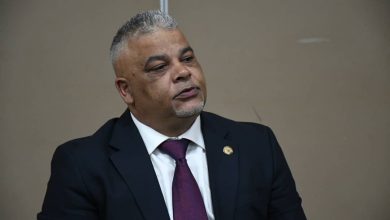
Ecama president Bertha Bangara-Chikadza said in an interview that expanding production of goods and services with international demand offers the most sustainable route to accumulating reserves, but would require the government to remove constraints that undermine investment and trade.

“The most sustainable means to build reserves in the country remains increasing the export base through increased production of goods and services with world demand,” she said.
Bangara-Chikadza, who is also an economics lecturer at the University of Malawi (Unima), said the government should prioritise development expenditure that creates an enabling environment for investment while providing incentives, including tax breaks and industrial zones, to businesses capable of increasing exports.
In the short-term, she said authorities should continue rationing forex to maintain sufficient buffers for essential imports.
The recommendations follow Reserve Bank of Malawi (RBM) data showing that total foreign exchange reserves increased to $616.3 million (about K1.1 trillion) in June 2026, equivalent to 2.5 months of imports, from $596.5 million (about K1 trillion) or 2.4 months in May.
Forex reserves were also higher than the $555.9 million (about K973 billion), equivalent to 2.2 months of imports, recorded in June 2025.
The RBM has attributed the improvement to increases in both gross official and private-sector reserves.
However, Bangara-Chikadza said the year-on-year comparison masks substantial fluctuations during the period.
Import cover fell to two months of import cover in September 2025 before rising to 2.7 months of import cover in January 2026 and subsequently declining.
“The rise over the year, therefore, could simply signify a seasonal change rather than fortified reserves in the country,” said Bangara-Chikadza.
She said the volatility meant that the current improvement remained insufficient to conclude that Malawi’s persistent foreign exchange constraints were easing.
Mzuzu University economics lecturer Christopher Mbukwa shared the assessment, observing that the 2.5 months of import cover remained below the three-month import-cover threshold..
He said businesses continued to wait for forex to finance imports while some travellers struggled to have foreign currency loaded onto their cards, indicating that higher reserves had not necessarily translated into improved market liquidity.
“The increase may be triggered by a temporary positive shock like the tobacco selling season,” said Mbukwa.
Another Unima economist Edward Lemani cautioned that it is “premature to conclude that the gains are structural”, citing Malawi’s narrow export base and heavy dependence on imports.
He argued that scarce forex should be channelled towards productive sectors capable of expanding exports, warning that manufacturers and exporters become less competitive when they source imported inputs at high exchange rates while receiving less favourable rates for their export proceeds.