The Electricity Generation Company (Egenco) has warned that government’s decision to write off debts owed by the Electricity Supply Corporation of Malawi (Escom) is weakening its ability to invest in new power plants and rehabilitate ageing infrastructure.
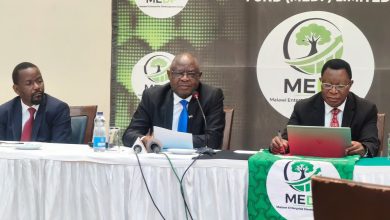
Speaking in Lilongwe yesterday when Egenco appeared before the Parliamentary Committee on Commissions, Statutory Corporations and State Enterprises, chief executive officer William Liabunya said the company is financially viable and capable of funding power projects through internally generated resources but is constrained by limited policy support.

plant
Liabunya said the Treasury has written off about K97 billion owed to Egenco over the years, including roughly K30 billion cancelled in 2019 and another K67 billion in 2024. He said the funds could have been invested in critical electricity generation projects.
“If we are serious about power development, the electricity we generate should provide the revenue needed to expand capacity,” Liabunya said. “But we are working in reverse. We make the money, it is cancelled from our books and we start from zero. Tariffs are adjusted and you expect consistent payments, but the money does not come.”
Despite the write-offs, he said Escom has accumulated a fresh debt of about K30 billion, which it is failing to service, raising fears that government may again cancel the obligation at Egenco’s expense.
Liabunya questioned what he described as preferential treatment accorded to Escom, arguing that the utility has the capacity to meet its obligations.
“Escom continues to pay independent power producers at higher costs, even though Egenco invests heavily in electricity generation and also supports power supplied by the same producers,” he said.
He further noted that Egenco’s tariff remains below the cost of production, placing additional strain on operations and expansion plans.
Liabunya disclosed that Egenco currently owes creditors about K16 billion, including K14 bi l lion owed to foreign suppliers for spare parts that require foreign exchange. He said the company services its debts without government cushioning.
Despite the challenges, he said Egenco plans to increase generation capacity from the current 444.67 megawatts (MW) to 2,434.5MW by 2040 through partnerships and other support mechanisms.
In response, committee
make their own proposals in terms of remuneration. We are all service vice-chairperson John Jackson Bamusi said lawmakers will engage relevant authorities to establish why Egenco is facing persistent financial challenges.
“As a public institution, Egenco requires adequate support to expand capacity and ensure reliable electricity supply,” Bamusi said.
Meanwhile, economic governance expert Jimmy Lipunga has warned that growing debt tensions between Egenco and Escom could undermine power sector reforms and electricity expansion plans.
He said the sustainability of the sector depends on whether the debt relates to unpaid electricity supplied by Egenco, stressing that Escom has a commercial obli@gation to settle such arrears.
“If the debt is in respect of electricity supplied by Egenco to Escom, then the latter has an obligation to pay,” Lipunga said, adding that tariffs across the electricity supply chain must reflect actual production and distribution costs.
He warned that tariff misalignment between generation and distribution utilities could trigger financial strain.
“If the tariff restructure between the parties is not properly aligned, it will precipitate a working capital squeeze in one or both entities,” Lipunga said.
Energy policy expert Kandi Padambo said the justification for debt cancellation depends largely on how the debt accumulated.
“If it arose through an arm’s-length willing seller, willing buyer transaction, writing-off such debts may not be reasonable and may be damaging to both Egenco and Escom,” Padambo said.
“However, if it resulted from a mismatch between the output price per unit and the price at which Escom sells electricity to consumers, there may be justification for such intervention.”
Padambo added that attracting private investment into electricity generation requires cost-reflective tariffs and strong regulatory credibility.
“What w i l l at t ract more investment is real cost pricing and good governance, supported by an independent regulatory authority that is not only independent but seen to be so,” he said.
Government performance reports show Egenco’s financial position has remained volatile. Ministry of Finance data indicates the company moved from a K5.1 billion profit in 2022 to a K7.4 billion loss in 2023 before posting a modest K644.8 million profit in the 2024/25 financial year, largely supported by a K7.1 billion insurance compensation payment.
Despite electricity sales rising to K76 billion, Egenco continues to face rising operational costs and liquidity pressure, with receivables—largely linked to Escom—remaining high.
Lipunga warned that prolonged non-payment could weaken the company’s operational capacity.
Data also shows Escom has struggled financially despite recently returning to profit. The utility recorded a K4.8 billion profit in 2024/25 after posting a K65.3 billion loss the previous year, largely driven by tariff adjustments and increased purchases from independent power producers.