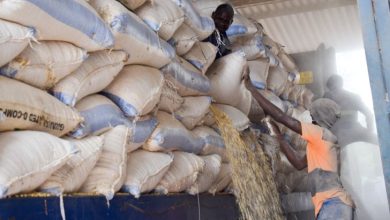
Excess supply of the leaf yesterday turned into a nightmare tobacco farmers as the 2026 Tobacco Marketing Season opened amid low prices and fears of the worst to come.
Minister of Agriculture, Irrigation and Water Development Roza Fatch Mbilizi, who opened the season on behalf of President Peter Mutharika at the Lilongwe Floors, acknowledged the pressure of excess supply.
However, she urged buyers not to exploit the situation.
“There is overproduction, but no single leaf should be bought at lower than the market price,” said the minister, appealing for full uptake of the crop.

However, Tama Farmers Trust president Abiel Kalima-Banda said
the imbalance was predictable but poorly managed.
He said: “We needed to sit down and negotiate with buyers. If the rejection rate remains this high, growers are in trouble because they depend on the auction floors to sell their
tobacco.”
Kalima-Banda, whose body represents a majority of the growers, also warned farmers that production discipline is now critical for future seasons.
“If we oversupply, the end result will be low prices. We need to produce what the market demands,” he said.
Kalima-Banda added that delayed communication on minimum prices may have worsened uncertainty on the floors.
“We were expecting tobacco to be bought based on those minimum prices,” he said.
Traditionally, the country’s President presides over the
official launch of the marketing season and Mutharika’s absence yesterday could be felt through a subdued start to the country’s most critical export season with contract tobacco fetching a maximum of $3 per kilogramme (kg), down from about $3.20 on
the opening day last season.
Buyers also rejected a sizeable portion of the leaf on offer, reflecting cautious demand amid an emerging supply glut.
Tobacco Commission had not released official minimum prices or opening benchmarks by press time, leaving both growers and buyers operating without a clear pricing framework.
The second round tobacco estimates survey indicated that Malawi will overproduce by 14 percent at 197 million kg against a projected demand of 170 million kg, creating a surplus that may affect prices.
On the auction floors, farmers said the opening signals were discouraging. Prices, they said, are already drifting below viable production costs.
Selemani Jorijo, a farmer from Kabudula in Lilongwe, said the situation was unsustainable.
He said growers would need at least $3 per kg to break even.
Another farmer, who requested anonymity, blamed the confusion around pricing guidance.
The weak opening comes at a time when Malawi’s external trade position remains under pressure.
National Statistical Office data show the country’s import bill rose to $2.67 billion from $2.2 billion the previous year, widening the trade gap.
An analyst, Christopher Mbukwa said the combination of oversupply and weak prices could trigger illicit trade flows.
Tobacco remains the country’s economic anchor, earning a record $540 million last year, accounting for about half of export earnings and roughly a fifth of total imports, making its performance crucial to foreign exchange stability.