Despite low-cost loans offering a lifeline to firms, manufacturers insist that the funding is only a first step towards their growth ambitions.
The low-cost loans, accessed at an average rate of 14 percent from the World Bank-funded Financial Inclusion and Entrepreneurship Scaling (Fines) project have helped to improve production and better cash flow for more than 48 000 small-scale firms.
But the firm wants more capital to boost their businesses.

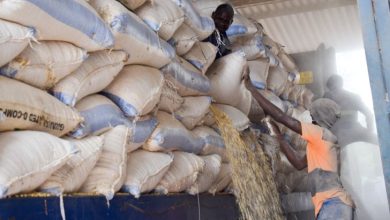
In an interview on Tuesday, Tammie Investment Limited managing director Aaron Mwasokwa, whose firm got a loan of $250 000 (about K438 million) from Fines project in 2023, said they want to expand storage facilities and tonnage of maize being processed to meet the market demand for the maize flour and bram, which is exported to Zimbabwe.
He said: “The loan helped us buy some of the additional equipment, including the cleaning, grading and polishing machine, the weigh bridge, the pre-cleaner and finishing the warehouse.
“Right now, we are renting warehouses outside these premises. We still need additional storage facilities.”
The firm’s milling plant processes 600 50 kilogrammes bags of maize grain into flour per day and makes weekly exports of bram to Zimbabwe.
On his part, Bio Energy Resources Limited, which got $60 000 (about K105 million) investment loan, bought essential equipment and upgrade operational facilities.
But the firm is still exploring other funding sources and growth opportunities to scale into additional industrial applications such as sustainable aviation fuel to support low‑carbon incentives.
The company also plans to establish a refinery to produce 100 percent bio-diesel for the agriculture and transport industries.
The firm’s chief executive officer Laurie Webb indicated that with a processing capacity of 10 metric tonnes (MT) of jatropha seed per day, the factory produce up to one million litres of jatropha oil per year.
With the target to increase processing capacity to 30MT per day within the next four years, he said they want to help meet the growing need for diversified fuel sources for the transport sector as well as Malawi’s demand for bio‑fertilisers.
Genset manufacturer Farmers Voice Africa Innovations and Investment Group said the firm is looking for a capital injection of K1 billion to boost its solar-powered generators manufacturing business, to supplement the K30 million loan boost from Fines project.
Farmers Voice Africa president Brighton Jelemoti said the loan was used to procure equipment to kickstart the business, but more capital would enable it to scale up production and expand its footprints to Zambia and Zimbabwe,.
The African Economic Research Consortium data show that only 15 percent of Malawian companies have a bank loan or line of credit compared to an average of 30 percent in sub-Saharan Africa.
On the other hand, African Development Bank (AfDB) data show that Malawi’s growth in business capital has decelerated from 23 percent in 2017 to just five percent in 2020, amid mounting macroeconomic instability.
Business capital refers to the financial, physical and intellectual assets that enterprises leverage to drive economic activity, investment and production.
This includes micro, small, and medium enterprises, large corporations, start-ups, industrial capital and financial capital sources supporting businesses.
The decline, according to the AfDB 2025 Country Focus Report, has been due to high inflation, large fiscal and current account deficits, high costs of credit, shortages of foreign currency and vulnerability to climate change and other external shocks.
Consequently, business capital remains a small component of national wealth, accounting for only two percent compared to 15 percent for Sub-Saharan Africa in 2020.
According to AfDB, Malawi’s private sector credit to gross domestic product is low, at 1.8 percent, compared to South Africa’s 67.6 percent or 12.8 percent for Zambia.
At the same time, Malawi is estimated to have over 1.6 million small businesses, the majority being microenterprises at 74 percent, with operations in agriculture, manufacturing, ICT and financial services and employing about 80 percent of the total labour force and contributing about 40 percent to GDP.
In an interview, Fines project manager Ralph Tseka conceded the rising demand for softer loans, which he said has had an impact on growth of businesses.
He said although the initial funds have been exhausted, the project is recycling repayments to keep meeting demand while preparations are underway for a successor programme, expected to start around May 2026”.
Fines project is an $86 million (about K146 billion) five-year Malawi Government project being implemented by the Reserve Bank of Malawi to increase access to financial services and promote entrepreneurship.