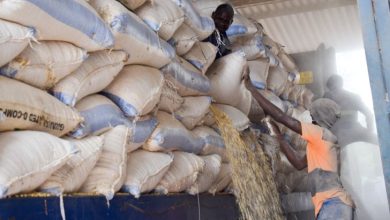
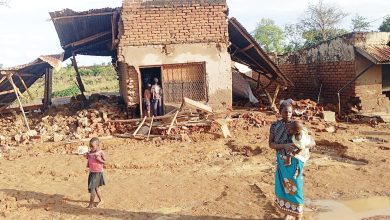
Most Malawian smallholder farmers are clearing fields for the 2026/27 agricultural season amid financial and environmental anxiety resulting from rising fertiliser prices and impact of El Niño weather forecasts.
The combination of high input costs and projected severe dry spells threatens to cripple early planting efforts, a development likely to place the country’s food security and rural incomes in immediate jeopardy.
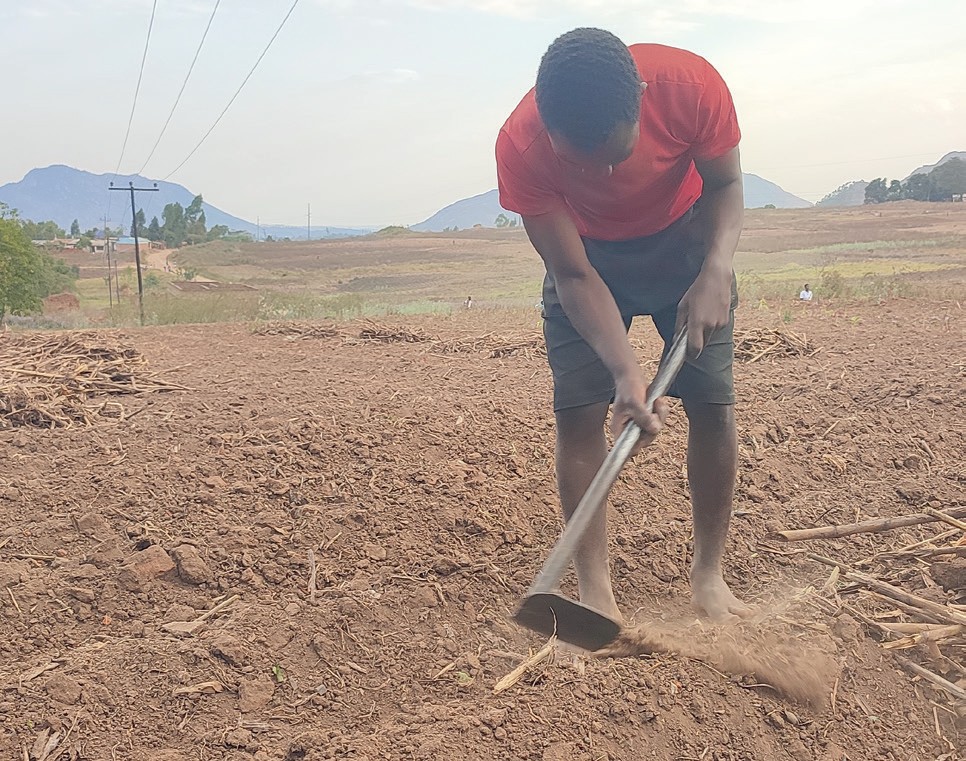
During a visit to Mkwanda Village, Traditional Authority (T/A) Likoswe in Chiradzulu District, The Nation found a dejected Davie Wasi working in his garden on Sunday afternoon to prepare for a farming season he is no longer sure will reward him.
He said the upcoming season set to start with the first rains either in late October or early November presents a painful double burden of rising fertiliser prices and fears of El Niño-related weather conditions that could affect crop production in most parts of the country.
Said Wasi: “If I struggled to buy fertiliser during the just-ended agricultural season when a 50-kilogramme [kg] bag was selling at around K150 000 and survived by buying fertiliser in small quantities measured in buckets, what more this time around when a 50kg bag is selling at as much as K205 000?”
He said the high prices have made fertiliser become a luxury he can no longer confidently plan for, adding that little money he earns from piecework is for food and other household needs.
Spot checks in shops indicate that a 50kg bag of Urea is now selling at between K180 000 and K190 000 while NPK is at between K185 000 and K205 000 per bag, depending on the supplier and location.
“I was hoping that this year I would simply apply organic manure because I cannot afford fertiliser. But this news about El Niño makes me sometimes feel like I should not even continue preparing the land because I don’t see a future in it,” said the 28 year-old father.
Wasi said the prospect of poor rains or other El Niño-related weather shocks makes the coming season even more frightening.
In Ngolokoto Village, T/A Wimbe in Kasungu, another farmer, Joseph Banda is also staring at the approaching agricultural season with little hope.
He said the combination of high fertiliser prices and the anticipated El Niño conditions has left him uncertain about how to prepare.
“My hands are tied. I harvested only 12 bags, and I cannot sell them to buy fertiliser because that is the food my family depends on,” said Banda, who expressed fears of another difficult farming season.
Elizabeth Sinoya, a farmer based in Lupaso, Mzuzu, expressed similar sentiments in an interview, highlighting the rising cost of fertiliser and the anticipated El Niño conditions as two threats converging on her already financially-struggling family.
While the Ministry of Agriculture, Irrigation and Water Development is touting Mbeya fertilisers, the low-cost organo-mineral input, Lilongwe University of Agriculture and Natural Resources soil science professor Patson Nalivata is on record having said that they cannot meet the full nutrient demands of staple crops such as maize, which feeds the majority of Malawians. He, however, acknowledged that organic fertilisers play an important role in restoring soil health.
In June this year, Ministry of Natural Resources indicated that between October and December this year, the country will likely experience below-normal rainfall, particularly in the Southern Region districts due to El Niño conditions.
The Department of Climate Change and Meteorological Services has placed 12 districts in Malawi at maximum risk of a complex “twin threat” of severe drought and extreme flooding. The districts are Blantyre, Chikwawa, Nsanje, Balaka, Mangochi, Phalombe, Mulanje, Thyolo, Chiradzulu, Ntcheu, Neno and Mwanza.