International Monetary Fund (IMF) resident representative Nelnan Koumtingue has urged Malawi to institute comprehensive economic reforms to ensure long-term economic and financial systems stability.
In a written response in reaction
to the IMF working paper on debt restructuring, he warned that poorly sequenced reforms could undermine market confidence and derail recovery.
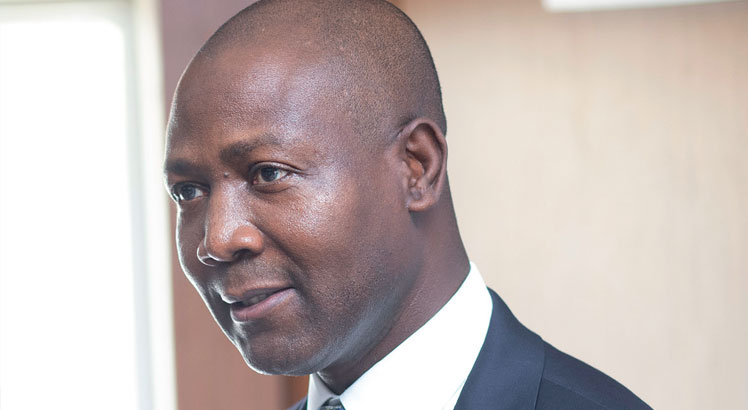
He said: “Debt restructuring can only succeed when accompanied by credible fiscal consolidation, sound monetary policy and strengthened institutions for transparent debt management.
“If implemented in isolation, it risks undermining financial stability, particularly where banks and pension funds are heavily exposed.”
Koumtingue said the IMF paper does not advocate a domestic debt restructuring for any specific country, emphasising that such decisions remain a sovereign prerogative.
“Should a country opt for domestic debt restructuring, a key prerequisite is to strengthen market confidence by embedding the process within a comprehensive macroeconomic adjustment programme that addresses the root causes of debt accumulation,” he said.
Koumtingue added that the adjustment programme should be anchored in strong fiscal consolidation that distributes costs equitably across the public and prioritises enhanced domestic revenue mobilisation, while also securing support from external
development partners.
The warning is particularly relevant for Malawi where rising sovereign debt levels have intensified fiscal pressure.
Treasury data shows that the country’s public debt is hovering around K16 trillion, about 85 percent of the country’s gross domestic product, while interest payments absorb nearly half of all tax revenue estimated at K2.1 trillion in this fiscal year.
In an interview, Mzuzu University economics lecturer Christopher Mbukwa noted that Malawi’s public debt “has already reached the distress level,” saying this exerts pressure on the K8 trillion National Budget that ends on March 31 2026 through interest payments, thereby diminishing fiscal space and crowding out critical social services.
He said a coordinated policy response is essential, adding that unless expenditure is tightened, revenue collectionis restructure our debt, the current imbalances will remain unsustainable.
Scotland-based Malawian economist Velli Nyirongo observed that the IMF’s advice mirrors lessons from regional peers, stressing that debt restructuring cannot be viewed as a shortcut, but that it should follow serious fiscal adjustment.
“The sequencing determines whether a country regains investor confidence or faces further market uncertainty,” he said.
On his part, economist Dalitso Kubalasa likened Malawi’s debt crisis to “a family that has borrowed too much from loan sharks and is now drowning.”
“The money meant for hospitals and teachers’ pay is instead used to cover interest,” he said./
“Every day we delay, the debt piles up, clinics stay empty and classrooms fall apart.”
The IMF analysis draws lessons from Ghana, Sri Lanka and Barbados. These are the countries that experienced deep crises after delaying reforms.
Malawi’s public debt was last recorded at 16.19 trillion, which is 86.4 percent of the country’s gross domestic product (GDP) at roughly K20 trillion, according to Ministry of Finance and Economic Affairs data.
External debt stock is recorded at $4.27 billion (about K7.4 trillion) while domestic debt is at $5 billion (about K8.79 trillion).