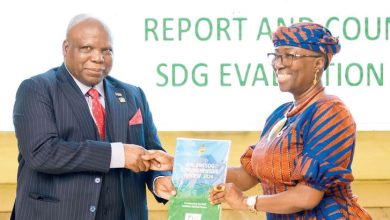
commodities to building regional value chains that create jobs, raise farmer incomes and strengthen food security.
He said the partnership with Agra is about moving from ambition to execution.
On her part, Ruhweza said that trade liberalisation alone would not transform Africa’s food systems unless farmers and agribusinesses are equipped to compete.
“This partnership is about making intra-African food trade work in practice, linking policy to delivery,” she said.
Under the collaboration, the two institutions will advance agricultural trade through the AfCFTA Agri-Trade Action Plan.
AfCTA is market of 1.3 billion people with a combined gross domestic product of $3.4 trillion.
The International Monetary Fund (IMF) has urged Malawi to accelerate debt restructuring, reduce domestic interest burden, broaden the tax base and unlock export-led growth as the country grapples with what it has formally classified as “debt distress”.
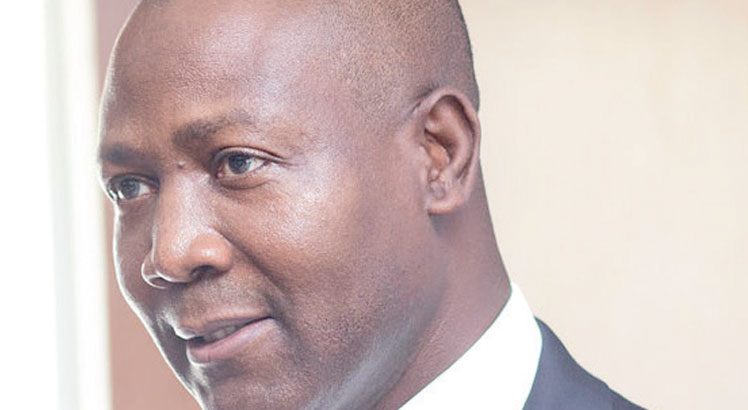
IMF resident representative Nelnan Koumtingue said in an interview on Monday that a joint debt sustainability analysis found that Malawi’s “overall and external public debt rating is considered to be in debt distress” due to external arrears, ongoing negotiations over an external debt restructuring and public debt dynamics that are unsustainable.
He said external debt service “is projected to remain above some of its key risk indicators for many years”, pointing to vulnerabilities relative to exports and tax revenue.
Koumtingue added that domestic debt levels have sharply increased in recent years and are expected to continue to rise over time, with domestic interest and principal payments now accounting for over 70 percent of total debt service costs.
He said restoring sustainability will require tangible progress on restructuring agreements with remaining creditors, lowering reliance on high-cost domestic borrowing and strengthening revenue mobilisation.
“While debt restructuring is a critical step, sustained domestic reform effort will be essential to restore medium-term debt sustainability,” said Koumtingue.
He noted that Malawi’s debt burden reflects “a combination of many factors, including macroeconomic challenges and weak fiscal policy amplified by recurrent exogenous shocks”.
Economists say frequent climate-related disasters have disrupted growth and export earnings while persistent fiscal deficits have forced government to “turn to high-cost domestic borrowing to finance the gap, resulting in “a growing interest burden that consumes an increasing share of the budget.”
But Koumtingue said reforms should focus on “removing formal and informal barriers to exports and
addressing the country’s chronic shortage of foreign exchange”.
The fund’s warning comes amid a sharp rise in Malawi’s debt stock. Since the launch of the country’s long-term development strategy Malawi 2063 in 2020, public debt has climbed from about 54 percent of gross domestic product to roughly 89 percent in recent fiscal cycles.
In nominal terms, the stock has expanded from around K4.76 trillion to more than K22 trillion.
Treasury figures further show that debt service has grown even faster. Repayments have surged from about K300 billion in 2021/22 to a projected K2.47 trillion in 2025/26, absorbing an increasingly large share of government revenue and expenditure. Treasury data further show that most recent borrowing has financed recurrent pressures such as wages, subsidies and interest payments rather than capital formation.
The composition of borrowing has also shifted decisively toward the domestic market. Between 2021/22 and 2025/26 fiscal years, about 80 and 94 percent of annual fiscal deficits were financed domestically, exposing government to short maturities and higher interest rates, the data show.
A Treasury official who did not want to be mentioned observed that cumulative depreciation of around 70 percent significantly increased the local currency cost of servicing external obligations.
He said that arrears clearance mechanisms contributed to the build-up, as promissory notes issued to unpaid suppliers were discounted at commercial banks, effectively converting arrears into domestic debt.
Economics Association of Malawi president Bertha Bangara-Chikadza in an interview said persistent fiscal deficits remain central to the crisis.
“Malawi’s rising public debt has been driven largely by persistent fiscal deficits, mainly due to low revenues and high recurrent expenditures, particularly on wages, subsidies and interest payments,” she said.