JCM’s livelihoods programme transforming Kanzimbe communities

Since 2019 when JCM Power began construction of its 60‑megawatt (MW) solar plant, communities in Sub‑Traditional Authority Kanzimbe in Salima have experienced notable transformation.
Through its Restoring Livelihoods, Changing Lives programme, the independent power producer addresses livelihoods holistically across five capitals: natural, social, human, physical, and financial.

Interventions target education, agriculture, health, financial inclusion, water and sanitation, and other critical social needs.
For Griceria Msasa’s daughter, Jessy Banda, JCM’s support has been life‑changing. Jessy, now in Form Four at Katawa Community Day Secondary School (CDSS), says the company’s bursary has kept her in school.
“It was painful watching my friends go to school while I stayed home because we could not afford fees. Since joining JCM’s bursary programme, my school fees are paid. They also provide notebooks, writing materials, mathematical instruments and sanitary pads,” Jessy said.
JCM built Katawa CDSS at a cost of $213 796.07 (about K383 million). The school and the bursary scheme are easing pressure on thousands of students in Chitala Zone, which previously had no secondary school despite having 11 primary schools.
Salima District acting director of education Often Gadabu explained the challenge: many children were dropping out because the nearest secondary schools—Kaphirintiwa and Kaphatenga—are about 10 kilometres away.
Agriculture and economic empowerment
Communities in Sub‑TA Kanzimbe are also benefiting from agricultural programmes and village bank initiatives designed to boost economic empowerment. Griceria Msasa reports higher yields and better market access thanks to the livelihood programme.
“JCM built a storage warehouse that allows us to safely store our harvests, protecting them from thieves and pests and promoting food security,” she said.
“We also struggled with livestock care. JCM provided goats and chickens, taught us proper husbandry, and helped us build raised enclosures to keep animals safe and disease‑free.”
JCM’s Ulimi ndi Moyo project teaches modern farming practices to increase yields. Levison Masamba, JCM Power community liaison officer, said the company supports families with land clearing, land preparation, planting assistance, improved seed and farming supplies, and ongoing technical support from field officers.
Jon Bahen, JCM Power chief executive officer, said the company recognised that acquiring land for the project was not enough; communities needed partnership and empowerment for sustainable livelihoods.
“We knew that simply acquiring land and its resources wasn’t enough. We needed to restore and improve livelihoods. At JCM we view livelihoods holistically through five capitals: natural, social, human, physical and financial. Since the end of construction we have invested in 40 initiatives targeting each capital,” he said.
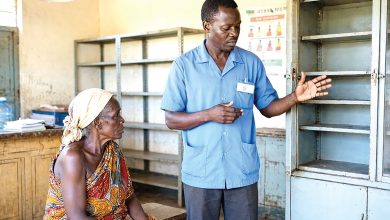
The company has also invested in water and health infrastructure, providing about 10 boreholes in surrounding communities and handing over a health facility in 2021.
Minister of Energy and Mining Jean Mathanga said the school symbolises JCM Power’s commitment to community empowerment.
“Schools like this are the backbone of development, empowering our youth and driving growth. It’s a testament to JCM Power’s foresight that they prioritise education in their corporate social responsibility (CSR).”
The minister also praised JCM’s contribution to Malawi’s energy sector through its Kanzimbe site in Salima and the 20MW Golomoti plant in Dedza.
Community leaders describe JCM as a genuine partner focused on transforming livelihoods through income‑generating activities, education access, and financial literacy. Sub‑TA Kanzimbe officials welcomed the company’s interventions and urged continued support.
When the school was officially opened, the chief said the community had embraced JCM since its arrival in 2020, and called on government to support the company’s efforts.
Enock Phale, member of Parliament for Salima North West, described JCM’s CSR as impactful despite the company operating in the area for only four years. He appealed to the government to complement JCM’s work—for example, by connecting Katawa CDSS to the national electricity grid.
JCM Power’s multi‑pronged approach—combining infrastructure, education, agriculture and financial inclusion—illustrates how private energy projects can catalyse broader community development when implemented in partnership with local stakeholders.