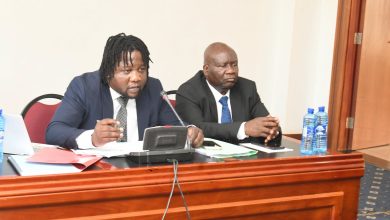
Chief Justice Rizine Mzikamanda yesterday launched a plea bargaining drive to decongest the country’s prisons by clearing a mounting backlog of criminal cases through prison camp courts.
Speaking at a pilot Prison Camp Court at Lilongwe Central Prison, popularly known as Maula Prison, he said urgent reforms were needed to restore efficiency and public confidence in the criminal justice system.
The week-long pilot, running from March 2 to 7, seeks to accelerate the disposal of serious criminal cases, starting with homicide, while easing congestion in prisons operating at over 200 percent capacity.
Said Mzikamanda: “Plea bargaining is not justice for sale. It is justice based on law, administered transparently and voluntarily engaged in by those who exercise the right.
“The accused can take responsibility for their actions, and victims and communities can express their views. It is participatory justice that provides certainty while upholding due process.”
Although plea bargaining has been provided for under Section 252A of the Criminal Procedure and Evidence Code since 2010, implementation has lagged.
Acknowledging years of systemic backlog, Mzikamanda said: “The legislative intent has always been to promote access to justice and efficiency in criminal case management, but implementation has lagged.
“We are starting with homicide cases, which for long have proven difficult to commence and conclude, resulting in suspects spending years on remand. Once done, we hope the prison population will be reduced considerably.”

Malawi’s prisons currently hold 15 969 inmates, according to Malawi Prisons Service Commissioner General Wandika Phiri. Of these, 3 739 are on remand, including 950 facing homicide charges, about 25 percent of all remand cases.
She said the initiative offers a practical solution to overcrowding that strains resources and compromises safety.
The model draws on lessons from Uganda and Rwanda. Mzikamanda noted that Rwanda resolved 13 000 cases in two years through plea bargaining, significantly reducing both court backlogs and prison congestion.
Professor Daniel DeWalt, senior vice-president for Global Impact at Pepperdine University, said Malawi’s initiative builds on a decade of experience supporting African judiciaries.
He said: “Implementing plea bargaining immediately turns the tide, providing certainty for accused persons and their families while reducing case backlog and overcrowding.”
Implementation task team chairperson Judge Chifundo Kachale described the pilot as a lawful and humane response to a long-standing crisis.
Under the model, public prosecutors, Legal Aid Bureau lawyers, accused persons and victims will actively participate in proceedings. Victims will be given space to present their views before agreements are concluded.
Meanwhile, Centre for Human Rights Education, Advice and Assistance executive director Victor Chagunyuka Mhango has welcomed the focus on homicide remandees.
In an interview yesterday, he observed that many accused persons in serious offences spend years on remand due to case backlogs, limited judicial sittings and investigative delays.
Mhango said the 63 inmates, comprising13 women and 14 juveniles, who have already expressed interest in the process demonstrate demand for faster justice.
Stakeholders say the Maula pilot could pave the way for expanding plea bargaining to other serious offences nationwide.