Non-disclosure of key information threatens Malawi’s accountability for a $2.47 billion (about K4.3 trillion) climate-financed infrastructure portfolio to measure carbon efficiency, emission reductions or adaptation outcomes, an independent review has warned.
A study commissioned by the Construction Sector Transparency Initiative (CoST) Malawi found that although climate-resilient projects are approved under strong policy frameworks, transparency collapses once construction begins, making it difficult to verify climate impact, value for money, or resilience outcomes.
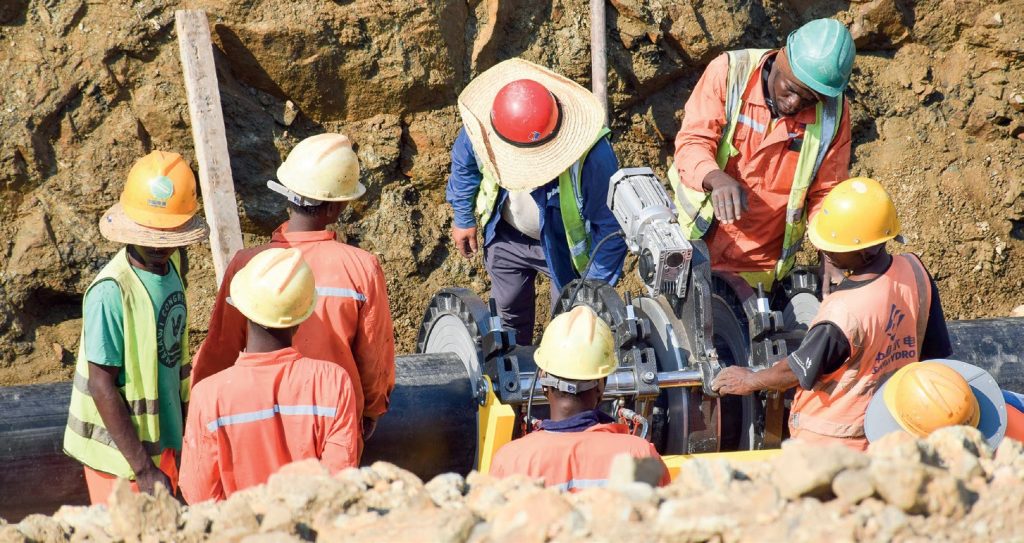
The review covered 17 projects in the Northern, Central and Southern regions in energy, water, irrigation, transport, urban resilience and watershed management sectors.
Presenting the findings in Lilongwe yesterday, CoST consultant Rodney Kumsinda said over 80 percent of project information is disclosed at planning and approval stages, but disclosure drops to below 50 percent during construction, with completion and decommissioning data scoring between zero and 50 percent.
He said: “While all projects claim alignment with the Paris Agreement and national climate targets, none provided baseline data to measure carbon efficiency, emission reductions, or adaptation outcomes.
“This means the $2.47 billion portfolio cannot be proven to be delivering its climate goals.”
The report shows that 14 of the 17 projects disclosed financing information worth about $360 million, leaving most climate funding, spanning multi-billion-kwacha irrigation, water, and dam projects, in the dark.
The review also found weak disclosure of procurement and bidding information, raising concerns over unexplained low bids, cost overruns, and potential misuse of funds.
“Without full lifecycle disclosure, from planning and procurement through construction to completion, climate finance risks becoming ordinary infrastructure spending with no measurable climate benefits,” the report warned.
To safeguard investment, CoST Malawi recommends mandatory publication of all project documents, a central public climate project dashboard and integration of transparency standards into contractor accreditation and funding agreements.
Development partners funding projects such as Mpatamanga Hydro, Shire Valley Transformation, Malawi Watershed Services Improvement Project (MWASIp) and urban resilience programmes should link disbursements to verified disclosure of baseline data and procurement information, the report adds.
CoST Global Programme chairperson Rajiv Lall said comprehensive data collection and stakeholder engagement reduces infrastructure costs and strengthens public support.
“Through collaboration with CoST International, CoST Malawi and Cira [Construction Industry Regulatory Authority], we hope to develop a framework that improves infrastructure governance for the benefit of Malawians,” he said.
Cira chief executive officer Gerald Khonje said climate finance is critical as Malawi faces increasing floods, droughts, and cyclones.
“As these resources grow, so does the responsibility to ensure projects are well planned, procured, delivered, and monitored. Every kwacha must be traceable, every decision defensible, every outcome verifiable,” he said.
The projects reviewed include the $1.07 billion Mpatamanga Hydroelectric Power Station, $218.9 million Shire Valley Transformation Project, $240 million Regional Climate Resilience Programme (RCRP), $157 million Shire River Basin Watershed Improvement Project (MWASIp) and the $60 million Kapichira Hydroelectric Rehabilitation Project.
Others include the Lake Chilwa Basin Resilience Project, Pride Project-CARLA, Nkhata Bay Water & Sanitation, Dowa Dambo Irrigation, Lilongwe Urban Resilience, Chipoka Port Fisheries, and Nkholongue Multipurpose Dam.
Ministry of Transport and Public Works spokesperson Chikondi Chimala said the project implementers and the Public Procurement and Disposal of Assets Authority were best to comment on the matter.