When clock ticked 11.10am yesterday, Ministry of Labour, Skills and Innovation director of administration George Masinga pressed a red button, remotely triggering an earth-shaking blast that stirred a dust storm from Kangankunde Hill in Balaka.
His gesture saw Lindian Resources, owners of Kangankunde Rare Earaths Mine in Balaka, almost 90 kilometres from Malawi’s commercial capital, Blantyre, kick off a new rare earth mine.
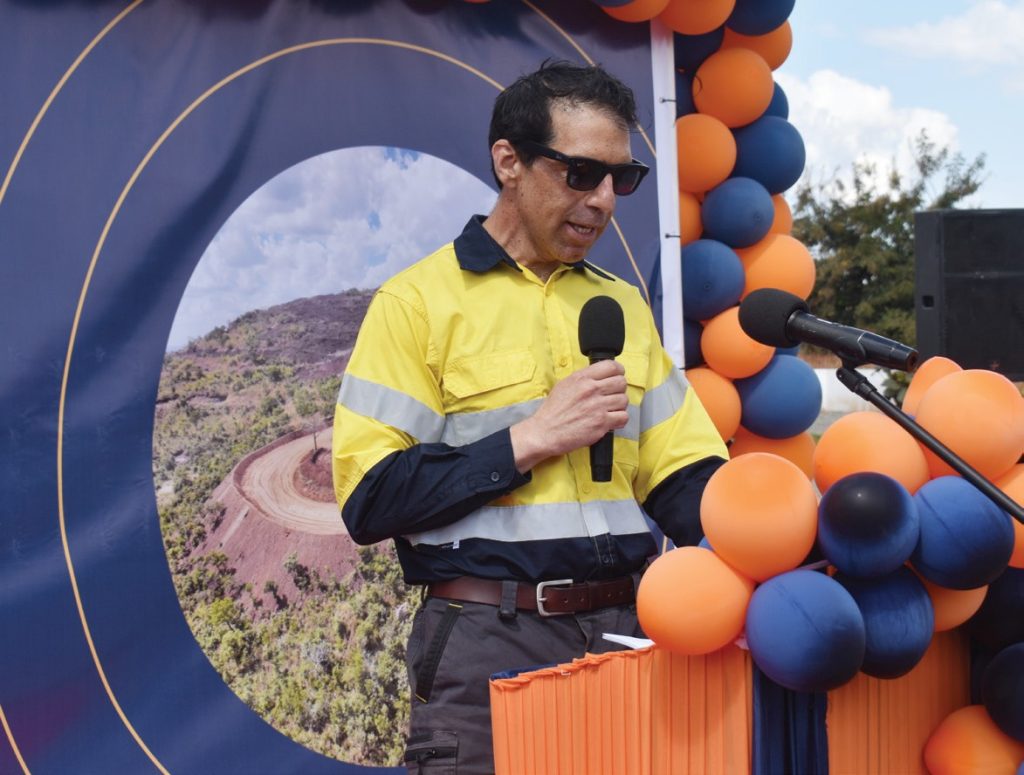
moment. | James chavula
“This is a historic day,” said Masinga. “I am honoured to preside over the first blast of Kangankunde Mine. On behalf of the Government of Malawi through the ministries of Labour and Mining, I congratulate Lindian and Rift Valley Resource Developments for reaching this major milestone. This marks the begining of a new chapter not only in the company’s operations but also Malawi’s mining sector.”
He urged the mining company to respect workers, environmental sustainability, surrounding communities and human rights for shared opportunities and prosperity.
To date, the mine has employed 3 500 workers, 80 percent of them Malawians.
Masinga triggered the blast in place of Minister of Mining Jean Mathanga, who was away to Kasiya Rutile Mining project in Lilongwe.
The explosion, coming days after a successful trial last Saturday, cracks open one of the world’s largest underdeveloped rare earth resources for making magnets, electric vehicles, robots and phones.
Scoping by the mining firm listed on Australian Stock Exchange shows at least 261 million tonnes is tucked under the hyena-infested hill between Senzani and Phalula markets.
The blast-off marks the official launch of the Rift Valley Resources open-pit mining site touted to generate $114 million (about K205.2 billion) annually for over 45 years.
“We have just witnessed a defining moment in the development of the Kangankunde Rare Earths Project,” said Lindian executive director Zac Komur.
He said Kangankunde has moved from construction readiness into active mining.
According to the Ministry of Mining, mining contributes just about one percent to Malawi’s gross domestic product, a slump from 10 percent before the lengthy suspension of Kayelekera Uranium Mine in Karonga 12 years ago.
However, government strategists expect the emerging extractive’s share to rebound and beat the all-time high by 2030.
Senior Chief Chanthunya said the milestone event signals the rebirth of the semi-arid setting where hyenas roam day and night.