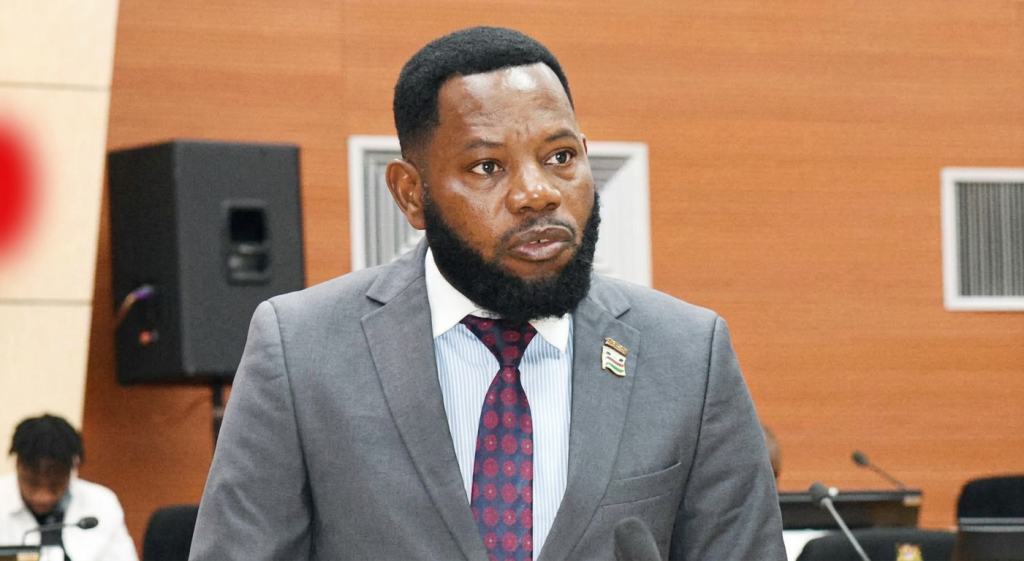
About three months after the expiry of a 180-day deadline set by the High Court of Malawi, the government is yet to review and implement Malawi’s post-abortion care guidelines despite a court order requiring the Attorney General, in collaboration with the Ministry of Health, to do so. The ruling, delivered on November 28 2025, affirmed the right of minors who become pregnant as a result of sexual violence to access safe abortion. In this exclusive interview, our News Analyst JONATHAN PASUNGWI engages Parliamentary Committee on Health chairperson ANTHONY MASAMBA, who speaks about implications of the delay and how it puts reproductive health services under threat. Excerpts;
Q1. What is the committee’s assessment of the government’s compliance with this court order?
The committee notes with concern that the 180‑day period set by the High Court has elapsed without the Ministry of Health finalising the revised post‑abortion care guidelines. This constitutes non‑compliance with a binding judicial directive. Under Section 108 of the Constitution of Malawi, decisions of the High Court are binding on all persons and authorities. The principle of constitutional supremacy (Section 5) requires that any law or conduct inconsistent with the Constitution is invalid. Therefore, failure to comply with a High Court order undermines the rule of law and violates the government’s duty to respect judicial authority. The Judicature Act reinforces the binding nature of court orders, while the Public Health Act places a statutory obligation on the Ministry of Health to ensure delivery of health services consistent with prevailing legal standards. In addition, the Child Care, Protection and Justice Act obliges the State to protect minors, including survivors of sexual violence, whose access to lawful reproductive healthcare is directly affected by the delay.
Q2. Has the committee engaged the Ministry of Health or the Office of the Attorney General to establish why the revised guidelines have not yet been finalised?
The committee has not yet engaged the Ministry of Health or the Office of the Attorney General directly on this matter. However, it intends to raise the issue in Parliament either through Standing Order 14 (Matter of Urgent National Importance), which allows Members to bring forward matters of urgent public importance for debate. In addition, the committee may request that the Minister of Health present a ministerial statement under Standing Order 71 to clarify the reasons for the delay.
Q3. What role does Parliament play in ensuring that court orders, particularly those affecting public health and access to healthcare services, are implemented within the prescribed timeframes?
Parliament has a constitutional duty to ensure that judgments of the courts are respected and implemented. This role is exercised broadly through its legislative authority, its power to demand accountability from the Executive, and its responsibility to safeguard constitutional rights. Parliament ensures compliance with judicial directives by debating matters of public importance, passing corrective legislation, and requiring ministers to report on progress.
Q4. How concerned is the committee that the continued delay in reviewing and implementing the guidelines is affecting access to lawful abortion services for minors who are survivors of sexual violence?
The committee is deeply concerned that the delay continues to affect access to lawful reproductive health services, particularly for minors who are survivors of sexual violence. Recent statistics underscore the urgency: Over 4 000 teenage pregnancies were recorded in Mchinji in the first quarter of 2026. Kasungu registered more than 5 000 pregnancies among girls aged 10 to 19 in just five months. Nationally, teenage pregnancy prevalence has risen to 32 percent. Beyond numbers, the human impact is devastating. Cases such as the grandfather sentenced to 21 years for sexually abusing his grandchildren—one left pregnant—illustrate how defilement robs girls of their childhood, education, and future prospects. Each delay in implementing the court’s directive perpetuates this harm.
Q5. Does the committee intend to summon the Ministry of Health and the Attorney General to account for the delay?
The Committee intends to summon the Ministry of Health to account for the delay, using its powers under the Standing Orders. The provisions will empower the Health Committee to call ministries and agencies, summon witnesses, and demand the production of evidence. Engagement with the Attorney General may follow thereafter, depending on the explanations provided. This oversight process will be scheduled during the next parliamentary committee meeting, and the public will be duly informed of the proceedings.
Q6. Are there any legislative or policy gaps that Parliament needs to address to strengthen the protection of survivors of sexual violence seeking reproductive healthcare?
There are clear legislative and policy gaps. Current laws do not adequately protect survivors of sexual violence seeking reproductive healthcare. Parliament must consider amendments to the Penal Code and related statutes to strengthen protections and ensure alignment with constitutional and international obligations. Balancing rights and values Parliament recognises the diversity of religious, cultural, and ethical views in Malawi. The committee believes that reforms must be framed around constitutional rights, public health imperatives, and the protection of life and dignity. Structured dialogue with faith leaders, traditional authorities, and civil society is essential to balance these perspectives while upholding the rule of law.
Q7. Is there anything else you would like to add regarding this matter?
The committee remains committed to ensuring that the High Court’s judgment is respected, that survivors of sexual violence are protected, and that Parliament fulfils its oversight mandate in a manner that is both constitutionally sound and socially sensitive. The statistics on teenage pregnancies and the harrowing cases of defilement remind us that every delay translates into more girls losing their futures to violence and early motherhood.