Bridget Msumali, a resident of Chilimampunga at Ntandire in Lilongwe, had gone two months without water from her tap.
In the absence of potable water, the mother of three was forced to rely on a shallow well before developing abdominal complications.
“I became sick and when I explained the symptoms to a clinician, I was told my condition was a result of drinking untreated water,” said Msumali.
For Ntandile residents, in Traditional Authority Njewa, dry taps are a regular occurrence.
Some households allege to have gone for months without water, despite continuing to pay bills.
“The taps usually dry produce water twice a week and usually at night for just two hours. Households must scramble to collect enough for their daily needs,” said Msumali.
The situation is forcing the residents to depend on unsafe water sources such as shallow wells, some located close to toilets exposing them to the risk of under water contamination.
Lilongwe Water Board (LWB) attributes the unreliable water supply to population growth.
The water provider is currently serving a population of more than 1.25 million in over 142 200 metered connections across a 2 900-kilometre distribution network.
LWB Spokesperson Chisomo Chibwana acknowledged some areas are experiencing persistent water supply challenges and has since encouraged customers to report prolonged water outages through the board’s customer service channels.
“The city is experiencing a gap between water production and demand. We currently produce 125 million litres per day against the actual demand of 157million litres per day,” she said.
Beyond population growth, Chibwana said illegal sand mining in Lilongwe River is also contributing to raw water abstraction, but stressed this was not the only cause of the current water crisis.
She said sand mining disrupts the flow of water from Kamuzu Dam to the treatment plant, placing additional pressure on an already struggling system.
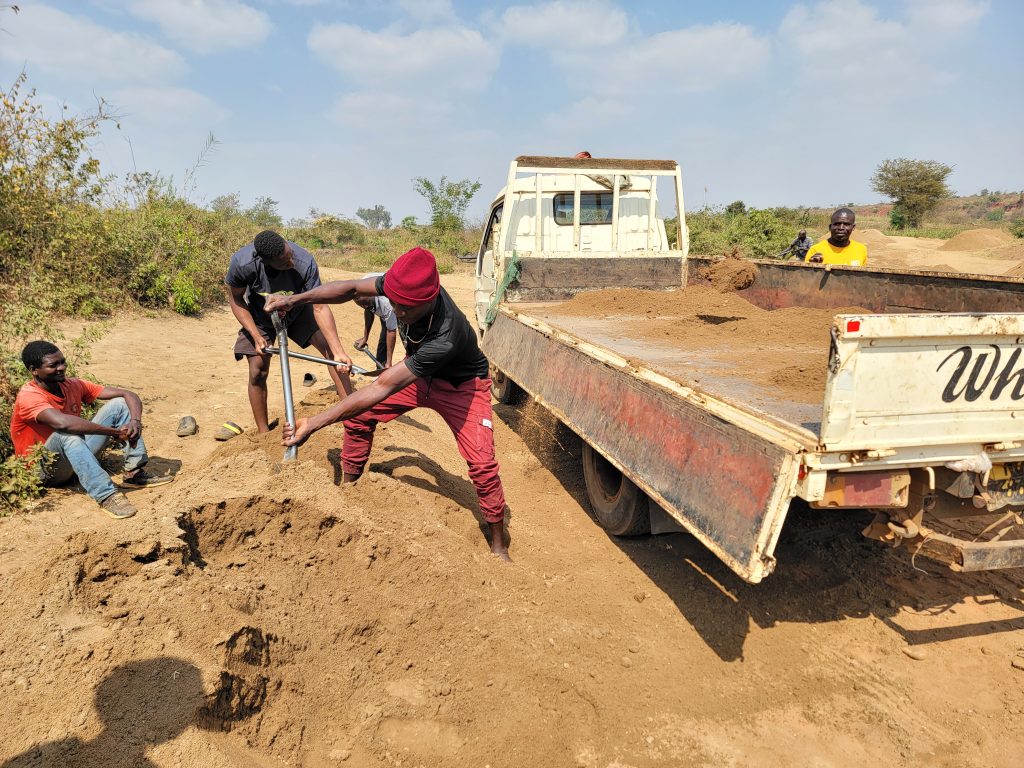
Maliko Yoweri, an illegal sand miner from Chiwoza Village, in Lilongwe said abandoning the activity without an alternative source of income would leave his family struggling.
On a good day, Yoweri said he can supply two trucks of sand earning about K100 000.
“When we see security officers, we run and return after they leave,” he said.
Another miner, who sought anonymity, while acknowledging the environmental damage, said poverty makes it difficult for them to stop illegal sand mining.
The miner, who has worked in the industry for four years, sometimes travels for up to three days on different trips, earning between K40 000 and K50 000 per trip.
For the miners, who are caught between survival and land degradation, the question of alternatives remains pressing.
However, Chibwana says the board is engaging local leaders, government institutions and stakeholders to help communities find more sustainable ways to earn a living.
While the Ministry of Health and Sanitation has warned against drinking untreated water, particularly from wells near toilets, residents are wondering whether population growth alone has resulted in the scarcity of basic services such as portable water.
However, Mathews Kalaya, deputy director of sanitation and hygiene under the Ministry of Health, while acknowledging challenges faced by some communities to access potable water, said unsafe water exposes communities to diarrhoea and cholera.
“We continuously conduct awareness campaigns on hygiene, sanitation and safe drinking water,” he said.
Activist Lewis Mkambala agreed that menstrual hygiene is a concern for women and girls of all ages during a water crisis.
“Women are particularly affected because adequate water, sanitation and privacy are essential for managing menstruation safely and with dignity,” he said.
Mkambala said menstrual hygiene must be included in discussions and responses to water crises.
While authorities recognise the problem, enforcement remains challenging as the miners always flee when security arrive, with some facing resistance and attacks.
Meanwhile, traditional leaders have introduced by-laws to curb illegal sand mining.
Senior Group Village Head Chiwoza acknowledged that many people depend on sand mining because of poverty.
She said LWB has been doing civic campaigns on how sand mining disrupts the river and contributes to water-supply problems in Lilongwe.
Environmental expert Dominic Nyasulu warned that increased illegal sand mining along the Lilongwe River is a serious concern as besides affecting river flow, it could worsen flooding and called for greater public awareness, stronger enforcement and tougher penalties for offenders.
LWB said that during the 2024/25 financial year, 12 vehicles were impounded and more than 20 people were apprehended and prosecuted.
Some offenders were fined up to K600 000 by the courts, , while failure to pay could result in a custodial sentence, depending on the court’s ruling.
The Malawi Water Resources Act provides a legal framework for regulating activities affecting water resources and watercourses.
While goal 6 of United Nations Sustainable Development Goals (SDGs) seeks to achieve universal access to safe water, sanitation and hygiene by 2030, at the same time promoting sustainable water management, protecting ecosystems and supporting developing countries, Lilongwe’s water crisis cannot be blamed on one factor.