Malawi remains in the dark regarding its share of the $7 billion (about K12.3 trillion) Japanese pledge to improve connectivity through development of transport corridors, including Nacala Corridor one year after the offer.
During the 2025 Tokyo International Conference on African Development (Ticad) last August, Japan pledged to mobilise up to $5.5 billion through Enhanced Private Sector Assistance for Africa (EPSA) and $1.5 billion through Japanese International Cooperation Agency (Jica) for impact.
The Nacala Development Corridor which connects Malawi, Mozambique and Zambia was mentioned among the targeted projects.
But Minister of Finance, Economic Planning and Decentralisation Joseph Mwanamvekha on Wednesday said Japan was better placed to divulge details of the package.
“It was their commitment and they can tell you better,” he said.
In a written response, the Japanese Embassy in Lilongwe yesterday clarified the nature of the pledge, but was short on specifics. The embassy said the $7 billion pledge is for Africa as a whole, not just the Nacala Corridor.
“These commitments are not earmarked exclusively for the Nacala Corridor Development Initiative,” reads the statement.
For Malawi, Hugo Mlewa from the Japanese Embassy in Lilongwe said the Nacala Corridor Development Initiative was launched at Ticad 9 in August 2025.
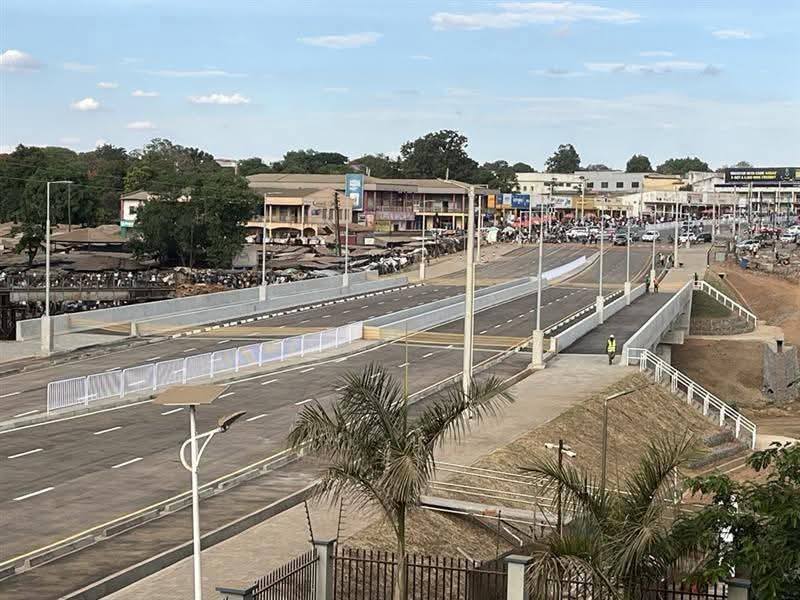
He said the priority is connectivity, citing support for the M1 upgrade and the Lilongwe Bridge handed over in 2026 to boost trade and investment.
However, the cited projects predate the August 2025 pledge and that lack of clarity is becoming hard to ignore because the push for the corridor coincides with the discovery and development of high-value minerals in Malawi.
It also comes as environmentalists grow wary of projects whose environmental management plans and funding architecture remain unclear.
Ministry of Transport and Public Works has since said progress on the Nacala project is “not stagnant” but slow.
The ministry’s director of railways Engineer Geoffrey Magwede said Japanese companies have held technical meetings on the condition of the track from Nkaya in Balaka to Mchinji and onward to Chipata in Zambia.
He also cited letters of intent for technical training for engineers and technicians.
“The impetus is coming up,” Magwede said. “But it is not the progress where we can say we have a clear timeline of events. For the training, paperwork is being done now, but actual training will start in 2027.”
The uncertainty comes as Japanese interest surges in Malawi’s newly viable rutile, graphite and rare earth deposits—minerals the corridor is designed to haul from Kasiya in Lilongwe to the Mozambican Indian Ocean port of Nacala.
Despite Japan’s clarification that its $7 billion pledge covers Africa broadly, analysts say the commercial logic of the Nacala Corridor remains tied to minerals and none of the funding is ring-fenced for the corridor covering Malawi, Mozambique and Zambia.
In June 2025, Japanese firm Toho Titanium confirmed that natural rutile from Kasiya project met specifications for high-performance titanium metal.
Kasiya is also rich in graphite and both minerals are listed as “critical minerals” for batteries, defence and electronics—sectors where Japan is seeking to reduce dependence on China.
In September 2025, Sovereign Metals chief executive officer Frank Eagar, whose company is developing the Kasiya mine, said Japan’s commitment “demonstrates the highest level of government backing for the corridor that underpins our project economics”.
The company plans a six-kilometre rail spur to connect Kasiya to the Nacala line heading to Zambia without which “Kasiya’s economics do not stack up”.
But critics argue that the priorities are clear.
“This is infrastructure designed first for extraction,” said a governance analyst and senior government policy adviser.
The position is reinforced by Alice Malunga, a lawyer specialising in mining, energy and environmental law who said Japan’s push was shaped by China’s rare earths ban of 2010.
“Japan wants multiple, non-Chinese sources for the raw materials its industries depend on, and Kasiya is one such source. So Nacala fits into a bigger pattern, but it is not a rare earths deal specifically,” she said.
While the debate over financing continues, the physical footprint of the Nacala Corridor is expanding, raising environmental and social concerns.
Malunga said the upgrade spans rail, road and port work “across three jurisdictions, which raises several concerns”.
In Mchinji, Salima, Ntcheu and Dedza, residents complain about lack of consultation and poor communication on relocation.
“Mchinji district council assured us of relocation. That promise has not materialised to date,” said Jane Asante, who lives at Kamwendo.
Environmental activist Mathews Malata also warned better rail access could accelerate illegal timber and charcoal exports without stronger border enforcement.
“The real test is how effectively we can turn those minerals into lasting prosperity without exporting the environmental costs to our communities,” he said.
Malunga’s recommendations are to lock in protections before construction.