Malawi has asked the World Trade Organisation (WTO) to foster protection of special trade rights to help developing countries facing structural challenges, low production capacity and vulnerability to external shocks.
In a statement to the 14th WTO Ministerial Conference that opened in Youndé, Cameroon yesterday, Minister of Industrialisation, Business, Trade and Tourism Simon Itaye said special and differential treatment (SDT) must be preserved to ensure countries like Malawi are not left behind.
The minister said the provisions allow Malawi, along with other developing economies, to participate in global trade at a pace that matches its level of development, while supporting industrialisation and economic diversification.
Said Itaye: “For Malawi, SDT is not a concession, but a necessary right that recognises our structural constraints, limited productive capacities, and vulnerabilities to external shocks.
“Meaningful and operational SDT enables countries like Malawi to integrate into global trade at a pace consistent with our development realities, supports industrialisation and economic diversification.”
His remarks come as developing countries continue to push for fairer trade terms that support growth, reduce inequality, and enable long-term development.
WTO rules were designed to ensure predictable market access by preventing sudden trade restrictions and discrimination between trading partners.
However, trade rules have become less predictable. Countries increasingly use discriminatory trade measures such as tariffs, investment screening and technology restrictions linked to industrial policy, national security and geopolitics.
Ironically, data from the United Nations Trade and Development shows that many developing countries still struggle to benefit fully from global trade with least developed countries accounting for just 1.1 percent of world exports in 2024, barely above one percent in 2010 and still far below the two target set for 2030, despite preferential access schemes.
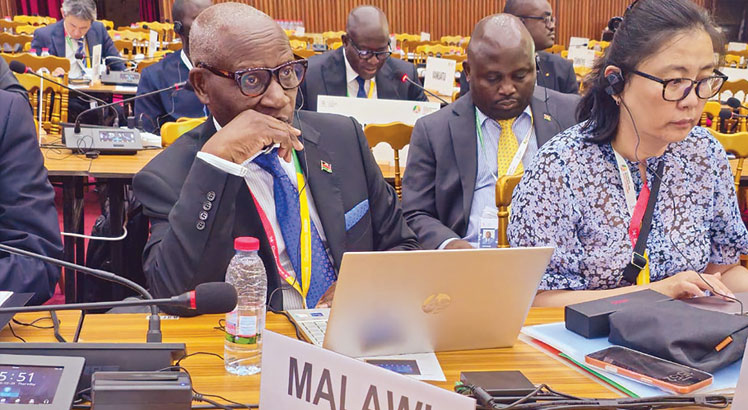
Speaking on the sidelines of the conference in Cameroon, Malawi Confederation of Chambers of Commerce and Industry chief executive officer Daisy Kambalame said without specialised and differential treatment, Malawi can easily become a dumping ground.
She said: “It’s really important that as we look at reforms and also looking at the foundation of the WTO and what it is expected to deliver, we do not compare apples with grapes.”
Meanwhile, WTO director-general Ngozi Okonjo-Iweala conceded that negotiating function has delivered only a handful of outcomes in the past 30 years, in part because some members feel that decisions from previous negotiations have not been implemented as expected.
The WTO 14th Ministerial Conference (MC14) started yesterday and will end on March 29 2026 in Yaoundé, Cameroon. Ministers from across the world are attending the conference that is discussing the challenges and opportunities facing the multilateral trading system and to take action on the future work of the WTO. Cameroon Minister of Trade Luc Magloire Mbarga Atangana is chairing the conference.
*Coverage of the 14th WTO Ministerial Conference is sponsored by the WTO Media Team.
*See another story from the conference on Page 7 of this edition.