At the beginning of this series we painted a grim picture of an economy flying through a perfect storm—low growth, high inflation, no forex, no fuel, growing budget deficit, etc. By now you know the story well. The question now is how to land, safely, in this storm, without crashing the plane?
Many readers have been asking for solutions to the issues covered in this series. They are seeking technical answers to our escalating debt problem and our persistent budget deficits. If we get the top professionals in the country together, a credible recovery plan could be detailed. Our development partners are standing ready to see what new thinking emerges from the upcoming elections.
But technical solutions are only half the problem, we also need an environment that is conducive to genuine change. We need our leadership to be willing to listen and to examine the empirical record of repeated policy failure. If we don’t subject current policies to rigorous debate the proposed solutions may falter, again.
Let us return to the analogy of the economy flying through a storm and what the next President of Malawi, as the chief pilot, should do.
Pick a strong credible technical team
During an emergency or crisis situation, we don’t want an amateur team at the controls. Get the best possible technicians and experts to help navigate the stormy weather. This is particularly important for the central ministries of Finance, Trade, Foreign Affairs, Agriculture, Lands, Justice and Home Affairs. Get people of great depth and proven experience in these ministries. We saw already how chopping and changing in the Ministry of Finance has led us down the wrong path.
You can get the best economic recovery plan, with comprehensive action plans, but you need competent people who understand economics, politics and diplomacy, and are willing to take a firm approach to economic management. If you have weak leadership at the centre, the plans will surely fail… The centre will not hold.
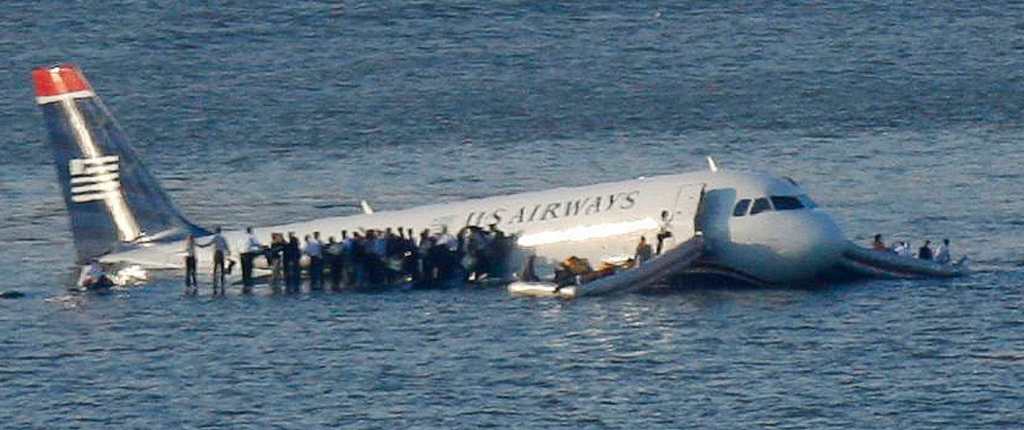
In 2009, Captain Chesley Sully remarkably landed an Airbus A320 on the Hudson River in New York after the plane hit a flock of birds, causing engine failure. His handling of the plane in such a crisis is considered the most successful emergency landing in aviation history. This is what he said: “There’s simply no substitute for experience in terms of aviation safety”. Elsewhere, Captain Sully said: “It always boils down to leadership”. The best pilot in aviation history did not talk about the technical manoeuvres and solutions they took but rather the importance of his team on that Airbus flight. To land this plane, we need a team of great depth, integrity and courage. Experience matters.
Ensure that your instruments and data are accurate
To change the growth trajectory of this country, we will need to have accurate information on what is happening in economic terms (flows of goods as well as currency flows). Such detailed information is relevant for monetary and fiscal policy if we are to effect successful reforms. By understanding how fast currency is circulating, the Reserve Bank will be able to put the brakes on the creation of money which is contributing to high inflation. Similarly, setting a market-determined exchange rate requires information on forex flows that are currently occurring off the radar. Without accurate information on what is really happening in commodity markets, policy acts as a blunt instrument. It is like flying in the dark with poor vision. Information matters.
Send clear signals to others who can help
Flying through the economic storm, the technical team will have to send strong, clear signals to the Air Traffic Control Tower (ATCT). Air traffic controllers use signals from the plane to coordinate and guide take-off, landing and other airport operations.
In the context of trying to stabilise the economy, we could compare the International Monetary Fund (IMF) to the control tower. The IMF cannot pilot the plane for us, but they can help to stabilise the aircraft as it approaches landing by giving financial assistance for the national reform programme. In the same way, a plane needs ATCT during a bad storm, we need the IMF to help navigate the next few years.
As with any institution, the IMF has its rules and regulations that apply to member countries. The new administration will need to send clear signals that Malawi is ready to undertake a serious reform programme and that our leadership is committed to a plan that will include, among others, cutting wasteful spending and restructuring public debt. Unless our behaviour is in line with the established norms, we will not get another IMF programme and our plans will fail. Financial assistance matters.
Engage and attract private investors
Once we have landed, we will need to quickly turn to putting the economy on a sustainable growth path. That is a big task, that will require team work, drawing upon talent from across the board—public sector, private sector and external experts. We should learn from what other countries have done in similar situations and do it better.
One thing successful countries do in Africa is to attract foreign investment. We do not have enough capital to boost this economy on our own. We need several billions of dollars flowing into Malawi into various sectors—agriculture, mining, manufacturing and tourism. This is only possible if we learn how to work well with potential investors.
A lesson from East Africa
One country in Africa has mastered the art of attracting investors. Last year, I travelled to that country six times as part of my work. The country is small and landlocked with few resources and high population density like ours. In 1994, its economic prospects were very poor due to a deep national crisis and a highly fractured society. It looked like a hopeless case. Today, that country is flying high, in part because it knows how to attract international investors and to keep them coming back. Its capital city is clean, orderly and digitally enabled.
Of course, it is Rwanda (see table)—the country of a thousand hills and strong leadership. The government of Rwanda convinced my employer, Mastercard Foundation, to move its head office from Toronto in Canada to Kigali and many others have followed. Rwanda has strong, intelligent, savvy leadership and the government works like a well-oiled machine when it comes to attracting investors. The main lesson is that you can get out of even the worst national crisis, but it requires unwavering leadership focus, commitment to the national interest, and a dedicated technical team in the cockpit beside the chief pilot. That is how to land amidst the perfect storm. Leadership matters most!
*Taz Chaponda is a senior economist who has worked for Mastercard Foundation, the IMF and the World Bank. He was budget director in South Africa and the managing director for Malawi Agriculture and Industrial Investment Corporation. He has degrees from Harvard University and the University of Oxford, and an MBA from INSEAD Business School