Malawi and the US on Wednesday signed a memorandum of understanding (MoU) for a five-year $936 million (K1.6 trillion) bilateral health cooperation which initially raised eyebrows over a clause that threatened data protection.
In an announcement on its website, the US Department of State said under the deal whose deadline was December 31 2025, the US intends to provide up to $792 million (about K1.3 trillion) over the next five years to support Malawi’s efforts to combat HIV and Aids, malaria and other infectious diseases. The package also includes a component to bolster disease surveillance and outbreak response.

On the other hand, Malawi will have to increase its overall annual health spending by $143.8 million (about K251.8 billion) during the lifespan of the MoU in an arrangement meant to set a new course for national ownership, co-investment and measurable results.
But the announcement has not included any details on data protection concerns raised locally. However, it confirms earlier indications that the money will go directly to the government, with no direct access for non-governmental organisations (NGOs).
Reads the statement in part: “The MoU is designed to leverage Malawi’s significant progress in addressing the HIV and Aids epidemic, supporting the country’s commitment to maintaining its 95-95-95 goals for epidemic control through sustainable, integrated service delivery approaches that the government will self-maintain after the MoU concludes.
“The MoU marks a critical shift away from parallel NGO delivery systems and the healthcare workforce structures they created, restoring responsibility for those resources to the national government.”
Under the new approach, the statement said Malawi will co-invest in a comprehensive range of health priorities, including HIV and Aids, tuberculosis, malaria, maternal and child health, polio and global health security while supporting cutting-edge solutions such as digitalisation to reach rural populations.
“This MoU will put Malawi on a path toward a more durable, responsive and sustainable Malawian health system while ensuring Americans are protected from global health threats,” adds the announcement.
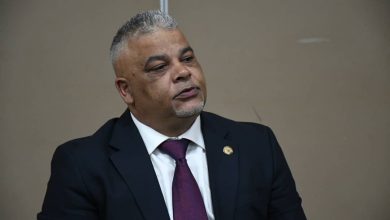
In an interview yesterday, Parliamentary Committee on Health chairperson Anthony Masamba said they hope that the issues raised on data sharing, including pathogen information have been included in the MoU.
The committee had advised government to protect data sovereignty, demand co-authorship, data use agreements that protect intellectual property (IP), guaranteed technology transfer and ring-fenced funding for Malawi’s laboratories and data stewardship.
Masamba said if the issues have not been included, they will continue talking to government, but indicated that the money was needed to help a sector which mostly depends on donor funding.
On his part, Centre for Human Rights and Rehabilitation executive director Michael Kaiyatsa, whose institution was part of the 57 NGOs in Africa that protested the deals, said at face value, the stated objective of building a more resilient and self-reliant health system in Malawi is commendable.
However, he said large-scale financing arrangements that reshape health systems, data infrastructure and governance responsibilities carry long-term implications for sovereignty, accountability and human rights.
“The lack of public access to the MoU is troubling, particularly given that issues of health data and pathogen sharing are inherently sensitive. Secrecy in this context fuels speculation and mistrust,” he said.
On the other hand, Malawi Civil Society Advocacy Forum chairperson Gift Trapence faulted government on the deal, saying the MoU was written without civil society consultation.
International Coalition on Health Financing Advocacy chairperson Maziko Matemba noted that for over 30 years, NGOs have successfully complemented government efforts in health service delivery.
By press time at 8pm yesterday, Minister of Health and Sanitation Madalitso Chidumu Baloyi had not yet responded to our questions, but assured last week that government had engaged in consultation in dealing with the raised concerns.