
A recent Afrobarometer survey shows a strong majority of Malawians want the government to guarantee healthcare for every citizen even if that requires higher taxes.
The poll, Africa’s Health Systems Amid Global Aid Contraction’ released last Friday, show that support is stronger across the continent averaging 70 percent with Gabon and Senegal reaching as high as 89 and 88 percent respectively.
The survey signalled a pivotal shift in national priorities amid rising medical costs and strained public health facilities indicating that 62 percent of respondents in Malawi prioritise universal healthcare access over keeping taxes low.
On the other hand, around 36 percent of Malawians strongly oppose the government providing health care for all even if it means higher taxes with 2 percent undecided.
The survey, based on 45 600 interviews across 38 African countries, says health ranks as the most important problem Africans want their governments to address, overtaking unemployment at the top of citizens’ policy agenda for the first time in at least a decade.
About 85 percent of Malawians report they or a family member worry about their ability to obtain and afford needed medical care.
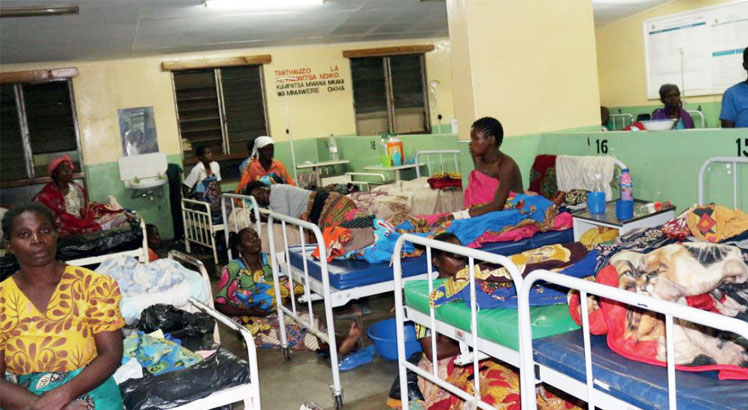
The survey further show that Malawians are struggling to access public health services with 81 percent of respondents who visited public health facilities stating that they found no medicines and same percent of patients also experienced long wait times in public hospitals.
Further, it flags geographical disparities in health care access on the continent with 71 percent of the urban residents live within walking distance of a health clinic, but only 30 percent of rural residents have same access, translating into a 41 percentage point gap, one of the largest among the 38 countries surveyed in the report.
The survey said United States Agency for International Development (Usaid) withdrawal of aid has put a threat to 65 percent of healthcare for countries like Malawi with TB and HIV set to suffer, pointing to a looming crisis.
On health insurance or medical aid, which is critical as it protects households from catastrophic out-of-pocket health expenses through pooling risk and spreading costs across members, Malawi remains the least in medical coverage with only four percent of the population insured while the rest resort to out of pocket payments for their healthcare needs
“Health insurance coverage drops into the single digits in 15 of the 36 countries. In Lesotho, Sierra Leone, Malawi, Uganda, and São Tomé and Príncipe, fewer than one in 20 respondents say they have medical aid. The continental picture is thus one of extreme health-financing vulnerability.
“With most households relying on out-of-pocket payments, illness is a potential financial shock, underscoring an urgent need for more inclusive and better-funded health-insurance systems across Africa,” reads part of the report.
In an interview yesterday, Kamuzu College of Health Sciences (Kuhes) epidemiology professor Adamson Muula said the survey points to areas that require urgent attention.
He said the withdrawal of aid by multilateral donors has put a strain on health financing calling on government to explore other funding options.
“Malawi’s health budget is second highest to agriculture, an indication that there is political will. We need to wait and see, citizens are complaining about taxes have been introduced.
“Some of the money are supposed to cover the gap that has been left by withdrawal of aid. The country is on track in attainment of universal health coverage, but efforts have to increase and coordination is key,” said Muula.
Reacting to the findings in an interview yesterday, Parliamentary Committee on Health chairperson Anthony Masamba said the results are a true reflection of the situation on the ground.
He said the health sector relies heavily on donors, but the withdrawal of Usaid support should compel government to implement the national health financing strategy which provides ways of scaling up domestic resource mobilisation.
He suggested charging of taxation on certain products to help fund healthcare to cover the desire for universal health coverage desire.
“We need to ensure some of the drugs are purchased by ourselves, otherwise depending on donors for our healthcare will not take us far. The K5 billion Constituency Development Fund will ease gaps in healthcare that the country is experiencing as highlighted in the report,” he said
Health rights activist Maziko Matemba said the findings call for improved infrastructure and means to address funding gaps.
“These findings are a wake up for government and authorities to implement the suggested health services reforms. We need home grown solutions, including a decentralized healthcare,” he said.
Minister of Health Madalitso Baloyi did not respond to our questionnaire regarding efforts being undertaken to increase healthcare coverage in the country.
In the 2026/27 national budget, K1.02 trillion was allocated to the health sector, up from K764 billion in the previous financial year
Under the Health Sector Strategic Plan III covering the period 2023-2030, Malawi targets to improve access to health services by increasing the percentage of health facilities providing minimum quality of care standards from 39 percent in 2019 to 75 percent in 2030.