PressCane Limited has embarked on an ambitious countdown to close nine small ponds dug to lessen perennial spills by Friday in a make-up exercise that has cost up to K1 billion.
The imminent closure of the secondary ponds that empty nine bigger ones was one of the six things the Malawi Environmental Protection Authority (Mepa) ordered the ethanol producer to do following waste spills that polluted land, air and water in Dyeratu, Chikwawa District.
Mepa closed the company in January this year, ordering it to clean up, assess the damage and compensate affected communities.
There were similar orders from the National Water Resources Authority (NWRA) which imposed a K40 million fine on the ethanol distillery.
In an interview during a visit to Dyeratu yesterday, PressCane Limited chief executive officer Bryson Mkhomaanthu said the company has complied with all 12 orders by NWRA and they were remaining with one of six actions on compensation as directed by Mepa.
He said: “In terms of compliance issues, by today, we have achieved 12 out of 12 for NWRA and we have written them to come and inspect.
“However, we are six out of seven with Mepa because assessments for compensations are not in our hands. They are being done by Chikwawa District Council in collaboration with relevant ministries and agencies.”
Mkhomaanthu said the company has spent over K1 billion to fix the burst ponds and effects of the spill that scorched trees, grass and other vegetation in neighbouring areas.
During a visit in February, Lauji was a village in mourning when the blackish waste swamped surrounding homes and the environment.
The tragedy left Patrick Guta and his daughter, Christina, shattered, as the tar-like overflow from the mother pond—the largest of nine on site—polluted their homestead and left nearby potatoes wilting.
The Gutas lamented that they hoped the tubers would help lessen hunger.
However, yesterday the Gutas could afford a smile as the root crop is sprouting, with a green canopy all over the field the size of a netball ground.
Today, the leafy potato field ushers visitors into a clustered settlement where vegetation scorched by the highly acidic spill is getting green again.
“As our potatoes, grasslands and shrubs get green again, we have hope that the pollution is getting less hazardous to our lives. Also, Chikwawa District Council sent a team that came to assess the damage. We are just waiting for PressCane to compensate us anytime,” said Christina.
The disappearing wastewater has restored hope for an end to perennial spills in the clustered village.
The Gutas and their neighbours recall the ethanol company dispatching a team to pump the stagnant pools of wastewater and apply sand and grey soils in polluted homesteads.
At the waste management facility, environmental scientist Samson Mphande was deployed to ensure the ponds do not spill again—at least until the last one is decommissioned.
The consultant and his team have separated the ponds that once poured into the mother of them, which often flooded into the village. The eight ponds no longer pour into the excavation adjacent to the settlement.
PressCane granted The Nation access to the effluent ponds to see the work done since authorities weighed in.
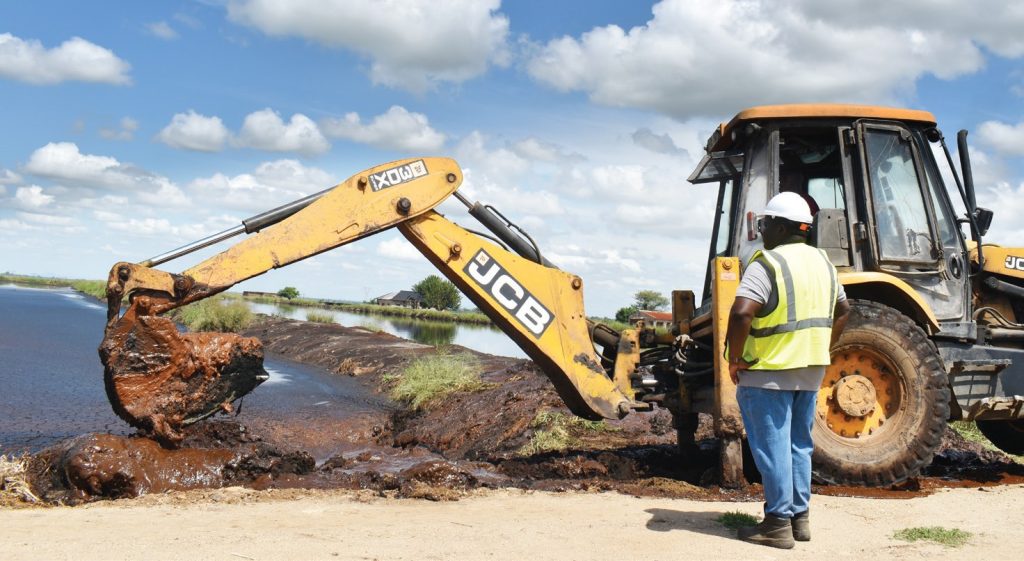
During the visit, we saw an excavator scooping drying sludge from a main pond to a sealed backup where a newly procured composting machine was mixing and chipping the waste to fine manure, said to be rich in potassium and nitrogen.
Mphande said about 100 workers will package the compost for sale to tea companies, orchards and other plantations, with the potential to produce 230 400, totalling K23.04 billion if sold at K100 000 each.
A first since PressCane’s inception 21 years ago, composting is not just a quick fix as the company plans to open its K10 billion factory to turn the waste into organic fertiliser.
It opens a business opportunity to turn the environmental hazard into what Mphande calls “a goldmine” and create jobs for local communities.
This pathway comes as the ethanol producer is racing against time to seal the secondary ponds before the next rainy season and the large ones within three years.
“This is pure gold,” says Mphande. “Industrial waste is money. This sludge is rich in nutrients that crops need for good harvests. We are talking about over K23 billion from one pond and this is not the largest.”
Mkhomaanthu said the company promptly responded to the spill induced by rainstorms that caused flooding in Chikwawa. He added that heavy rains also helped to wash away the residues of the stuff that polluted the environment.
He said the company was on track to decommission the secondary ponds by Friday, April 17.
PressCane coughed up K164 million in pay-outs for last year’s spill that polluted rice fields totalling about 1000 hectares.
In an interview, Chikwawa district agriculture development officer Isaac Ali, who leads the community engagement committee, said the council has listed about 2 400 farmers to get compensated for partial or total loss of crops on their polluted fields.
“This is just a figure from the agriculture cluster and 80 percent are rice farmers who own small plots in the polluted lowlands. I also received reports from the lands, housing and environmental clusters, which have been forwarded to Mepa so that PresCane can make the payouts,” he said.
Mepa ordered PressCane to make payouts by March 17, but assessments were delayed due to heavy rains that made the low-lying area inaccessible to a team of about 30 ass essors last month.
Other assessments will be undertaken by the Ministry of Health, the Malawi Bureau of Standards and soil scientists.