Malawi’s fiscal position came under renewed scrutiny yesterday, with the World Bank warning that rising public spending, mounting public debt and persistent foreign exchange distortions are pushing the economy towards deeper instability.
The Malawi Public Finance Review 2025 unveiled in Lilongwe yesterday by World Bank senior economist Jakob Engel shows that widening fiscal and external imbalances combined with repeated shocks since 2019 have entrenched the country’s “most severe crisis in recent history”.
He warned that persistent foreign exchange distortions, particularly fuel subsidies and losses from the Reserve Bank of Malawi’s foreign exchange operations, are adding hidden liabilities to the public sector.

He said: “Misaligned exchange-rate practices have weakened export competitiveness while reducing Malawi’s resilience to shocks. These distortions come at a large cost to taxpayers.”
Engel said Malawi still has an opportunity to reverse course if reforms are sustained, saying: “With realism and partnership, Malawi can place itself on a path to stability, resilience and inclusive growth.”
In his remarks, World Bank country manager Firas Raad said rigid expenditures consume roughly 80 percent of domestic revenue, with interest payments alone crowding out investment in growth-enhancing sectors.
He said the public wage bill has also expanded, rising from below three percent of gross domestic product (GDP) in the early 2000s to at least six percent in 2024, adding that the fiscal equation remains “out of balance”.
Raad said the rise in recurrent costs has compressed the resources available for programmes that support productivity and poverty reduction.
“Restoring stability requires hard choices, transparency and strong parliamentary oversight,” he said, adding that consolidation must protect low-income households through targeted transfers,” he said.
The review titled ‘Restoring stability, rebuilding trust’, shows that total government expenditure has doubled over the past decade from 16 percent of GDP in 2011/12 fiscal year to more than 30 percent of GDP in 2024/25.
The review has outlined a targeted mix of reforms that could deliver savings of between 2.6 percent and 12.5 percent of GDP through improved procurement, tighter wage controls, realistic budget execution and stronger public financial management.
It highlights growing vulnerabilities within State-owned enterprises, especially in the energy and water sectors.
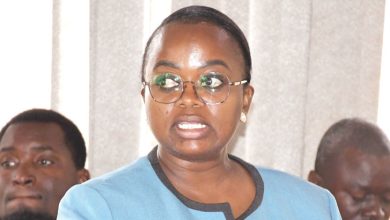
During a panel discussion, one of the panellists, Economics Association of Malawi president Bertha Bangara-Chikadza said Malawi’s core challenge is not excessive spending, but weak enforcement.
“Malawi does not have a spending problem, it has a fiscal discipline problem,” she said, urging authorities to broaden the tax base to capture more economic activity outside the formal sector.
University of Malawi Associate Professor of economics Winford Masanjala argued that the National Budget should be treated as a binding legal instrument.
“People who violate the budget should be penalised in the same way that people who break the penal code,” he said.
Development practitioner and governance expert Lingalireni Mihowa urged government to prioritise spending that improves livelihoods, adding that Malawians expected policies that would shift household welfare.
Despite the grim assessment, the review outlines two reform scenarios, one gradual and one ambitious, suggesting that additional revenue equivalent to 4.1 to 6.5 percent of GDP could be mobilised through value added tax rationalisation, narrowing exemptions, modernising tax administration and expanding property taxation.