Malawi Confederation of Chambers of Commerce and Industry (MCCCI) says the private sector continues to face challenges to access foreign exchange despite government reducing the mandatory surrender requirement to 25 percent from 30 percent for applicable exporters.
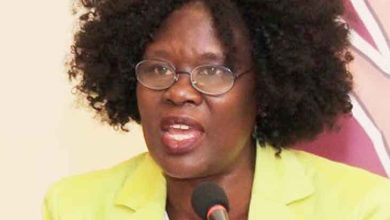
Presenting the private sector ‘s2026/27 National Budget input at the final leg of pre-budget consultations in Blantyre on Wednesday, MCCCI chief executive officer Daisy Kambalame said there is need to revise it further down and prioritise sectors that generate foreign exchange because firms are still struggling to produce at full capacity.

She said: “Most businesses reported to have been producing below their capacity and improving the business environment is key to the country’s economic recovery.
“In 2025, 51.9 percent of the firms reported a capacity utilisation of below 50 percent with 37 percent of the businesses reported a utilisation rate higher than 50 percent, but lower than 75 percent. Only 11.1 percent reported a utilisation rate of above 75.”
Kambalame urged government to prioritise fostering growth in the manufacturing sector in the 2026/27 National Budget, saying this will reduce dependence on imports, expand a solid export base and ultimately ease pressure on foreign exchange reserves.
She said focus now should be on high-value products such as pharmaceuticals as the sector only has four main companies and their limited output meets only a small portion of national needs, resulting in heavy reliance on imports.
Kambalame said as Malawi imports over 90 percent of fertilisers or 430 000 metric tonnes per year, supporting fertiliser production can also ease the cost and scarcity of the commodity, cut import costs, enhance agricultural productivity and boost food security.
The chamber has also proposed a cut in the excise duty on locally produced fruit wines from 95 percent to 10 percent to stimulate the growth of this emerging industry. It also proposed a review of 20 percent sewer charges for bottling manufacturing companies, whose operations of up to 70 percent depend heavily on water.
The private sector lobby group further proposed a reduction of excise tax on spirits beverages from 110 percent to 60 percent to curb smuggling.
In reaction, Minister of Finance, Economic Planning and Decentralisation Joseph Mwanamvekha announced a crackdown on the illegal forex market, which he says has worsened foreign exchange crisis.
He said that while he knows a few firms engaged in the malpractice, he would rather have them stop than being forced to close down their operations.
Mwanamvekha said while the forex reserves situation is improving, addressing the gap between parallel and official market will be critical.
He said: “With the official rate at K1 751 against K3 600 on the black market, the gap is huge and has to be addressed.
“Reserves are improving and slowly people will be able to access forex in the banks. There is no reason why people should be queuing for months just to get forex.”
The minister said the forthcoming budget will be anchored on the Malawi 2063 First 10-Year Implementation Plan and the National Economic Recovery Plan, with continued prioritisation of economic stabilisation and investment in key productive sectors of agriculture, tourism, mining and manufacturing.
During the opening of the 2026/27 Pre-budget Consultations Meetings in Lilongwe last Friday, economists and groups called for a realistic budget, control spending and focus on key social programmes, warning that wishful thinking could keep the economy weak.