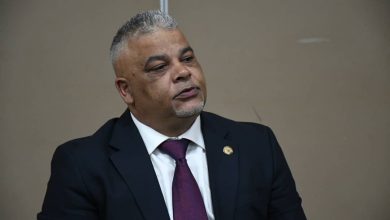
Minister of Finance, Economic Planning and Decentralisation Joseph Mwanamvekha has defended new tax measures introduced in the 2025/26 Mid-Year Budget Review, saying they were adopted after careful consideration.
In his 2025/26 Winding Up Statement on Mid-Year Budget Review Statement in Parliament on Monday, he said Treasury has been deliberate to ensure that those with a higher ability to pay should contribute more towards rebuilding the economy.
In his 2025/26 Mid-Year Budget Statement, Mwanamvekha removed the 25 percent tax band on Pay As You Earn (Paye) with incomes between K170 000 and K1.57 million now attracting 30 percent tax, those up to K10 million will be taxed at 35 percent while a new 40 percent tax rate applies beyond that threshold.
The minister also increased the value added tax (VAT) rate from 16.5 percent to 17.5 percent, introduced a 0.05 percent bank transfer levy to be applied on all bank transfers and another 0.05 percent mobile money levy on mobile money transfers of above K100 000 to be paid by the sender.
Mwanamvekha also announced downward revision of corporate income tax for companies earning “supernormal” profits from K10 billion to K5 billion.
“We remain committed to continuous dialogue with all stakeholders as we implement these measures and we will monitor the impact closely to ensure that these reforms achieve their intended objectives without undermining business confidence or economic activity,” he said.

Mwanamvekha said it was not correct that the revised Paye structure will disproportionately affect low-income earners, stressing that those earning less are better off than they were in the previous tax regime.
On the increased VAT, he said tightening corporate taxation and restructuring of Paye are meant to contain a widening fiscal deficit projected at K3.1 trillion this fiscal year that ends on March 31 2025.
Mwanamvekha also highlighted that the move to reduce the threshold for supernormal profit tax will be subject to revision once the economic situation improves.
Centre for Social Concern economic governance officer Agness Nyirongo said in an interview yesterday that for Malawi to balance revenue mobilisation with social protection, tax reforms should be accompanied by deliberate efforts to lower inflation, stabilise the kwacha, strengthen food security and create jobs.
She ssaid without such interventions, ordinary Malawians, especially low-income earners, will continue to face intensified economic hardship.
In its analysis of the 2025/26 Mid-Year Budget Review, the Economics Association of Malawi noted that while proposed tax and non-tax reforms are expected to increase revenue, they could also spark unintended economic pressures, necessitating critical trade-offs during budget implementation.
Reads the analysis in part: “Therefore, the government must rigorously implement these reforms and exercise prudent management of public resources.”
Ecama argued that raising the Paye threshold could reduce revenue as collections only reached 96 percent of the 2024/25 fiscal year mainly due to the expanded zero-Paye bracket although rates for middle and high-income earners could partially offset this shortfall.
Ecama further observed that all things being equal, the increase in VAT rate is expected to increase VAT revenues by six percent, but it could be inflationary if companies pass on the tax increase to consumers, thereby reducing households’ purchasing power.
Meanwhile, domestic revenue and grants are projected at K5.46 trillion, a drop from K5.78 trillion amid revenues underperforming by 43 percent and grants by 12 percent by mid-year.
Parliament passed the K8.589 trillion revised budget on Monday.