
Minister of Finance, Economic Planning and Decentralisation Joseph Mwanamvekha yesterday wound up debate on the proposed K10.9 trillion 2026/27 National Budget with a warning that accommodating recommendations from parliamentary cluster committees could derail the fiscal framework
In his winding up speech in Parliament on the 2026/27 fiscal plan set to roll out on April 1, the minister said additional resource requests from the committees amounted to K2.3 trillion, equivalent to 7.2 percent of gross domestic product (GDP).

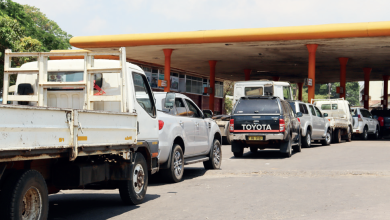
16.2 percent of GDP. | Nation
He warned that wholesale adoption of the requests could push the deficit from about nine percent to 16.2 percent of GDP.
“Assuming these requests are considered to the full extent, the deficit would grow to 16.2 percent of GDP and will frustrate all the efforts we are trying to undertake to recover the economy,” he said.
On macroeconomic management, he stressed the need for coordinated fiscal and monetary policy to stabilise the economy, particularly in the face of inflationary pressures driven by high money supply growth, persistent deficits and foreign exchange shortages.
“Government is implementing coordinated fiscal, monetary and external sector reforms to gradually reduce inflation, restore macroeconomic stability and support sustainable and inclusive growth,” said Mwanamvekha.
He also addressed concerns that new levies, particularly on financial transactions, could undermine financial inclusion.
“Government recognises the importance of a vibrant and inclusive financial sector and will continue to carefully balance revenue mobilisation with financial inclusion objectives,” said Mwanamvekha, adding that authorities would monitor the impact of such measures to ensure they do not discourage participation in the formal financial system.
The minister maintained that revenue growth projections are anchored not on raising taxes alone, but on improving efficiency, strengthening compliance and sealing leakages in the system.
Mwanamvekha delivered his final response after contributions from UTM Party spokesperson on finance in Parliament Felix Njawala, who broadly supported the need for fiscal discipline while cautioning on implementation risks.
He urged Parliament to back the minister’s efforts to contain borrowing, arguing that the country must avoid widening deficits.
“We have to manage our budget with small deficits,” said Njawala.
He described the budget as incremental, noting that spending ceilings imposed on ministries would inevitably create trade-offs, leaving some votes underfunded in favour of priority sectors.
While backing the expansion of the Constituency Development Fund (CDF) as a driver of local development, Mwanza central legislator warned of risks, including potential abuse of resources and fragmentation of spending.
Njawala further called for greater focus on high-impact sectors such as irrigation, mining and foreign exchange management, arguing that growth depends on strengthening productive capacity and improving forex allocation.
The winding up of the debate on the budget followed a decision by Parliament last week to shorten debate on the budget from the prescribed 10 days to five, compressing deliberations on the fiscal framework.
The debate opened with reactions from the Malawi Congress Party and the Budget and Finance Committee of Parliament, which flagged risks around revenue projections, debt sustainability and expenditure pressures.
These were followed by detailed inputs from cluster committees, which scrutinised allocations across ministries, departments and agencies.
As Parliament is now is the Committee of Supply, the debate has laid bare the central tension facing fiscal policy: balancing consolidation with development demands in an economy constrained by debt, forex shortages and limited fiscal space.