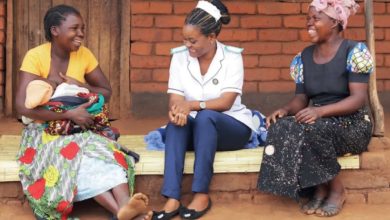
Mary Thomson and her husband, Kanjala, have lost their income amid changing witchdoctors, but their firstborn’s suffering has not changed.
Since 2011, Ethel, 15, was frequently bedridden with severe blood shortage, high fever, stomach pains and swollen joints.

The parents, from Simon Village in Neno, did not know their daughter had sickle cell, a genetic disorder that affects 38 000 Malawians, according to the Ministry of Health.
Thomson switched to witchdoctors as the nearest health centre—Lisungwi—offered little relief for the girl’s condition, except malaria drugs and blood transfusions.
“They couldn’t pinpoint any serious problem, so she would be on the sickbed a week after seeking medical assistance,” she recalls.
Her 14-year-old son Chimwemwe experienced similar symptoms in 2012, doubling the cost of care and hospital trips.
“It wasn’t easy,” she says. “Ethel could be admitted on Monday and discharged on Tuesday. On arrival home, I would be back in the hospital with Chimwemwe.”
The burden persisted until 2017, when tests at Neno District Hospital confirmed that the pair was suffering from sickle cell disease.
In the meantime, the couple wasted their earnings on witch doctors.
“I had almost given up. We suspected someone was bewitching our children as they couldn’t spread the disease to others,” Thomson narrates.
However, the herbalists failed to lift the spell or heal the children.
“The witchdoctors gave us different concoctions, promising that our children would get better, but nothing worked out,” Thomson recounts.
Money vanished
In 2016, the couple sold five bags of cowpeas and two goats to pay witchdoctors who offered no cure.
“We changed witchdoctors, but always returned home without a solution,” says the mother.
The children’s situation kept deteriorating until they were admitted to Neno District Hospital.
“We were in danger of losing our children, so it was a huge relief when tests showed that Ethel and Chimwemwe had sickle cell anaemia,” says Thomson.
Clinician Henderson Masanjala says non-communicable diseases (NCDs)like sickle cell have become silent killers due to delayed detection and treatment, fuelled by low awareness
He works with Partners in Health (PIH)which supports the government to deliver quality healthcare and lifesaving information, including tips on sickle cell disease.
Currently, PIH conducts sickle cell tests that have helped debunk the agony of Thomson’s children.
It provides test kits and initiates the screening of all potential cases visiting the hospital.
“We shouldn’t just give people treatment based on what they say, but conduct tests to rule out other related diseases,” says Masanjala.
The tests guarantee sickle cell patients like Ethel and Chimwemwe an accurate diagnosis and timely treatment.
“Previously, such children were receiving malaria drugs based on their symptoms, but their conditions kept deteriorating. When they came to the district hospital, their health history and scans revealed that they had sickle cell anaemia,” says Masanjala.
Thomson’s children are back in school and dreaming of becoming healthcare workers to serve their rural locality under Traditional Authority Simon
The World Health Organisation estimates that sickle cell disease affects 7.74 million people and Africa accounts for almost 5.8 million cases.
However, a study conducted in Malawi showed that 3.1 percent of admitted children below 12 have sickle cell disease.
NCD coordinator Bellings Mzungu says the district has about 29 known sickle cell patients on care.
Children inherit the condition from their parents with the trait in their genes. The genetic disorder affects red blood cells that carry oxygen to all organs, making them rigid, fragile and shaped like a sickle.
However, low awareness means that some people die without knowing their condition.
“Malawi doesn’t have a definitive cure for sickle cell disease, but we provide symptom control treatment to alleviate problems,” Mzungu says.