As Malawi faces a rising suicide rate, psychologists and human rights advocates are calling out Section 229 of the Penal Code for criminalising attempted self-harm.
Under this law, anyone who survives a suicide attempt can be jailed for up to two years—regardless of the personal crisis that drove them to the brink.
In 2022, the High Court of Malawi underscored how punitive sentencing ignores legal safeguards. Judge Bruno Kalemba overturned an 18-month term, noting that courts must first consider non-custodial alternatives before handing down prison time.
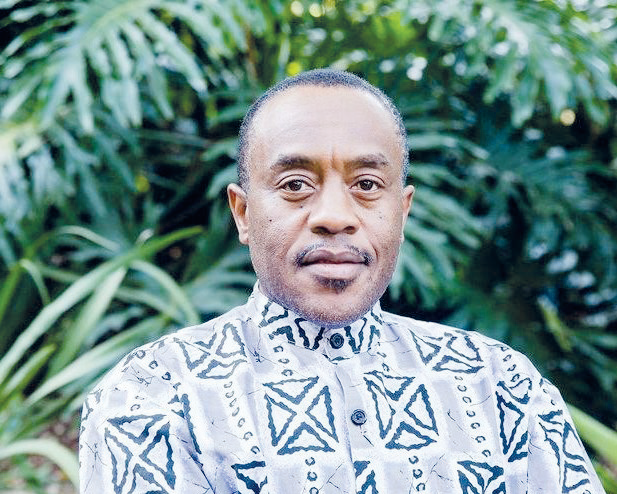
an approach to take
care of a person’s cry
for help. I Nation
National Police spokesperson Peter Kalaya on Thursday said the law enforcers were working on compiling most recent suicide statistics.
However, between January and March 2025, police official statistics show that 153 people committed suicide, an increase from 126 in the corresponding period the preceding year—with males the most affected.
National Police information shows that the most affected age group is between 20 and 39 years, with reasons bordering on marital disputes, drug and substance abuse and unsettled debts, among others.
But while arguing that criminalising suicide does not deter others from committing the act, human rights advocates and psychologists state that such individuals need compassion and support.
In a written response on Thursday, Centre for Human Rights and Rehabilitation executive director Michael Kaiyatsa said from a human rights perspective, criminalising attempted suicide raises serious concerns.
He said: “People who attempt to take their own lives are often in deep psychological distress and need care, not punishment. Treating such individuals as criminals risks further harming them and discouraging others from seeking help due to fear of legal consequences and stigma.”
Kaiyatsa said the argument that decriminalising attempted suicide could lead to an increase in suicide cases is not supported by evidence.
“Experiences from countries that have decriminalised attempted suicide, such as Ghana, Kenya and India, show that this is typically not the case,” he said.
Kaiyatsa further said decriminalising suicide will also help to reduce the stigma associated with mental health struggles.
On July 2 2025, President Lazarus Chakwera assented to the Mental Health Bill (2025), which replaced the Mental Treatment Act (1948), which among others, recognise suicide as a mental health and decriminalise it.
Parliament’s Legal Affairs Committee had recommended that the offence be repealed.
Kaiyatsa said if the law is to be amended, it would be important that such a move be accompanied by investment in mental health services and community awareness programmes.
Kamuzu University of Health Sciences clinical psychologist Chiwoza Bandaweon Thursday said the current suicide surge is dire. He said people often commit suicide because they do not receive the help they need as they struggle to come out in the open.
He said: “We really need to take an approach that takes care of the person in his cry for help. Criminalisation of attempted suicide is a medical legal approach to handling the situation.
“What the new Mental Health Act does is it looks at a patient from a human rights perspective; it takes care of the patient which is very important.”
Centre for Human Rights Education, Advice and Assistance executive director Victor Mhango in an interview on Thursday said: “Actually, the Mental Health Act will promote counseling as people will embrace suicidal thoughts as a mental condition, not a sign of weakness and reduce death by suicide.”
In 2022, the High Court of Malawi in a ruling by Judge Bruno Kalemba described as excessive, an 18–month prison sentence for Yakilini Chinsepo, who was sentenced by the First Grade Magistrate’s Court in Lilongwe after being found guilty of attempted suicide at his own plea.
His sentence was subsequently reversed. Chinsepo attempted suicide due to challenges he was facing at his workplace.
A copy of the ruling on judicial review number 13 of 2022, being criminal case number 581 of 2022, faulted the lower court for passing the sentence without making other considerations, citing provisions of Section 340 of the Criminal Procedure and Evidence Code.
“It is wrong to sentence a person, against whom no previous conviction is proved, to undergo imprisonment unless it appears to the court, on good grounds (which ought to be set out in the record), that there are no other suitable ways of dealing with him,” reads part of the ruling.
“The record does not show that the magistrate considered these sections, and it seems to me that had the magistrate done so the court below would have reached the conclusion that there were other appropriate means of dealing with the accused person.”
Southern Africa Litigation Centre’s (Salc) Vivian Kasunda and Violet Kanyimbiri in an October 10 2024 published an opinion, argued that lessons need to be learnt from the Chinsepo ruling; hence, stressed the need for decriminalising suicide.
They argued that decriminalising suicide aligns with international human rights standards, in particular, Article 3 of the Universal Declaration of Human Rights and Article 6 of the International Covenant on Civil and Political Rights.
“Criminalising, however, violates these rights by denying access to medical care and support as well as perpetuating stigma and discrimination.
“It is important to remember that Malawi has ratified both these international treaties and has, therefore, demonstrated its commitment to upholding human rights and the rule of law,” reads part of the opinion.
World Health Organisation (WHO) regards suicide as a public health problem that effectively requires a public health response and that with timely, evidence-based and often low-cost interventions, suicides can be prevented.