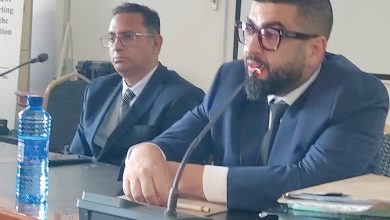
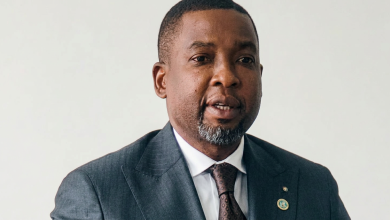
Minister of Finance, Economic Planning and Decentralisation Joseph Mwanamvekha yesterday refused to commit on when the National Economic Recovery Plan (Nerp) is expected to stabilise the country’s ailing economy.
Asked during pre-budget consultations in Mzuzu as to when Malawians can expect tangible relief from rising prices, weak incomes and persistent shortages of some goods and services, the minister could not tell.

short while. | Joseph Mwale
He, however, said some positives are already evident, including falling prices of maize and cement, among others.
Mwanamvekha also said Nerp will stabilise the economy, restore confidence and accelerate inclusive growth through prioritised evidence-based interventions that strengthen productivity, job creation and fiscal sustainability.
He said: “We will make the tough decisions because we think it’s necessary. You need to know that you need to suffer in a short while for good things to come in future. When? We have already started doing it.
“But how we maintain it, it depends on a number of factors. Some of them are external. Tomorrow we could have a disaster which we can’t predict. But there’s that commitment that we address it as soon as possible.”
The minister’s position comes against a backdrop of sustained macroeconomic stress.
Inflation currently stands at 27.9 percent, while the official exchange rate is at K1 751 to the United States dollar, compared to a parallel market rate of about K3 800, down from around K4 500 before the September 2025 General Election.
Interest rates remain punitive; with Malawi recording one of the widest interest spreads in the region. Lending rates hover at about 37.4 percent, while deposit rates average 4.7 percent, discouraging savings and choking private investment.
Growth prospects also remain subdued.
Treasury projects economic growth of 2.7 percent in 2026, which is 3.3 percentage points below the six percent threshold required to transition Malawi to a middle-income economy by 2030.
Mwanamvekha dismissed calls from delegates to the pre-budget consultation, including the Church and Society of the CCAP Synod of Livingstonia and civil society, to reduce taxes such as value added tax (VAT).
The minister doubled down on his earlier statement made at a similar meeting in Lilongwe on Friday that it would be counterintuitive to reverse the taxes, noting that this was the “bitter pill” Malawians have to swallow to guarantee economic stability
“We already have too many subsidies in areas of health, education and agriculture. What I am asking is that all the relevant stakeholders need to take a part. Everyone has to participate in order to address the challenge.
“It requires all of us to work together and address [the challenges]. As I have said, it can be painful in some cases. At times, you have to make those necessary decisions. Not out of bad intentions, but for the purpose of addressing the challenge that we have,” he said.
He further said the national budget continues to face significant pressure emanating from statutory expenditures, notably wages and salaries, interest payments and pension obligations, including gratuities, which account for more than 90 percent of domestic revenue.
Malawi’s total public debt stands at K22.4 trillion, with 55 percent of it being domestic borrowing.
The heavy reliance on domestic debt has sharply increased interest payment obligations, which are estimated at K2.27 trillion in the 2025/26 financial year, further squeezing fiscal space.
The minister said the economy continues to face multiple headwinds, including persistent foreign exchange shortages, high inflation, climate-related shocks, poor infrastructure and a weak energy sector.
In his presentation, Church and Society of the CCAP Synod of Livingstonia executive director the Reverend McBowman Mulagha said Malawians are already overtaxed; thus, the synod opposes any new taxes on citizens.
Among others, he urged government to prioritise revenue generation through mining sector reforms.
“Government should instead review Paye brackets eroded by inflation and focus on cutting waste and corruption through performance-based budgeting and strong citizen oversight of public funds.
“The secondment of public officers as lecturers while they continue to receive full benefits from their parent institutions represents a clear waste of public resources and an unnecessary burden on taxpayers,” said Mulagha.
Moses Mkandawire of Nyika Institute, who represented the civil society agreed, urging removal of tax holidays while ensuring tax compliance.
“VAT and excise duty should not negatively affect low income populations. VAT at 17.5 from 16.5 percent is on a higher side, we were advocating for a reduction to 14 percent.
“Strengthen public finance management system by ensuring budget transparency, public spending controls and equitable distribution of resources. Improved procurement as 25 percent to 30 percent of total budget for procurement is lost through corruption,” he urged.
From the Malawi Local Government Association (Malga) executive director Hadrod Mkandawire said much as approved budget estimates cannot be funded 100 percent, cash flow to councils, particularly the development budget, has been undermining budget credibility.
He said: “As of today, we have received only 25 percent of the annual estimates from the health rehabilitation funds. Only 15 percent of the approved estimates for city roads have been disbursed to the beneficiary urban councils.
“The cash flow challenge has not spared other development windows such as the Infrastructure Development and District Development Fund. For instance, all local authorities are yet to receive funding for the month of December 2025.”
Meanwhile, Mwanamvekha has said the 2026/27 Budget will prioritise macroeconomic stabilisation, food security and protection of critical social services, even as Treasury tightens controls to rein in deficits.