Barely three months after Parliament approved the nearly K11 trillion 2026/27 National Budget, the economic foundations it was built on are already cracking.
When Minister of Finance, Economic Planning and Decentralisation Joseph Mwanamvekha presented the fiscal plan in Parliament in Lilongwe on February 27 this year, the government anchored it on optimism with a projected 4.1 percent fiscalised growth in gross domestic product (GDP), end-year inflation target of 15 percent, a policy rate of 18 percent and nominal GDP of K31.5 trillion.
The plan was clear from the outset: to collect more revenue, contain the deficit and protect pro-poor spending despite tight fiscal space.
However, that optimism is now colliding with the reality on the ground.
In April, the World Bank trimmed Malawi’s 2026 GDP growth forecast to 2.3 percent and warned that inflation would stay above the 20 percent mark, five percentage points more than the ambitious 15 percent target.
The bank projects the fiscal deficit will widen to 11.8 percent of GDP against the nine percent target in the approved fiscal plan.
The Bretton Wood institution, which says public debt will hit 92.3 percent of total output, also labels Malawi the most challenging debt restructuring case in sub-Saharan Africa with foreign exchange reserves remaining critically low.
Inflation is now projected at 21.9 percent and with the World Bank stating it is likely to stay above 20 percent, the 15 percent target already seems off.
Parliament’s Budget and Finance Committee received an even gloomier internal briefing with committee chairperson Sosten Gwengwe stating that “the legs on which the 2026/27 budget is standing have become very weak and shaky”.
He said in an interview that members of the parliamentary committee were recently briefed on an even more subdued macroeconomic outlook, including slower economic growth, persistently high inflation, a stubbornly weak foreign currency position, unsustainably high public debt levels and an uncertain global outlook.
To Malawians, the symptoms are familiar. Persistent forex shortages have kept the parallel market active and dictating prices of imports. Geopolitical tensions in the Middle East have pushed fuel prices up, disrupting production in the process.
Further, debt servicing now consumes roughly half of domestic revenue, leaving little for development.
Economics Association of Malawi president Bertha Bangara-Chikadza notes that nearly two-thirds of the nation’s public debt is domestic and expensive to service.
“Heavy government borrowing encourages banks to buy Treasury securities instead of lending to manufacturing, agriculture and mining,” she says.

Public finance expert Jimmy Lipunga adds that years of low growth, widening deficits and money supply expansion have created structural weaknesses that the current budget cannot wish away.
Gwengwe, a former minister of Finance during the Chakwera administration, is now calling for the enactment of a Fiscal Responsibility Act and a Debt Management Act to strengthen fiscal discipline and ensure future borrowing remains within limits approved by Parliament.
The social contract
For the Peter Mutharika administration, its first budget after returning to power was widely expected to honour its social contract with voters: protect livelihoods, stabilise prices and deliver services while fixing the macroeconomy.
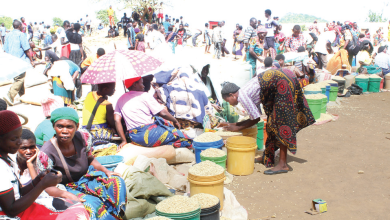
Here, the picture is mixed. On one hand, Malawians are finally feeling relief at the market. Maize prices have fallen, easing the cost of living after two years of food inflation. That matters politically—food is where most voters in Malawi experience the economy.
On the other hand, forex shortages mean pharmacies, manufacturers as well as fuel and fertiliser importers still struggle. Food is cheaper, but everything imported remains expensive.
With inflation now projected at nearly 22 percent instead of 15 percent, the purchasing power gains from cheaper maize risk being eroded while the wage bill, subsidies and social programmes could face upward pressure.
This is the core tension of the social contract in 2026: government promised stabilisation, but voters are getting stabilisation in food, and volatility in everything else.
Where progress shows
It is not all gloom. Malawi Revenue Authority (MRA) exceeded its first-quarter target by K20 billion, collecting K1.398 trillion against K1.378 trillion.
MRA attributes this to base-broadening and tighter compliance. If sustained, stronger revenue could cushion some of the growth shortfall.
Government has also moved to bring home Malawians affected by regional shocks in the name of anti-migrant attacks in South Africa, showing fiscal commitment to citizens abroad despite limited resources.
And the emerging mining sector, Lipunga argues, offers the most realistic path to rebuilding forex reserves in the medium term—if production scales.
Can the budget still deliver?
Probably not without adjustments.
Gwengwe says government should immediately align spending with actual revenue collections instead of funding expenditure based solely on budget estimates.
Tightening cash management and prioritizing forex-generating sectors are no longer optional, he adds.
With economic growth at 2.3 percent instead of 4.1 percent, revenue is likely to underperform unless MRA over-delivers every quarter from an economy that is growing less than expected.
And given that debt is at over 92 percent of GDP, even borrowing space has evaporated.
But Bangara-Chikadza, who is an economics lecturer at the University of Malawi, says if inflation eases further, Middle East tensions cool and new tax measures hold, some budget targets can still be met.