Maalawi agricultural think-tank Mwapata Institute has highlighted that the country only exports two percent of its rice despite some varieties such as kilombero and super faya having significant demand in the region.
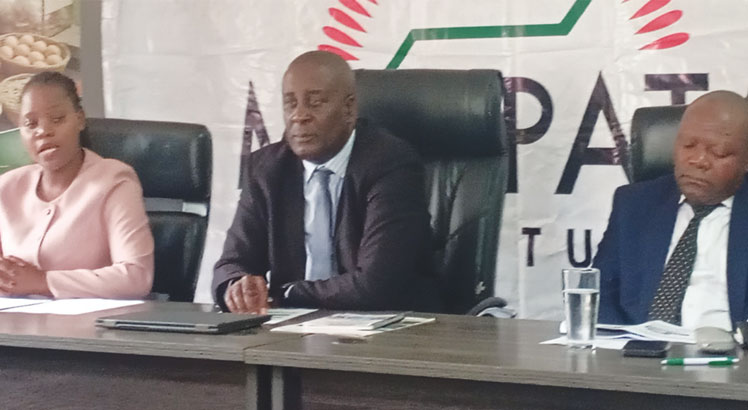
Speaking when unveiling the findings of its research in Lilongwe on Tuesday, Mwapata Institute research fellow Christone Nyondo attributed this to low productivity due to poor agronomics and seed systems, among others.
Titled ‘Issues, potential and options for commercialising the rice value chain in Malawi’, the study highlights that Malawi’s aromatic varieties such as kilombero, continue to be popular across Southern Africa, but only a small proportion is traded internationally.
The study has recommended five policy directions, including enhancing extension services, improving seed system and increasing the adoption of improved technologies and production methods.
Reads the report in part: “First, limited certified seed use, with only 30 percent of farmer organisations accessing it. Second, high inputs costs, particularly fertiliser, which limits farmers from applying at recommended rates.
“Thirdly, a high farmer-to- officer ratio and no specialised rice-agronomy extension, which is slowing adoption of techniques like the system of rice intensification.”
Nyondo said that the seed system is one of the biggest concerns in rice sector as it is underdeveloped and highly centralised as nearly all seed multiplication happens through the Rice Seed Association at Lifuwu Rice Scheme in Salima.
According to the study, such underlying production bottlenecks have resulted in the rice industry registering total consumption of 135 000 metric tonnes (MT) per year, below the processing capacity of 150 000MT.
Apart from the rice value chain, the institute also released two other research findings on soya bean and banana value chains, which show that low production levels restrict the growth of the sectors from value addition aspect.
For instance, while Malawi has soya bean processing capacity of 800 000MT per annum, output remains at 240 000MT, a situation that leaves the industry only using 20 percent of its annual processing capacity.
Speaking during the event, Mwapata Institute executive director William Chadza said the institute has strengthened its collaboration with key stakeholders like the government and the National Planning Commission to make sure that agricultural research findings and recommendations are implemented.
In an interview on Tuesday, Farmers Union of Malawi president Mannes Nkhata said the research policy briefs have exposed the real challenges that the farmers are facing and acts as the guideline for policy makers on initiatives to uplift the sectors.
Agriculture policy expert Tamani Nkhono-Mvula said the policy reform proposals have come at time the country is underutilising soya bean and rice value-chains potential.
“Malawi was the leading producer of groundnuts in the region. That should translate the potential of soya bean production as the two crops are both legumes meaning the latter could equally do well in most parts of the country,” he said.
Most of the soya bean in the world is produced by Brazil, the United States of America, Argentina, China, India and Paraguay.
About 76 percent of soya bean production is used as a protein source for animal feed, whereas 20 percent is consumed by humans as edible oils and soya milk, among others.