What once felt like the end of her dreams has become the beginning of an inspiring journey.
From selling samosas to helping feed her family, to leading a charitable organisation as country director, Mwayi Mpinganjira has defied the odds and is now pursuing a Master of Arts in Development Studies, determined to help others overcome barriers that once stood in her way.
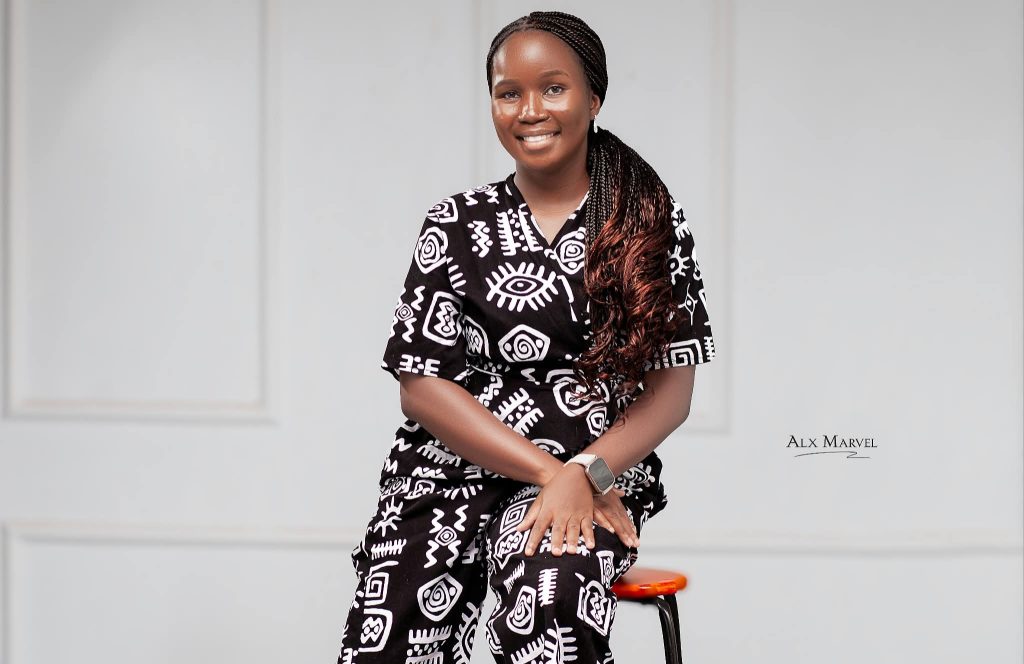
Her journey has been anything, but smooth. The death of her father, financial hardship, interrupted education and self-doubt threatened to derail her ambitions.
Yet, each setback became an opportunity to discover Mwayi’s strength, rebuild her confidence and pursue a future she nearly gave up on.
Today, she is a woman whose story speaks about the power of resilience, education and the courage to keep going when circumstances suggest otherwise.
“I believe having a difficult beginning does not have to determine how your story ends,” she says.
Mwayi’s struggles began after completing the Malawi School Certificate of Education at St. Mary’s Girls Secondary School in Zomba in 2010.
She dreamed of going to the University of Malawi, but failed entrance examinations at her first attempt.
Unwilling to sit at home waiting for another opportunity, Mwayi enrolled for a six-month diploma programme in Human Resources Management under the Association of Business Executives.
When she failed university entrance examination on her second attempt, she decided to continue with the diploma. However, just as she was nearing completion, life dealt her a devastating blow.
In 2014, a week after celebrating her 20th birthday, her father died. As the firstborn of five children, Mwayi found herself facing responsibilities beyond her years.
The family’s financial security collapsed. Relatives who had promised to support her education failed to honour their commitments, forcing her to abandon college when she had only two modules remaining to complete her Level 6 diploma.
With no reliable source of income, she turned to making and selling samosas to help the family survive.
“I knew I had to do something. We sometimes went without food and I could not just sit back, watching my family struggle,” she said.
Some people advised her to marry a wealthy man who could provide for her and her family. But Mpinganjira had a different vision of what independence should mean.
“I had seen what women without skills did for survival. I knew I did not want that kind of life. I wanted to stand on my own feet,” she added.
With the help of a classmate, she continued preparing for her final examinations from home. He tutored her, set practice examinations and encouraged her to keep going.
When examination fees became another obstacle, Mwayi refused to surrender.
She walked from home to her college to ask the principal for assistance, hoping the institution could pay the K60 000 examination fees for her.
She explained her situation and the college eventually paid the fees as a loan, which she repaid a few months later.
“I reached a point where I felt the diploma was the furthest I could go. I remember telling my mother that, but she encouraged me not to give up,” she said.
Her examination results came out and she passed well, finally earning her diploma.
But completing her studies was only the beginning of another responsibility: finding work to support her family.
Mwayi got an internship at the South East Education Division.
Working in the human resources department exposed her to the Malawi education system.
In 2016, an opportunity swang open through a fellow choir member who told her about a charity organisation in their community seeking volunteers.
She applied and secured a position as a volunteer administration officer, handling the child sponsorship database, preparing newsletters and participating in child needs assessments.
When the organisation restructured and introduced full-time positions, she became its human resources officer, helping strengthen internal systems and policies alongside the team and senior leadership.
Her professional growth rekindled the dream she had nearly abandoned: earning a university degree.
Through a scholarship, Mwayi studied for a Bachelor of Arts in Human Resources Management at the University of Malawi in 2018, combining work with her studies.
Having a job also enabled her to pay rent, support her mother and help her siblings remain in school.
In 2020, she graduated.
For Mwayi, the achievement represented much more than an academic qualification. It was proof that the financial difficulties that had interrupted her education did not have to dictate her future.
“I wanted other young girls going through similar or even worse situations to see that it is possible to have a difficult start and still achieve your dreams,” she said.
Yet, another defining test was waiting around the corner.
In 2020, during the Covid-19 pandemic, the organisation’s country director left the position.
With international travel restrictions preventing the foundation’s founder and chief executive officer from travelling to Malawi, the organisation faced uncertainty over its leadership.
Management considered temporarily closing operations or appointing someone from within the team to keep the organisation running while longer-term decisions were made.
Mwayi was approached to take up the challenge.
At just 26, she questioned whether she had the experience, stature and confidence to lead an organisation. She was conscious of the prejudices she had encountered because of her age and small physical stature.
She described the experience as a battle with imposter syndrome — the persistent feeling that one is not good enough despite evidence of one’s abilities.
Mwayi acted as country director for six months.
In 2021, she was appointed country director on a full-time basis, taking responsibility for leading the Malawi team and coordinating its work with the organisation’s headquarters in the United Kingdom, and later the United Arab Emirates.
The position pushed her beyond her human resources background, requiring her to deepen her knowledge of finance, programme development and management, partnerships, monitoring and evaluation.
Mwayi admitted the journey was not without mistakes, but every challenge became a learning opportunity.
“With the right support and the right people believing in you, you can achieve far more than you imagined possible. The obstacles do not necessarily disappear, but you stop facing them alone,” she says.
Four years in leadership also strengthened her conviction that many young people needed someone to believe in them before they could believe in themselves.
She visited her former school, St Mary’s Girls Secondary School, as well as Mulunguzi Secondary School, where she held motivational sessions with young girls.
“I wanted them to understand that hard beginnings do not have the final word. I had needed someone to tell me that when I was younger, and I wanted to be that person for them,” she says.
In 2025, Mwayi transitioned to part-time work with the organisation as ambassador and Africa lead.
She has since left the organisation and is now fully focused on her Master of Arts in Development Studies.
Her shift from human resources management to development studies reflects a growing desire to address the barriers that prevent people, particularly young people and those in vulnerable circumstances, from reaching their potential.
“I have a passion for working with people who lack basic opportunities, so they can break the barriers holding them back and become more than their circumstances suggest,” she says.
Perhaps the most moving affirmation of her journey came this year when one of her brothers graduated from university.
The moment reminded her of what he had told her when she graduated in 2020: “Mwayi, because you have done it, I also think I can do it.”
For her, those words captured the far-reaching impact of perseverance. Her achievements had become a source of courage for someone she loved, just as she now hopes her story will inspire other young women.
To girls who feel abandoned, overwhelmed by financial difficulties or convinced that their dreams are beyond reach, Mwayi said they should not give up.