The parliamentary ad hoc committee probing the June 10 2024 military plane crash that killed former Vice-President Saulos Chilima and eight others yesterday laid bare structural vulnerabilities in the country’s aviation safety net.
It also exposed a decade-long absence of basic navigation equipment and critical gaps in air traffic management procedures.
Testifying before the committee probing the tragedy, senior air traffic information officer and Officer-in-Charge at Mzuzu Airport Joseph Moyo admitted that the airfield has operated without functional air navigation instruments for more than 10 years and lacks basic systems for recording radio communications.
The revelations paint a gloomy picture of an airfield operating in the dark, where controllers rely solely on visual flight rules (VFR) and pilot-reported coordinates while managing unradar-controlled airspace.
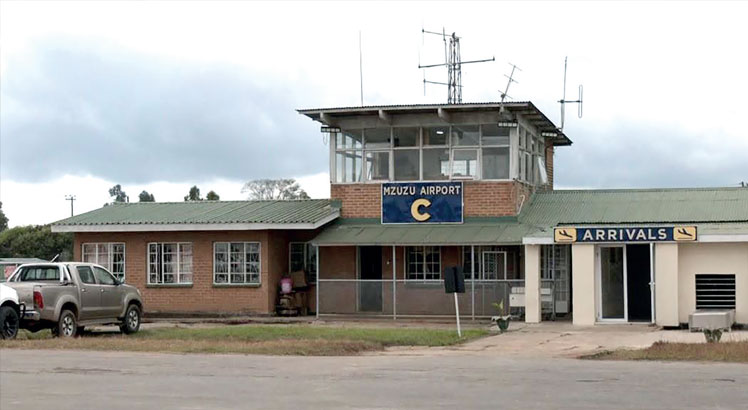
Moyo said Mzuzu Airport’s very high frequency omnidirectional range (VOR)—a ground-based navigation instrument that assists pilots in determining their position—stopped working more than a decade ago.
“Mzuzu is a VFR approach airport because we don’t have the navigation instruments. In the past, we had the VOR, which was operational,” Moyo told lawmakers.
The infrastructure deficit took centre stage as lawmakers pressed Moyo on critical discrepancies surrounding the fatal flight of the Malawi Defence Force (MDF) Dornier 228.
According to Moyo, during a brief contact at 10.12am, the pilot-in-command, Major Owen Sambalopa, reported being 20 nautical miles (about 38 kilometres) north of Mzuzu, near the Ekwendeni/Bwemba area.
However, technical findings from the German Federal Bureau of Aircraft Accident Investigation (BFU) interim report showed that the aircraft’s actual flight path indicated it never reached that position north of Mzuzu before crashing into terrain at 10.22am.
When questioned whether the crew had transmitted incorrect coordinates, Moyo defended the controllers, saying they are effectively blind and forced to rely entirely on pilot declarations in non-radar airspace.
“I cannot, on their behalf, say they were telling me the truth or lies,” Moyo testified. “According to our rules, we rely on conventional communication and believe the information given by the pilot. If they were within radar coverage around Kamuzu International Airport, we could easily verify, but at this point in time, I cannot tell.”
Lawmakers also questioned Moyo over his handling of weather updates, accusing him of acting outside his professional scope.
Official meteorological reports at 10am recorded a visibility range of eight kilometres despite heavy clouds, drizzle and fog. Yet Moyo admitted that he personally conveyed altered weather information to the crew, warning them that visibility around the airfield had abruptly deteriorated to five kilometres, without consulting resident aviation meteorological officers or updating official records.
Zomba Thondwe MP Dumisani Lindani questioned Moyo over his lack of formal meteorological qualifications.
“You are not an expert and you have changed information of the experts, relaying it to pilots… Why did you not alert the experts after conveying this information, which was different from what the experts had given you?” Lindani asked, charging that the unauthorised intervention created a dangerous conflict with official forecasts.
Moyo defended his decision, arguing that meteorological officers had insisted conditions were clear at 8am, forcing him to visually assess the rapidly deteriorating weather as cloud cover thickened.
Lawmakers also grilled Moyo on terrain-induced signal losses. He explained that direct radio contact at 20 nautical miles becomes virtually impossible when an aircraft descends to 5 000 feet near the Viphya mountain range, leaving controllers reliant on fuel-endurance calculations rather than real-time tracking to trigger emergency search protocols.
Pressed by Zomba City South MP James Mpunga on whether any medical condition, medication or personal impairment affected his judgment during the shift, given the complete absence of audio recordings of the final transmissions, Moyo insisted that his judgment was not impaired and that he was fully fit for duty throughout the morning.
Earlier, Civil Aviation Authority officials conceded that Mzuzu Airport was not licensed at the time of the crash on June 10 2024, meaning aircraft operated into the facility entirely at the operator’s risk until a licence was issued a year later, in July 2025.