Malawi’s growing calendar of ethnic festivals is a welcome celebration of heritage, identity and tradition. But amid the dances, regalia and royal speeches, there is an opportunity to build something bigger: a National Cultural Day that brings every community together to celebrate not only who we are, but what unites us.
Malawi may be small on the map, but its cultural calendar is becoming crowded. From Chiwanja cha Ayao and Mulhakho wa Alhomwe to Gonapamuhanya, Kulamba Cultural Festival, Mdawuku wa aTonga, Khulubvi Cultural and Heritage Festival and Mgumano wa Asena na Amang’anja, the country has found many occasions to dance, remember, dress up and declare, quite rightly, that our heritage matters. The two Ngoni kingdoms also hold their own major gatherings: Umthetho in Mzimba and uMhlangano wa Maseko Ngoni in Ntcheu.
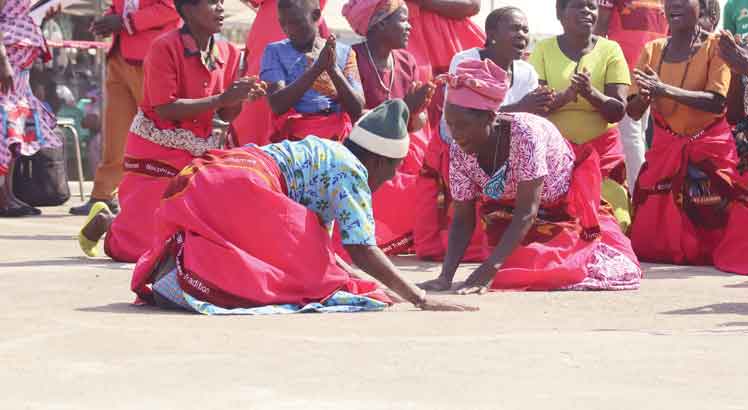
Muhlako wa Ahlomwe. | Nation
This is good news. A people who forget their languages, stories, music, dances and histories lose more than colourful costumes for a weekend. Cultural festivals help pass memory between generations, give traditional leaders and communities a public space, attract visitors and create opportunities for artists, traders and small businesses. In a country where too much of public life is reduced to partisan noise, there is something welcome about people gathering to celebrate what has endured.
But there is a question worth asking: Can we celebrate our many identities more deliberately as one nation, too?
At present, Malawi’s cultural calendar can feel like a collection of separate invitations. Each community gathers around its own history, often with its own stage, speeches, dignitaries and audience. There is nothing wrong with that. These festivals were not created to satisfy a national timetable, and nobody should be told to dilute an inheritance so that it fits neatly into a government programme. Yet we miss an opportunity when our cultural celebrations rarely become a shared national encounter.
Why not establish a National Cultural Day, bringing Malawi’s diverse cultural communities together in one annual celebration? Each year, one ethnic culture could be given special prominence, while every other group participates and showcases its traditions. One year the spotlight could fall on the Yao; the next on the Tumbuka, Chewa, Lhomwe, Tonga, Ngoni, Sena, Mang’anja or another community. The point would not be to rank cultures, but to give each its turn to teach the country something about itself.
Imagine a national gathering where a visitor can move from a Tumbuka historical recital to Yao dance, from Lomwe music to Tonga traditions, from Ngoni regalia to Sena and Mang’anja food and storytelling. Children could learn languages beyond the ones spoken at home. Artists could collaborate across traditions. Schools could participate. Local producers could sell food and crafts. Historians and elders could explain the meaning behind the performance, instead of culture being reduced to a parade of impressive costumes and energetic dancing.
Done properly, this could become more than an annual photo opportunity for politicians. It could be a living classroom, a tourism product and a platform for creative industries. It could also challenge the lazy habit of treating ethnicity as a political weapon. A Malawian should be able to appreciate another community’s heritage without being suspected of abandoning their own. Pride in one’s roots need not mean suspicion of somebody else’s.
There are risks, of course. A national festival could become another expensive State function, heavy on speeches and light on substance. The community chosen for the annual spotlight must not be treated as the government’s favourite, while others are reduced to decorative extras. Selection must be transparent and rotation agreed with cultural associations and traditional leaders. Funding, organisation and benefits should be shared fairly, with local communities retaining ownership of their traditions. No minister should be allowed to turn the national stage into a campaign platform.
Nor should a National Cultural Day replace existing festivals. Chiwanja cha Ayao must remain Chiwanja cha Ayao; Gonapamuhanya must retain its own meaning; Umthetho and uMhlangano must remain rooted in their respective histories. A national celebration should connect these gatherings, not swallow them. Think of it as a common roof, not a bulldozer.
The Department of Arts and other relevant public institutions could convene cultural associations, traditional authorities, artists, tourism operators and educators to design a practical model. The first task would be consultation, not a launch ceremony. The result should have a clear calendar, a fair rotation, strong participation by young people and a budget that is publicly accountable.
Malawi needs more chances for its cultures to meet.