Nearly seven in 10 Malawians would rather endure fuel shortages than pay more at the pump or see the kwacha devalued, a new Afrobarometer survey has found.
The findings, from Afrobarometer’s Round 11 Survey in Malawi, present government with competing public demands as the country struggles with foreign currency and fuel shortages.
The survey, conducted between August 5 and 17 2026, and presented in Lilongwe on Wednesday by the Centre for Social Research (CSR) of the University of Malawi, found that 68 percent of respondents disagreed with devaluing the kwacha, even if this would increase the cost of imported goods.
On fuel prices, 67 percent agreed that government should prioritise keeping prices low, even when this sometimes results in shortages. Only 31 percent disagreed.
The findings come against a background of widespread financial difficulties among households.
The survey found that 89 percent of Malawians had gone without cash income at least once in the previous 12 months, while 70 percent had gone without enough food to eat.
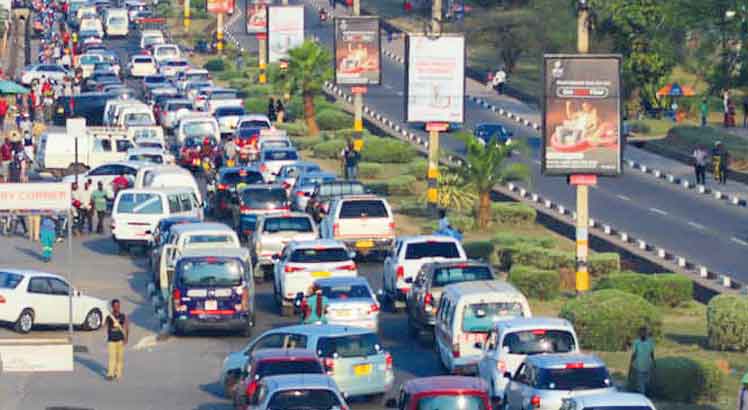
are ready to endure long
queues to access cheaper
fuel. | Nation
It also found that 58 percent had borrowed money from family members or friends to meet their needs.
At least 58 percent of respondents described the country’s economic condition as fairly bad or very bad, while 59 percent said it had worsened over the past five years.
However, 53 percent said government was managing the economy well, while 52 percent approved of its handling of price stability. Only 38 percent gave government a positive rating on job creation.
The findings raise questions about how government can address foreign exchange shortages when most citizens oppose devaluation and want fuel prices kept low.
In an interview, Economics Association of Malawi president Bertha Bangara Chikadza said keeping fuel prices below import and supply costs could discourage suppliers and worsen shortages.
She warned that resisting exchange rate adjustments could also lead to import rationing, making essential goods harder to obtain.
“Devaluation does not automatically create foreign exchange or resolve structural shortages,” said Chikadza.
She said currency devaluation could encourage more foreign currency to flow through official channels, but would also raise cost of imported fuel, fertiliser and other essentials, adding to inflation and poverty.
Chikadza urged government to increase foreign exchange earnings through exports, improve fuel supply arrangements and manage the exchange rate carefully.
She also called for fiscal discipline and targeted support for vulnerable households.
In a separate interview, Mzuzu University economist Christopher Mbukwa said the 67 percent of Malawians who want lower fuel prices understand how fuel costs affect transport and the prices of goods.
“If people are favouring lower fuel prices, that tells us that they are feeling the pain that fuel price adjustments have brought on them,” he said.
Mbukwa said those opposing devaluation may also be concerned with its effects, as previous currency devaluations have contributed to inflation and further foreign exchange shortages.
Political scientist Henry Chingaipe said the improved public assessment of the economy could partly reflect greater price stability, after prices previously changed several times within a day.
“Although inflation is still high, they are managing it because it is not volatile anymore,” he said.
Ministry of Finance, Economic Planning and Decentralisation spokesperson Williams Banda declined to comment, saying the ministry had not seen the report, and referred The Nation to the Reserve Bank of Malawi.
Efforts to obtain comment from Reserve Bank manager for currency operations David Ndege were unsuccessful, as he had not responded to a questionnaire by press time
The report, titled Malawian perspectives on economic conditions and management and on the role of Parliament, also examines public views on Parliament’s oversight role.
The survey involved face-to-face interviews with 1 200 adults aged 18 and above, conducted in their preferred languages.
The findings have a national margin of sampling error of plus or minus three percentage points.