Governance weaknesses and rising corruption are eroding investor confidence in Malawi, with a new World Bank report warning that businesses now see graft as a bigger obstacle than electricity shortages, transport bottlenecks or tax administration.
The World Bank Group’s Country Private Sector Diagnostic shows that corruption is the leading concern among formal firms, rising from the fourth-ranked business constraint in 2014 to the top obstacle in 2025.
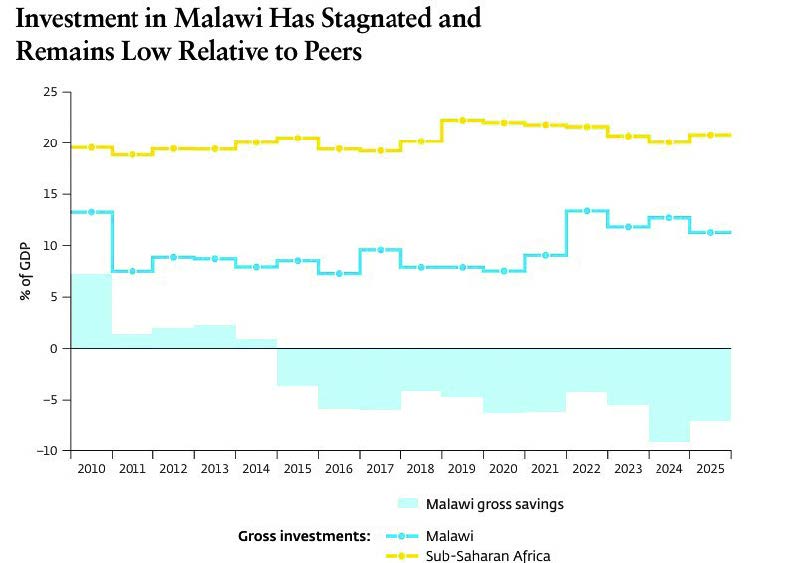
The report says governance and institutional weaknesses are discouraging investment by creating uncertainty, raising business costs and weakening confidence in the operating environment.
It notes that corruption remains widespread and directly impacts investment decisions.
“Companies often face demands for bribes to expedite business processes, secure contracts or access services, while funds intended for development are frequently embezzled,” reads the report.
The report further notes that the proportion of firms expecting to provide gifts to obtain licences doubled from 30 percent to 61 percent over the past decade while more than a quarter of firms reported making at least one bribe payment, which is well above the sub-Saharan African average.
Reacting to the report, Centre for Social Accountability and Transparency executive director Willy Kambwandira said the findings confirm what businesses and citizens have experienced for years.
“Corruption is no longer an isolated governance problem, it has become a structural cost of doing business in Malawi,” he said.
Kambwandira argued that investors are discouraged not only by bribery, but also by unpredictable decision-making, opaque procurement systems, selective application of the law and weak contract enforcement.
He said weak accountability systems, political interference and inadequate sanctions against wrongdoing have entrenched a culture of impunity that continues to undermine investor confidence.
The World Bank report also identifies weak public- private dialogue, opaque administrative processes, regulatory uncertainty and limited consultation on policy changes as factors discouraging private investment across sectors.
Business groups say the impact is particularly severe for smaller firms.
Chamber for Small and Medium Businesses Association executive secretary James Chiutsi said in an interview smaller firms bear the heaviest burden.
He said: “To some extent, larger firms can withstand corruption. But small businesses can’t.
“For us, it’s not just a cost it’s survival. Others call it a tax. We call it the difference between paying wages or closing down.”
Chiutsi said corruption affects almost every stage of business operations, from registration and licensing to contract awards, payments and taxation.
“In many offices, corruption touches everything: business registration, permits, contract awards, payments, taxation. Every desk with a stamp can become a toll gate if there’s no transparency,” he said.
Employers Consultative Association of Malawi executive director George Khaki said corruption increases the cost of doing businesses and clouds out honest businesses players from participating in economic activity.
“This is particularly worse with SMEs which are in the majority. Local and international investors look for certainty in the business environment and systems that work without hinderance or favouritism,” he said.
The report warns that these governance challenges are constraining both foreign and domestic investment at a time Malawi is seeking to attract private capital, expand exports and create jobs.