Since 2013, the Assets Declaration Act has been little more than democratic window dressing—brazenly ignored by the very officials it was built to restrain. But that era of impunity may be ending.
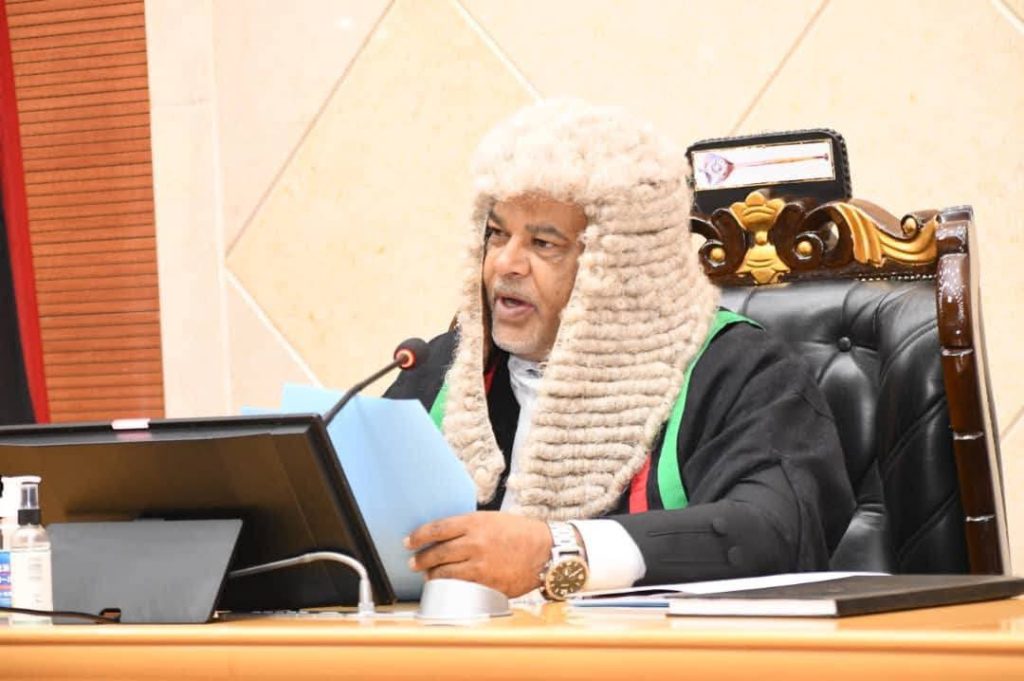
Speaker of Parliament Sameer Suleman issued a blunt warning in Weekend Nation this week that “the grace period is over, and no one found wanting will be spared”.
wanting will be spared
“I am following up and will meet Odpod [Office of the Director of Public Officers’ Declarations] management team soon.
“In this cohort, all laws will be applied to the fullest and will not spare anyone that has or will breach them,” he said.
Suleman was responding to a revelation by Odpod director general Michael Chiusiwa that five percent of elected and appointed officers are currently non-compliant, having failed to declare their assets within three months of the post-election deadline.
Suleman’s vow to “crack the whip” follows a decade of defiance; since 2013, the ledger of accountability has remained stubbornly blank despite thousands of officials flouting the law.
Records from Odpod reveal that during the 2016/17 fiscal year, four Cabinet ministers—the late Goodall Gondwe, George Chaponda, Joseph Mwanamvekha, and Grace Chiumia—along with four Members of Parliament, flouted the law with impunity.
Despite Odpod recommending the ministers’ dismissal and seeking to vacate the MPs’ seats, then-President Peter Mutharika—during his first tenure—took no action, leaving the files to gather dust.
By 2024, Odpod had gazetted 1 788 defaulters. The list reads like a “Who’s Who” of the State machinery, featuring heavyweights such as the Malawi Defence Force, the Judiciary, Escom, and the Malawi Police Service.
In January 2025, Chiusiwa confirmed that the list of defaulters had been gazetted (Gazette No. 3, 822) on December 13 2024.
He further pledged to release a new list of 2023/24 offenders ahead of the September 2025 elections.
However, the subsequent silence regarding these defaulters has been deafening; to date, not a single public officer has faced dismissal or prosecution for failing to declare their assets.
Chiusiwa maintained in an interview this week that its focus has shifted toward the non-compliant five percent, while simultaneously auditing the remaining 95 percent for “false or incomplete” submissions.
Centre for Human Rights and Rehabilitation executive director Michael Kaiyatsa attributes the problem to a lack of political will.
“The core problem is the inaction of State institutions mandated to enforce the law. While the Odpod can recommend action, enforcement relies on bodies like the OPC, Parliament, the ACB, and the Director of Public Prosecutions,” Kaiyatsa noted.
He criticised these institutions for failing to apply the law consistently and added that civil society is also at fault.
“We have treated asset declarations as a mere formality rather than the governance and accountability crisis it truly is.”
In a separate interview, Centre Social Accountability and Transparency executive director Willy Kambwandira argued that the asset declaration regime has devolved into a mere “ceremonial exercise” due to a lack of institutional independence.
“When a key body like the Public Appointments Committee of Parliament includes members who reportedly fail to comply with these requirements, it seriously undermines its legitimacy,” Kambwandira noted.
He called for a shift from “naming and shaming” to actual prosecution, noting that because the directorate currently “has no teeth,” rent-seeking behavior continues to thrive among public officers.
Parliamentary Appointments Committee chairperson Felix Njawala said has directed his clerk to identify defaulters from the 2024 Gazette and those who failed to comply during the five percent post-election window.
The pressing question remains: Will the new administration enforce the law, or will the Assets Declaration Act continue to lack teeth?
The Office of the Director of Public Officers’ Declarations has long acknowledged its limitations.
In September 2022, Chiusiwa told this newspaper: “Our mandate, under the current legal framework, is limited to making recommendations. The office can suggest sanctions but lacks the power to prosecute or dismiss offenders.”
Njawala emphasised in a WhatsApp response that while the Asset Declaration Act mandates sanctions like dismissal or prosecution, the primary hurdle remains a lack of enforcement.
He warned that without consistent enforcement by Odpod and rigorous monitoring by PAC, the asset declaration regime remains merely symbolic, threatening the new administration’s credibility.
Njawala said the division of labour is clear: Odpod is legally responsible for enforcement and prosecution, while PAC performs an oversight role by interrogating compliance and reporting to Parliament.
“Regarding the post-2025 election period, PAC is entitled to receive a list of the 5 percent of officers who failed to declare their assets. Although Odpod has not yet furnished this verified list, PAC intends to initiate oversight hearings and demand formal explanations from the concerned parties once the data is transmitted,” he said.
Njawala said the Law Commission’s proposal to amend the Constitution to mandate seat vacation for non-declaration offers clear trade-offs. He said this would ensure immediate consequences, strengthen deterrence, and align Malawi with global accountability standards. However, he feared potential politicisation, legislative instability, and due process challenges.