Malawi’s political parties remain vulnerable to internal conflict because of weak dispute resolution mechanisms, although judicial intervention can help restore order, a new study has found.
Published in the Malawi Journal of Politics and Public Affairs, the study says recurring disputes reflect incomplete party institutionalisation but also finds that courts can play a constructive role when internal mechanisms fail.

The paper, titled ‘Chaos quantum theory as a metaphor for political uncertainty: Insights from Malawian Post-1994 democratic party Conventions’, examines disputes surrounding party conventions since the return to multiparty democracy in 1994, with particular focus on Malawi Congress Party (MCP) and Democratic Progressive Party (DPP) disputes of 2023 and 2024.
Researchers Mwawi Chirwa and Matthew Phiri argue that the personalisation of party leadership, factional splits and weakness of internal enforcement mechanisms have limited the extent to which parties have become reliably institutionalised.
Reads the paper: “The conflicts analysed are not merely isolated incidents of disorder, they reflect the structural vulnerability of parties operating at the edge of chaos. These are rule-governed systems characterised by incomplete institutionalisation, competing factional interests and limited internal enforcement capacity.”
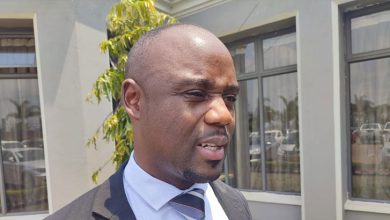
Commenting on the report, Centre for Multiparty Democracy executive director Boniface Chibwana said political differences are best resolved within parties because members understand the underlying issues.
“In doing so, the founder and funder syndrome will be eliminated and views of legitimate members will be respected at all times, thereby resolving some avoidable disputes,” he said.
In an interview yesterday, MCP publicity secretary Jessie Kabwila said the party continues to strengthen its processes and structures for resolving conflicts.
“We are working to ensure that conflict resolution mechanisms are not only strengthened at national level but also at district and regional levels,” she said.
Earlier this month, DPP secretary general Peter Mukhito warned that the party would act against individuals causing divisions in the party and working with other political parties to cause internal divisions.