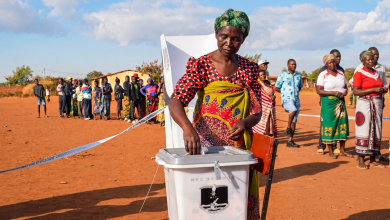
As the world braces for spiking food scarcity due to evolving El Nino weather, global land talks in Mongolia are winding up with eyes on money for restorative action.
The United Nations estimates a $355 billion war chest annually is needed to address land degradation, desertification and drought, but the current investment hovers around $77 billion.
Closing the K278 billion annual financing gap is the thrust of the 17th Conference of Parties (CoP17) to the UN Convention on Combating Desertification (UNCCD) in Mongolia.
The land treaty’s secretariat warns that the cost of inaction could hit $878 billion annually, but the required investment could generate an eight-to-one return estimated at $1.8 trillion in annual benefits.
“At the heart of our discussion is the topic of food security,” she said. “The more you work on restoring land, the more you have productive soil to ensure food security. That kind of narrative should be part of our finance [initiatives],” says UNCCD executive secretary Yasmine Fouad.
Malawi is one of the 198 parties to the UN treaty, signed in 1992 and director of forestry Custom Nyirenda leads its delegation to Mongolia.
The UNCCD is one of three environmental treaties adopted at the Earth summit in Rio de Janeiro, Brazil, alongside the UN conventions on climate change and biodiversity protection.
However, land health has garnered the least attention of the three and produced scant progress over the last three decades.
“Land is wealth; let us not destroy it,” said UN country representative Rabecca Adda Dontoh. “Currently, land degeradation affects 70 percent of Malawi’s land, costing seven percent of the country’s gross domestic product.”
Malawi pledged to restore 4.5 million hectares of degraded and deforested land by 2030 under the African Forest Landscape Restoration Initiative.
However, the newly launched State of the Environment Report shows that about 80 percent of the country’s land is degraded.
The annual national tree planting campaigns remain fragile as about half of the seedlings die within half a year.
only 60 percent of over 59 million trees planted on about 59.02 hectares last rainy season survived for six months, Minister of Natural Resources Patricia Wiskes announced in June.
“The achievements reflect Malawi’s continued commitment to landscape restoration, climate action and community resillience,” she said.
Among the losers, farmers, who feed the nation, bear the brunt of skyrocketing chemical fertiliser prices and falling harvests due to degraded soils, drought and shrinking farmlands.
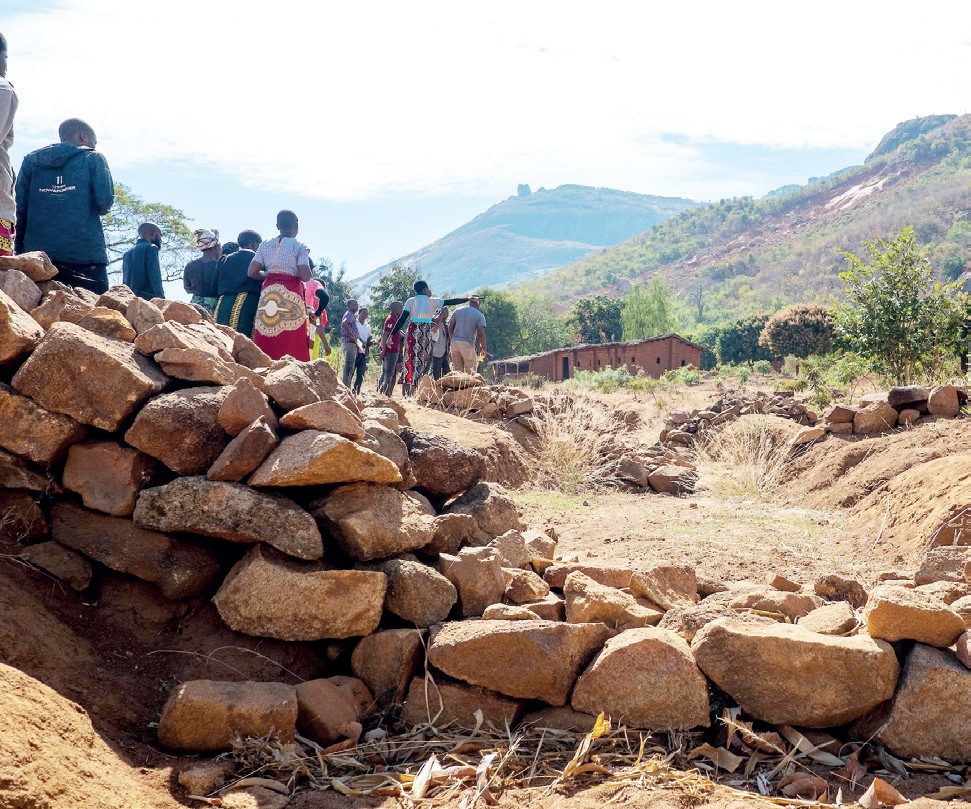
In Malika Village, peasant farmers lament shrinking crop yields from rocky and gullied fields as muddy rainwater gushing from Chiradzulu Mountain’s downslopes scrape fertile soil.
Dependence on costly fertiliser has relegated farming communities into slavish, hand-to-mouth piecework on their land, which they desperately give up to well-off seasonal farmers from neighbouring towns.
Bertha Banda laments: “I don’t know how I will survive the looming drought. I rent out my field at K100 000 to buy 100 kilogrammes for my family.
“Even that person has left the field to another person to avoid wasting money on pricy fertiliser, seed and labour, with the approaching El Nino.”
The UN’s Food and Agriculture Organization reports that the country loses about 30 tonnes of topsoil per hectare per year, but it takes over a century to replace.
The lost soil leaves farmlands breached and water bodies buried in sand, affecting agriculture, electricity supply and water quality.
Electricity Generation Company has spent over K10 billion over five years to remove debris and silt at Nkula and Tedzani hydropower plants alone, says its spokesperson Moses Gwaza.
“This figure excludes additional costs for dredging at Kapichira and emergency interventions after floods. These figures also do not include the lost revenue due to non-generation. These expenses cover dredging, weed harvesting, and mechanical repairs caused by sediment damage,” he says.