On paper, the promise is unequivocal: Malawi’s public hospitals offer free healthcare for all. It is a sacred covenant between the State and its citizens, designed to protect the most vulnerable from the financial catastrophe of illness.
In practice, this promise has been dismantled. Across the country, from the sprawling wards of Queen Elizabeth Central Hospital (Qech) to the remote shores of Likoma, access to life-saving treatment is now governed by an invisible, predatory tariff system. It is a shadow economy that rewards those with cash and ruthlessly abandons those with nothing.
Over several months, a consortium of investigative journalists went undercover across seven public facilities, including Qech, Kamuzu Central Hospital (KCH), Mzuzu Central Hospital, and district hospitals in Mulanje, Thyolo, and Chiradzulu.
They found that corruption is no longer a series of isolated ethical lapses; it is a coordinated ecosystem. Inside these walls, security guards, clerks, and clinicians have monetised human suffering, turning waiting rooms into marketplaces where the price of survival ranges from K4 000 to K260 000.
The gatekeepers at Qech
At Qech in Blantyre, the triage system isn’t medical; it’s financial.
On December 16 2025, Kumbukani Stafford, a farmer from Phalombe, arrived with his niece. She had been in agony since 2017. They had a referral letter, the ‘golden ticket’ to specialist care. Yet, 24 hours later, they were still on hard plastic chairs.
“We were bounced like a ball,” Stafford recalls. “They told us our name was ‘not in the system.’ But we were standing right there. We were human beings, not data points.”
Our undercover reporters discovered why Stafford’s niece was “invisible.” At Qech, security guards have transcended their roles as watchmen to become brokers.
As Stafford watched, the pattern became clear. Patients who arrived hours after them were being greeted with nods of recognition and ushered behind the heavy doors of the consultation rooms. The “system” wasn’t broken; it was gated.
It begins with the men in uniform. One guard, leaning against a concrete pillar, explained the economics of the ward to an undercover journalist posing as a desperate relative.
“Don’t come here like a child,” he warned, his eyes scanning the room for supervisors. “The money cannot go to one person. Every department the patient passes through must get a share. Once you pay, they tell each other an ‘urgent’ patient has arrived. When Stafford finally surrendered to the unspoken demand and paid K15 000, money meant for food and the bus fare home, the “missing” name suddenly materialised. A health worker, pocketing a portion of the fee, offered a thin, knowing smile. “They have entered the room now,” he told Stafford. “They are being assisted.”
Behind the scenes, the reporter watched the spoils being divided. Out of a single bribe, K5 000 was slipped to the scanning staff, while K1 500 was handed to a female security guard near the entrance. The triage was no longer medical; it was a business transaction.
In Room 1 at the same hospital, the system appears to break down. A woman from Lunzu arrived seeking a routine dental extraction—nothing more complicated than the removal of an aching tooth. But the dental unit declined to proceed after recording her blood pressure at a dangerously high. She was referred to Room 1 for stabilisation before returning to the dental section. She reported to the room at 8am on Tuesday, December 16 2025. What should have been a clinical assessment and swift intervention instead became a prolonged wait in a corridor of quiet desperation.
Throughout the day, she says, she watched a different triage system unfold; one lubricated not by medical urgency, but by cash. According to her account, patients discreetly handed K10 000 notes to hospital officials and were promptly ushered inside.
Those without money remained seated. She had nothing to offer but her hospital card and mounting pain.
By the end of the first day, she had not been seen. No medication. No blood pressure management. No explanation.
When our reporter met her the following morning, December 17 at 9:23am, she was still on the same chair, unassessed and untreated.
Hours later, at around 3pm, she lay curled in visible agony, her face clenched against the pain radiating from her untreated tooth and unchecked hypertension. At one point, she made a quiet, devastating request: could this reporter help her with K10 000 so she too could “be called”? In a public hospital where care is meant to be free, access appeared to come at a price. And for those who could not pay, suffering became the waiting room.
The High-Stakes Auction at KCH
Three hundred kilometres to the north, at KCH in Lilongwe, the corruption is less about small-scale “tips” and more about high-stakes extortion. Here, the prices reflect the desperation of the families.
In July 2025, a family arrived from Kasungu, carrying a 27-year-old man with a shattered leg.
He was the family’s breadwinner, a young man whose physical strength was the only thing keeping his widowed mother and younger siblings from destitution.
His uncle, a retired civil servant living on a meager pension, met them at the hospital.
The demand was blunt: K200 000 for an X-ray and “facilitation” of surgery.
“It was like an auction for human life,” the uncle said. He describes a scene outside the file room where families gathered in the shadows, whispering not about diagnoses, but about price points. “People were comparing figures. How much was this one asked to pay? How much that one had already given. If you didn’t have the money, the staff told you to wait a week, knowing a week with a broken leg is a lifetime of agony.”
The uncle paid, stripping his meager savings to do so.
But at KCH, the investigation found that a bribe is not a guarantee of service; it is merely a ticket to a cruel lottery. Despite the payment, the young man lay in the ward for days, his leg swelling, the skin turning a bruised purple.
It was only when the uncle, emboldened by the loss of his savings, began to make a scene, demanding receipts that didn’t exist and questioning the hospital’s integrity, that the staff finally moved. The nephew was rushed to surgery. Another man from Kasungu, who had paid the same K200 000 but remained quiet and respectful, was left behind. He is still waiting.
The extortion reaches its zenith at the Lilongwe Institute of Orthopaedics and Neurosurgery (LION) under KCH. This facility, meant to be a beacon of specialised care, has become a fortress for those with cash.
Deborah, 22, watched her mother’s health evaporate in the LION corridors. A radiologist told her the “medicine for a neuro-scan” was out of stock. The catch? The medicine could be found immediately for K260 000. Deborah spent a week begging relatives for the funds. She failed. Today, six months later, her mother is paralysed, the scan never performed, while they watched others pay the fee and receive their results in minutes.
The Fall of Chiradzulu
The corruption is not limited to the major cities. In district hospitals like Chiradzulu, the rot has become systemic, particularly following the withdrawal of international oversight.
For years, Médecins Sans Frontières maintained a presence at Chiradzulu District Hospital.
Their departure has left a vacuum that local syndicates have moved to fill. “Since they left, things have become worse,” a health worker at the facility said, speaking on condition of anonymity. “There was fear and accountability before. Now, it is a free-for-all.”
The investigation uncovered a network of “agents”, often lower-level staff or former employees, who patrol the hospital corridors like vultures. They identify the most desperate patients and offer to “connect” them to clinical officers.
In one harrowing case, a family brought in an underage girl who was pregnant and in distress. An agent intercepted them, directing them to a clinical officer whose identity was shielded. The family was told to pay K38 000 via mobile money. Despite this being a “private” arrangement, the procedure was performed in a government theater, using government-purchased anesthetics and supplies, with government nurses following the orders of a man who was essentially running a private business out of a public ward.
The corruption in Chiradzulu even pursues the citizens beyond the grave. The hospital mortuary, once a place of somber respect, has been monetised. Families are now routinely charged between K20 000 and K50 000 for embalming and bathing their deceased loved ones. No receipts are issued. For the poor, even the dignity of a proper burial has a price tag.
Perhaps most damaging to the future of the country is the allegation that the corruption has infected the very hiring of health workers.
The investigation found that job placements under the decentralised system often require a “fee” of up to K500 000.
“My neighbour was more than qualified,” the anonymous health worker said. “But they are poor. They couldn’t pay the K500 000. The position went to someone who had the money but half the skill. We are not just stealing money; we are stealing the quality of our future doctors.”
The Weapon of Neglect in Thyolo
At Thyolo District Hospital, the “Invisible Tariff” takes a different, more psychological form: the weaponisation of neglect. Here, the investigation found that if you do not have money or “strong” connections, you are subjected to a regime of indifference designed to make you give up and leave, or eventually, to pay.
A young man we will call Chotsadziwa has been admitted for three weeks with a broken leg after falling from a tree.
For the first three days, while the staff perhaps sized up his family’s financial status, he was treated. Once it became clear that no “extra” funds were forthcoming, the care stopped.
“Doctors just pass by without checking on me. It’s like I am invisible,” he says, lying in a bed with a dingy cast. When he cries out in pain, he is met with mockery. “Inutu si odwala sitingalimbane nanu” (You are not sick, we cannot focus on you), one doctor allegedly told him. Another told him to “be a man” and take care of himself.
“If I am not sick, why am I here?” Chotsadziwa asks, his eyes filling with tears. “I cannot eat because of the pain. Is that not sickness?”
Nearby, Wawa Phiri sits in frustration. He spent K30 000—a fortune for a rural villager—on transport after being referred from Fatima Hospital for his child’s injury. Upon arrival, he was not even given the courtesy of a physical examination. A staff member glanced at the child and declared him “healed,” handing the father eight Panadol tablets.
“I wasted my food, my time, and the money I borrowed for this journey,” Phiri says. “I saw the same thing at Queen Elizabeth. If you have money, you are a patient. If you don’t, you are a nuisance.”
This sentiment was echoed by an elderly man in the same ward, a victim of a brutal home invasion who was told his leg might need amputation.
After an initial period of care, the “waiting game” began. Every day, he is told “ubwere mawa” (come tomorrow).
“This world is full of corruption,” the old man whispers. “It’s in the police, the agriculture offices, and now it has taken the hospitals. The poor are being pruned away like dead leaves.”
The ambulance boat that services Likoma District Hospital

The Crocodile and the Ambulance
The most predatory form of this corruption occurs when geography and tragedy intersect.
In the remote districts, where there are no private clinics and no other options, the syndicate operates with total impunity.
On March 3 2025, the quiet life of the Kulumbo family on Likoma Island was shattered when 18-year-old Laston was attacked by a crocodile. His body was torn, his survival measured in minutes. He was rushed to Likoma District Hospital, where the staff immediately realised they were unequipped for such trauma. He needed a referral to Mzuzu Central Hospital.
The journey required an ambulance boat to the mainland and a land ambulance to Mzuzu. It was a journey that should have been covered by the State.
“They told us the ambulance had no fuel,” says Mike Kulumbo, Laston’s father. “They looked at my son bleeding, and they asked for K75 000.”
Kulumbo scrambled to find the cash, watching his son’s life leak onto the deck of the boat.
But the toll-taking was not over. When they reached Nkhata Bay, the land ambulance driver refused to turn the key until he was handed another K55 000.
“I paid because my son’s life was at stake,” Kulumbo said. “But the ambulance never stopped at a filling station. The tank was full. They were just waiting for a father who was too desperate to say no.”
“Forced Payments and the Silence That Protects Them”
Health rights advocates say the corruption documented in public hospitals is neither exaggerated nor new—it is widespread, deeply entrenched, and deliberately hidden.
George Jobe, executive director of the Malawi Health Equity Network (Mhen), acknowledged that bribery and forced payments have become a defining feature of Malawi’s public health system, even as patients are officially entitled to free care.
“There is massive corruption in public health facilities,” Jobe said. “It is true that there are reported cases of bribery in the health sector.”
According to Jobe, what patients experience is often not voluntary bribery but coercion under medical distress.
Mhen recently launched a project specifically to document what it calls “forced payments”—money extracted from patients who are sick, desperate, and afraid of being denied care.
“Some people do not give money willingly,” he said. “Someone is unwell and wants treatment. They feel they have no choice.”
Mhen has received repeated reports of patients being instructed—implicitly or explicitly—to place cash inside their health passports, a practice that has become widely understood across communities as the unofficial price of attention.
Yet despite the scale of the problem, Jobe said most cases never move beyond rumours and whispered accounts. Fear, power imbalances, and mistrust in reporting mechanisms keep victims silent.
“The problem is that these issues come out as rumours,” he said. “People are not willing to come forward.”
The forced payments project, he explained, was designed to break that silence by empowering communities to document and report abuses without fear.
“This is a problem that has to be faced head-on,” Jobe said. “It is something that health officials and the Ministry of Health have to deal with.”
Jobe acknowledged that formal accountability mechanisms exist, including hospital ombudsmen, and said the system itself is not fundamentally flawed. But he questioned its independence and effectiveness in practice.
“Most of the time, the hospital ombudsman is someone working under the same ministry,” he said. “They are often junior officers, and it becomes very difficult for them to report to their seniors.”
As a result, doubts persist about the efficiency and credibility of internal oversight, even in cases where hospital ombudsmen have attempted to escalate complaints to the national Office of the Ombudsman.
“There have been some hospital ombudsmen who have reported cases, and these have been taken up,” Jobe said. “But it is not enough.”
Mhen has formally recommended structural reforms, including the placement of independent officers from the national Ombudsman’s office directly within hospitals.
For patients navigating Malawi’s public hospitals, the consequences of that failure are already clear: care delayed, dignity stripped away, and survival reduced to a transaction negotiated in whispers.
Oversight, Accountability and the limits of reform
Faced with mounting evidence that forced payments and extortion have become normalised inside public hospitals, oversight institutions acknowledge the problem—but concede that structural and resource constraints limit their reach.
The office of the Ombudsman, constitutionally mandated to protect citizens from maladministration and abuse of power, maintains that the hospital ombudsman system remains effective despite persistent criticism that it lacks independence.
Ombudsman Grace Malera confirmed that hospital ombudsmen are recruited and deployed by the Ministry of Health, not her office.
She said the arrangement was a product of financial constraints that make it difficult to hire and station fully independent personnel across hospitals nationwide. However, she insisted this structure has not undermined the mechanism’s effectiveness.
According to Malera, hospital ombudsmen, regardless of their junior substantive grades, operate with functional autonomy and are trained to investigate complaints impartially, including those implicating senior medical or administrative staff.
Malera disclosed that in 2025 alone, more than 16 000 complaints were registered through the hospital ombudsman mechanism, with 238 related to informal or irregular payments for services.
These, she said, were handled as individual facility-level complaints.
Allegations of bribery and extortion, Malera noted, primarily fall under the mandate of the Anti-Corruption Bureau.
Nonetheless, she conceded that any practice that conditions access to public healthcare on unofficial payments constitutes maladministration, abuse of power, and a violation of administrative justice under the Constitution.
She said her office, subject to resources, is considering launching a new systemic investigation into public health service delivery with a specific focus on maladministration and unethical conduct.
The Ministry of Health, meanwhile, says it is aware of the malpractice but frames the problem largely as one of professional ethics rather than systemic criminality.
Bestone Chisamire, the Principal Secretary responsible for administration, confirmed that cases of extortion and informal payments by health workers have come to the ministry’s attention and that disciplinary action has been taken in some instances.
However, he said he could not quantify how many officers have been disciplined, citing the size and complexity of the national health system.
“This is about mindset change,” Chisamire said, emphasising that health workers must understand that they are employed to serve the public, not to generate personal income.
Reporting by:
Maureen Kawerama at Likoma District Hospital, Noel Mkwaila at Thyolo District Hospital, Nicholas Mbonela at Chiradzulu District Hospital, Thomas Kachere, Bobby Kabango, Chikondi Mphande, and Julius Mbeŵe at Qech, Mercy Matonga, Rebecca Chimjeka, and Jack McBrams at KCH.
Produced by the Continuing Journalism
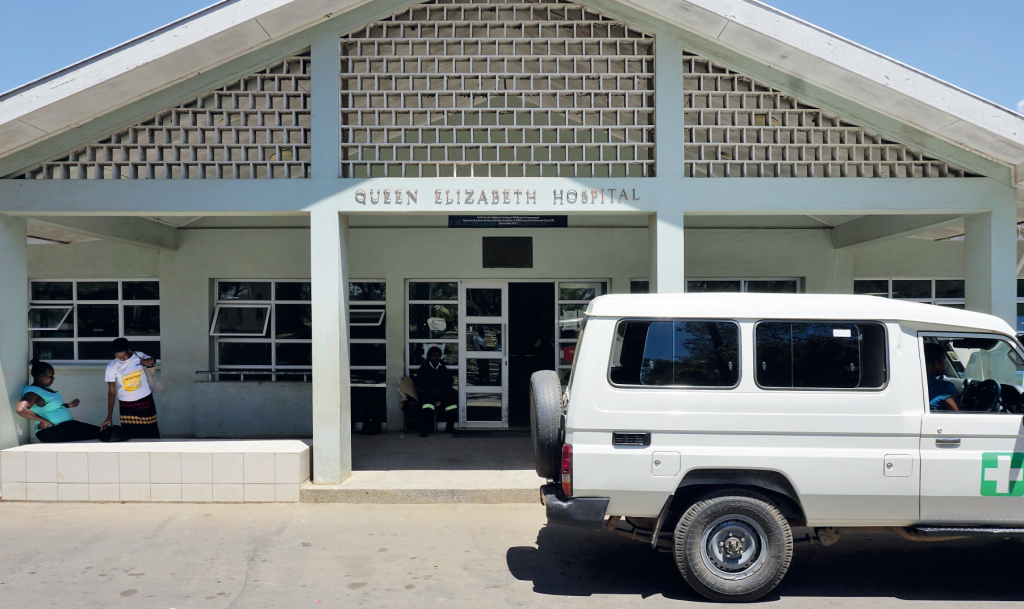
Qech in Blantyre is the largest referall public facility in the Southern Region. | Nation
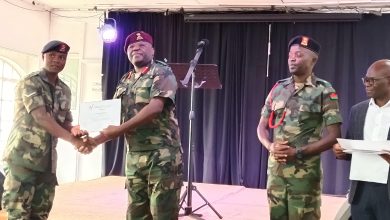
Malera: More than 16 000 cases recorded in 2025. | Nation