A K1.3 billion payment dispute has left seven completed hostels at Mchinji TTC locked by the contractor, forcing the college to train 210 fewer student-teachers a year and derailing efforts to meet global education standards.
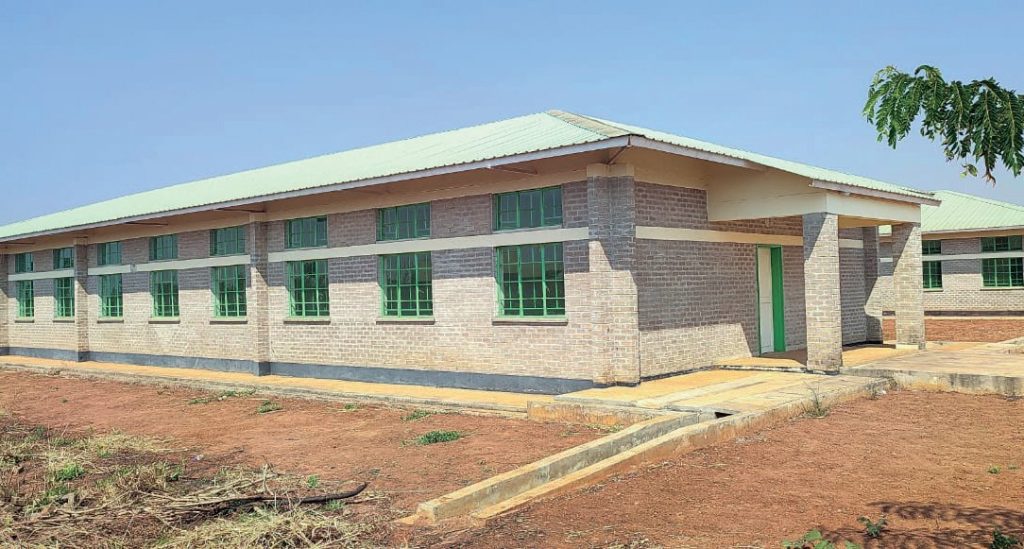
The college currently accommodates just over 400 student-teachers against a planned capacity of 600. Seven completed hostel blocks remain withheld by the contractor, according to both the Ministry of Education and the contractor S.R. Nicholas, denying space to 210 additional trainees each year.
Ministry of Education Principal Secretary Ken Ndala confirmed in writing that completed structures remain with the contractor due to outstanding payments.
“The Ministry owes the contractor some resources for the completed works. The amount may not be disclosed as this is a contractual issue between the contractor and client,” Ndala said.
A source in the Ministry of Education at Capital Hill said the outstanding amount hovers around K1.3 billion, including accrued interest.
S.R. Nicholas administration director Andrea Bizzaro also confirmed the company is withholding handover of the hostels as well as staff quarters until government settles.
“We have also faced losses from other government contracts where we finished the work and were never paid… We are not prepared to find ourselves in the same situation,” he said.
Bizzaro said donor-funded components—administration block, classrooms and initial hostels—were fully paid, allowing the college to open. The outstanding works fall under government’s 30 percent counterpart funding.
The impasse comes as Malawi’s public primary schools struggle with overcrowding far above both national and international standards.
The 2024 Education Management Information System report puts Malawi’s pupil-to-qualified-teacher ratio in public primary schools at 64:1.
That is above the Ministry of Education’s own benchmark of 60:1, and 50 percent above the United Nations Educational, Scientific and Cultural Organisation (Unesco) recommended standard of 40:1 for quality basic education.
With 5.2 million learners in public primary schools, Weekend Nation illustrative calculations show that Malawi requires an estimated 86 667 qualified teachers to meet the national 60:1 ratio.
To meet the international 40:1 standard, the requirement rises to 130 000 teachers, our illustrative calculations show, further establishing that at current staffing of about 74 000, there is a gap of 12 667 against national targets and 56 000 against international benchmarks.
Education analysts say losing 210 training spaces annually at Mchinji alone sets back progress toward both benchmarks at a time enrolment continues to rise.
Education governance expert Limbani Nsapato called for urgent intervention to resolve the impasse.
“The students are being inconvenienced because they may not have proper hostels. It also affects teachers and lecturers because teaching and learning takes place in an environment that is not conducive,” he said.
Another education advocate, Benedicto Kondowe, said the dispute undermines SDG 4 commitments.
“When a college designed for 600 operates below capacity, Malawi loses ground in meeting both national and international teacher targets.”
He urged Ministry of Education and Treasury to verify and settle any legitimate claims within the law.
Programme-wide problems
Mchinji, alongside Chikwawa and Rumphi Teachers’ Training Colleges (TTCs) form a three-college programme co-funded by Arab Bank for Economic Development in Africa (Badea), the Saudi Fund for Development, the OPEC Fund for International Development and the Malawi Government.
Approved in 2009 and launched in 2018, the project was expanded from two to three colleges, raising government’s contribution from 15 percent to 30 percent, according to a Capital Hill source.
While Chikwawa and Rumphi TTCs are operating at full capacity, external works at all three colleges remain incomplete due to government-imposed spending limits, including drainage and covered walkways.
Ndala said Treasury has engaged the National Audit Office to verify the contractor’s claim. Funds have been allocated in the 2026/27 financial year to engage new consultants for additional works outside the original contract, he added.
He said additional works, including extra ablution blocks, covered walkways, storm-water drainage and principal quarters, were outside the original contract and required additional funding.
A Weekend Nation visit to Mchinji TTC found completed, but unused hostels and staff houses. Access to staff houses and student accommodation areas was restricted, preventing independent verification of reports about the use of alternative sanitation facilities.
College principal Haswel Jeke declined to comment.
Meanwhile, staff members expressed frustration over having to rent accommodation outside campus while completed houses remain unused.
“It is frustrating to pay rent when you can see empty houses on campus. Morale is low among staff,” said one teacher, who asked not to be named.
Former president Lazarus Chakwera officially opened Mchinji TTC in March 2024.