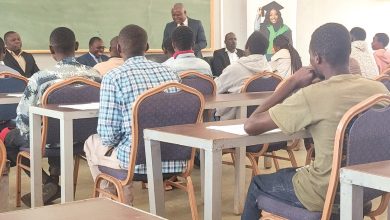
By 10am at Masasa Community Day Secondary School in Mzuzu City, Ndaona Mulungu’s chemistry class is in full swing.
When he asks a question, hands shoot up—mostly boys. In the back row, several desks sit empty as girls that once sat there are nowhere. Nothing forced them out. No rule bars girls from laboratories and no policy nudges them toward humanities.
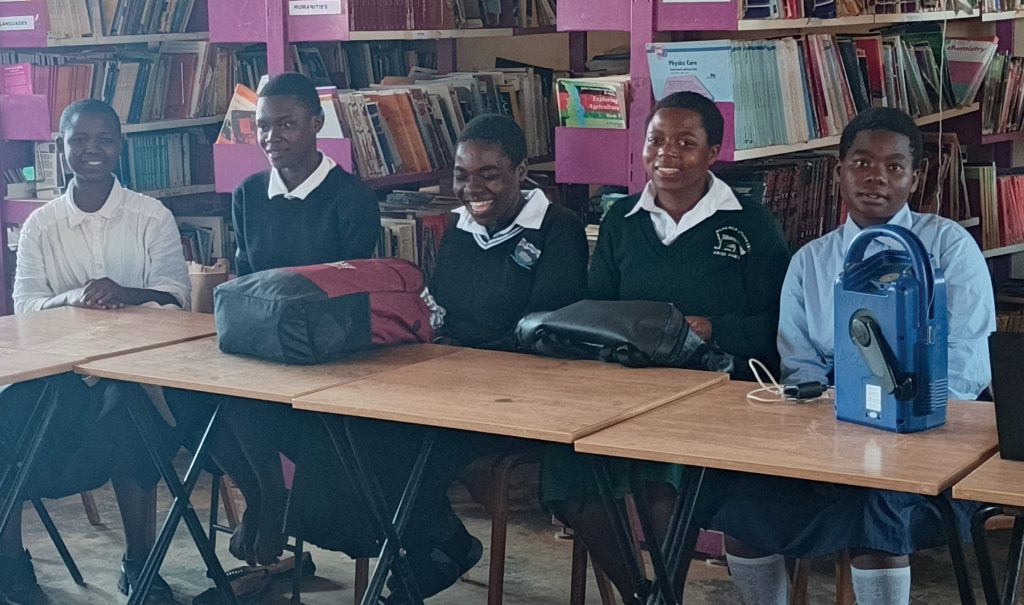
On paper, science is open to all, yet classrooms tell a different story. Science has silently become male territory.
Girls’ enrolment in science, technology and innovation programmes at university has often fallen below 20 percent, according to National Council for Higher Education data.
In 2019, Malawi ranked among the worst in gender equality for science and technology systems among Science Granting Councils Initiative countries, with women comprising just 20 percent of research and development staff.
This means both science research and innovation remain overwhelmingly male-led.
The exits begin quietly, one ‘small decision’ at a time. Girls and boys start secondary school studying integrated science together. By Form Three, subject choices narrow the field. In Form Four, the sorting is complete.
Mary Kaonga, now in Form Four, recalls how she left physics and chemistry. Not anymore.
“Everyone kept saying science is hard, especially for girls,” she says. “After a while, I believed it and switched to humanities.”
In the Form Three chemistry class, below 10 of the 28 students are girls.
The imbalance does not surprise anyone, including Form Four Thokozani Banda, 15. She has passed both chemistry and physics with distinction since Form Three.
“The problem is not ability,” she says. “Girls leave because they’re told sciences are not for them. And when you accept that, you drop it.”
Backed by her parents, Banda wants to become a brain surgion or civil engineer and inspire other girls to study sciences.
Mulungu, her teacher, sees no struggle says some of his top students are female, but the gap, he says, is psychological.
He states: “The belief that science is difficult is what learners are told, not what I see. Once fear takes hold, it is hard to reverse.”
Only 28 of 78 Form Three students take chemistry.
James Chisunkha, another science teacher, says Form Three marks the turning point.
He states: “They look at assignments and tests. They ask themselves if they belong.”
That judgement often begins long before secondary school. Weak foundations in physics and chemistry make senior science feel foreign when formulas and practicals finally appear.
Structural pressures deepen the drift, as qualified science teachers cluster in towns while rural schools make do with thinly equipped laboratories where practical lessons are often rushed or skipped.
Flooded rivers and domestic chores keep girls out of lessons that are difficult to make up.
“When a learner misses practicals, it’s hard to bring her back,” says Chisunkha. “The syllabus moves on.”
By Form Four, years of missed lessons, small exclusions and absorbed doubt have left classrooms so male-dominated that empty desks seem natural.
Although the Malawi 2063 vision identifies science, technology and innovation as central to agriculture, industry and urbanisation, only few graduates specialise in these areas, slowing the race to achieve the national ambitions.
A 2022 tracer study by the Ministry of Education screened nearly 18 000 university graduates. Only 2.5 percent specialised in science, technology and innovation. Just 8.8 percent had advanced ICT skills and 30.1 percent were in science, technology, engineering and mathematics (Stem) fields. The remaining 58.6 percent graduated in humanities, arts, and social sciences.
In contrast, there was equal representation of girls and boys in humanities, arts and social sciences.
Civil Society Education Coalition executive director Benedicto Kondowe calls it a systemic failure.
Policies promote equal access, he says, but social conditioning, stereotypes, and school practices push girls out of Stem at critical transitions.
“This trend undermines equity, wastes talent, and weakens long-term prospects, particularly in innovation, health, and technology-driven sectors,” he says.
Kondowe urges early intervention, saying schools must mentor girls with female science teachers and professionals, offer remedial and confidence-building support, adopt gender-responsive teaching, and protect girls from discouragement by peers, parents, or even teachers. Schools should also track subject selection data and intervene early where drop-off is evident.
Teaching, he adds, must move from fear-based exams to mastery, relevance, and encouragement. Career guidance should start early, challenge stereotypes, and showcase female Stem role models.
“Unless schools counter the narrative that science is ‘risky’ or ‘not for girls’, exams will reproduce social bias rather than measure potential,” he says.
At Masasa, empty desks tell a tale of girls quietly slipping away from science.
On February 11, as the country marks the International Day of Women and Girls in Science, the observance is watered by such tales.