There is something troubling about a society that gradually learns to accept what should ordinarily be unacceptable.
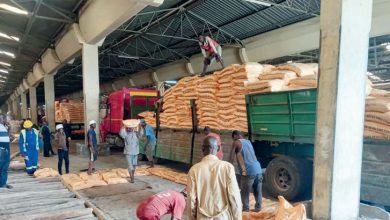
In Malawi, shortages of essential commodities have become so frequent that they appear to be part of everyday economic life. Food shortages, fuel queues, fertiliser scarcity and persistent foreign exchange constraints have become familiar features of the country’s economic landscape.
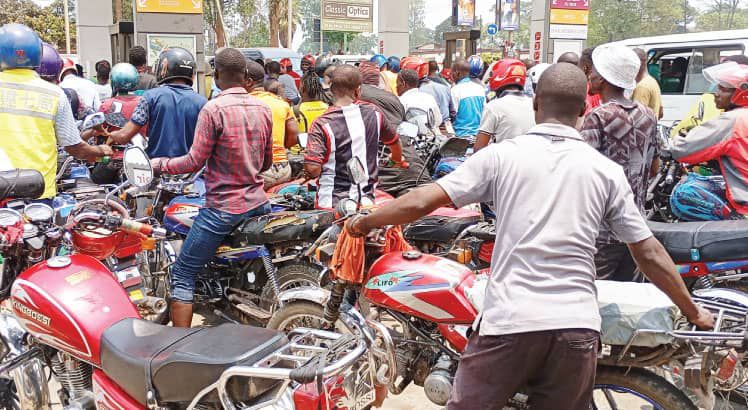
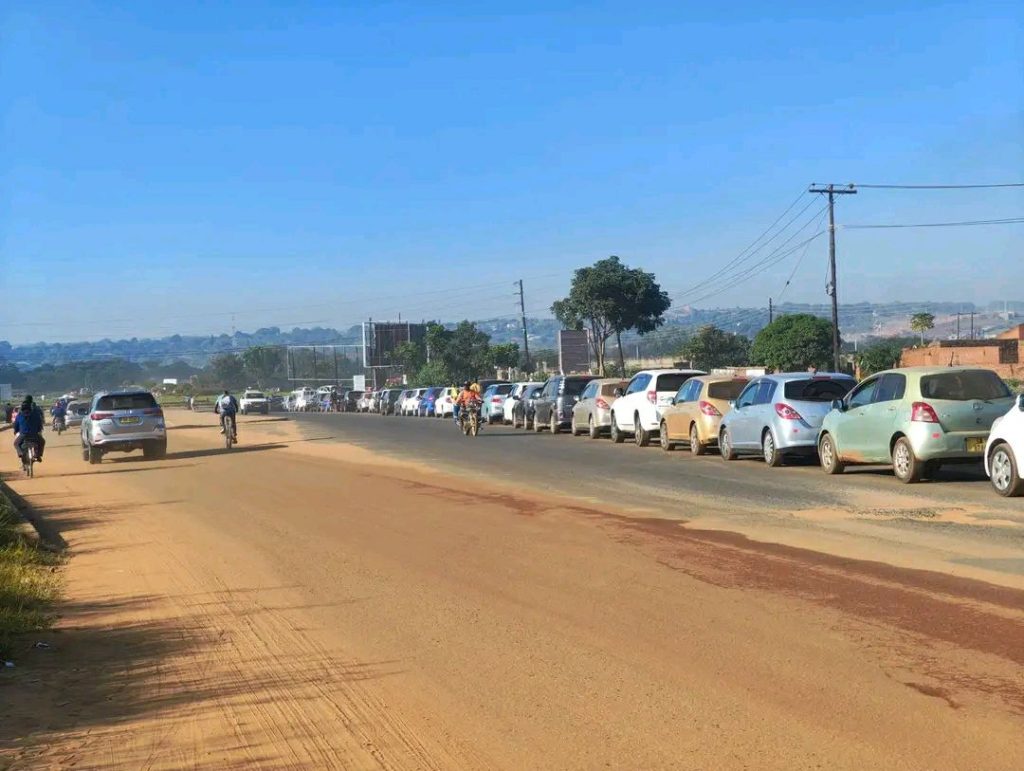
When fuel becomes scarce, people queue. When fertiliser is unavailable, farmers wait or adjust their planting decisions. When foreign exchange becomes difficult to access, businesses postpone imports, reduce production or search for alternative arrangements. When food becomes unaffordable or unavailable, households reduce consumption, substitute cheaper foods or skip meals.
And when the situation improves, even temporarily, there is relief. Life continues until the next shortage. What is concerning is not simply the recurrence of these shortages, but the possibility that Malawians are gradually being conditioned to expect them.
Malawians have become so accustomed to economic disruptions that the return of basic commodities is sometimes celebrated as an achievement rather than regarded as a normal function of a working economy. This raises an important question: Has Malawi’s prolonged experience of economic shortages created a form of collective learned helplessness?
Understanding learned helplessness
In psychology, learned helplessness describes a condition in which individuals exposed repeatedly to situations beyond their control eventually stop attempting to change those situations, even when opportunities for change become available.
The concept emerged from the work of psychologists Martin Seligman and Steven Maier in the 1960s. Their research demonstrated how repeated exposure to uncontrollable adverse experiences could influence subsequent behaviour, motivation and expectations.
The underlying idea is relatively straightforward. When people repeatedly experience situations in which their actions appear to make little difference, they may begin to believe that their efforts are futile. Over time, the problem is no longer only the difficult circumstances themselves. It is also the belief that those circumstances cannot be changed. Although originally developed to explain individual behaviour, the concept provides a useful lens through which to examine how societies respond to prolonged economic difficulties. This application must, however, be treated as an interpretation rather than a clinical diagnosis of an entire population.
Malawi’s cycle of shortages
Malawi’s economic difficulties are neither new nor confined to a single commodity. They are interconnected and their recurrence can reinforce the perception that shortages are inevitable.
Food shortages: Malawi is an agricultural economy in which maize remains central to household food security. Yet recurrent weather shocks, low agricultural productivity, input constraints and market disruptions continue to expose households to food insecurity.
Each food crisis brings renewed concerns about availability, affordability and access.
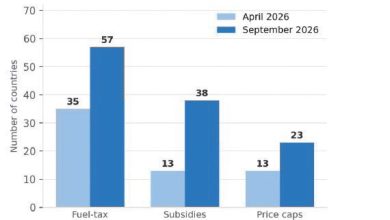
Fuel shortages: Fuel is essential for transport, agricultural production, commerce and the delivery of public services. When supplies are disrupted, the consequences extend well beyond motorists. Transport costs rise, business operations become uncertain and households face additional pressure on their already constrained incomes.
Fertiliser shortages: Agriculture depends heavily on timely access to inputs. Fertiliser that arrives after the optimal planting period may have substantially reduced economic value. For smallholder farmers, repeated uncertainty about availability and affordability can undermine production planning, investment decisions and confidence in agricultural markets.
Foreign exchange shortages: Persistent foreign exchange constraints affect the country’s ability to import fuel, fertiliser, medicines, machinery and intermediate goods. Businesses that cannot obtain foreign currency face production delays, increased costs and reduced capacity utilisation.
These constraints can also discourage investment and limit economic diversification. These shortages are not independent events. Foreign exchange constraints affect fuel and fertiliser imports. Fertiliser shortages affect agricultural productivity. Weak agricultural production can increase food import requirements, placing additional pressure on foreign exchange reserves.
Fuel disruptions increase production and distribution costs throughout the economy. The result is a cycle in which one shortage contributes to another.
From economic scarcity to psychological resignation
The economic consequences of shortages are relatively easy to observe. We can measure inflation, production losses, import constraints, household expenditure and changes in agricultural output. The psychological consequences are less visible.
Consider a farmer who has repeatedly struggled to access fertiliser on time. After several disappointing seasons, the farmer may reduce the area cultivated, avoid investing in improved seeds or abandon plans to expand production.
Consider a business owner who has repeatedly failed to obtain foreign exchange for importing machinery or raw materials. Eventually, that entrepreneur may stop pursuing expansion, not necessarily because opportunities are absent, but because experience has created an expectation of failure.
Consider a young graduate who has spent years searching for employment without success. Repeated rejection may gradually weaken the motivation to apply for further opportunities or invest in additional skills.
These are examples of how persistent economic constraints may influence expectations and behaviour.
Importantly, not every decision to reduce investment, production or economic activity represents learned helplessness. Sometimes these are entirely rational responses to genuine resource constraints and uncertainty.
The concern arises when the expectation of failure persists even after conditions improve and viable opportunities become available. At that point, economic adversity may have produced consequences that extend beyond the original shortage.
When survival replaces development
One of the most damaging consequences of repeated economic crises is that they can shift attention from long-term development towards immediate survival. Households concentrate on obtaining the next meal. Farmers focus on securing fertiliser for the next planting season. Businesses devote considerable time to finding fuel or foreign exchange.
Public debate becomes dominated by the availability of essential commodities. These are legitimate and urgent concerns. However, when they dominate national economic life year after year, they can crowd out the longer-term questions that determine economic transformation. How do we increase agricultural productivity? How do we diversify exports? How do we develop competitive industries? How do we expand productive employment? How do we reduce dependence on imported essential commodities? How do we strengthen domestic production and investment?
A country cannot easily sustain a development agenda when so much of its economic energy is devoted to managing recurring shortages. The danger is that survival becomes the objective, rather than the minimum condition upon which development should be built.
Breaking the cycle
If repeated shortages contribute to economic resignation, reversing the process requires more than encouraging citizens to remain hopeful. Confidence cannot be restored through speeches alone. It must be supported by tangible and sustained improvements in economic conditions.
First, Malawi needs to move from managing shortages to addressing their structural causes. This means strengthening agricultural productivity, improving export performance, maintaining credible macroeconomic policies and reducing vulnerabilities in essential commodity supply chains.
Second, economic policy must become more predictable. Farmers and businesses make investment decisions based partly on their expectations of future conditions. Persistent uncertainty discourages long-term planning, even when profitable opportunities exist.
Third, public discussion should increasingly distinguish between short-term crisis management and structural transformation. Restoring fuel supplies is important, but it is not equivalent to resolving the foreign exchange constraints that contributed to the shortage. Distributing fertiliser is important, but it is not the same as building a productive and commercially viable agricultural sector.
Fourth, citizens need access to credible information about economic performance. Transparency about policy choices, constraints, results and trade-offs is essential for informed public debate.
Finally, Malawi needs to rebuild confidence that meaningful economic progress is possible. That confidence must emerge from institutions that function, policies that produce measurable results and opportunities that allow individuals to improve their circumstances through productive effort.
Conclusion: Malawi must raise its expectations
Malawi’s repeated shortages of food, fuel, fertiliser and foreign exchange represent more than a series of economic disruptions. They raise deeper questions about the relationship between prolonged economic adversity, public expectations and the country’s development ambitions.
The greatest risk is not simply that shortages will continue. It is that their recurrence may gradually persuade citizens that shortages are an unavoidable feature of national life. When that happens, the economic problem begins to shape the way society understands what is possible.
Malawi should not become a country where citizens measure progress by the length of fuel queues, the occasional availability of fertiliser, or the temporary easing of foreign exchange constraints. The country needs a development conversation that moves beyond the management of scarcity towards the creation of productive capacity, economic stability and sustained improvements in living standards.
Learned helplessness teaches us that repeated exposure to uncontrollable circumstances can diminish the expectation that change is possible. But the same body of psychological thinking also points towards the importance of restoring control, agency and confidence through meaningful experiences of improvement.