Women-led businesses have received a paltry 0.44 percent of Malawi Government’s contracts worth K23.7 billion since 2020, indicating that most of them are excluded out of the markets, it has emerged.
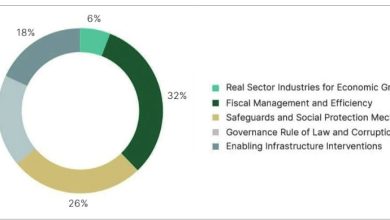
Findings of the study presented by the Common Market for Eastern and Southern Africa (Comesa) Federation of Women in Business Malawi Chapter in Lilongwe on Monday show that only 32 percent of women-led enterprises surveyed had participated in public procurement.

The findings are key because public procurement accounts for about 70 percent of the government’s public expenditure, according to a policy brief presented at the meeting by National Association of Business Women (Nabw).
Comesa Federation of Women in Business Malawi Chapter chairperson Sellina Mwenelupembe said he organisation was worried that women remained largely excluded.
“This is worrisome because women form the majority of the population and are active in business,” she said.
Mwenelupembe said many women-owned businesses lack working capital required to bid for high-value contracts, which usually require bid securities or performance bonds.
She said numerous levies, registration processes and certification requirements increase the cost of competing for government contracts.
Nabw member Bettie Kanjira cited inadequate working capital as the most immediate obstacle confronting women entrepreneurs.
“That is why we cannot participate in public procurement. We simply cannot meet the requirements,” she said.
Kanjira urged government, non-governmental organisations and development partners to introduce financing initiatives targeting women-owned enterprises.
She said women also lacked timely information about available tenders and qualification requirements.
“We are not fully informed about which bids are open and the requirements for qualifying,” said Kanjira.
He said bidding for contracts valued above K100 million is particularly expensive because businesses have to register with the Construction Industry Regulatory Authority and the Public Procurement and Disposal of Assets Authority (PPDA) which charge fees or levies.
The survey further found that only 17 percent of procuring and disposing entities were aware of the Macro Small and Medium Enterprises (MSME) Order of 2020.
Although the MSME Order allocates 15 percent of goods and services contracts and 10 percent of works contracts to marginalised groups, it does not divide the allocations among women, young people and persons with disabilities.
The PPDA system also does not record the gender of business owners, making it difficult to track women’s participation and assess compliance.
Comesa Federation of Women in Business Malawi Chapter and Nabw recommended gender-disaggregated procurement data, a legal definition of women-owned businesses and a specific procurement reservation for women.
They also proposed simplified registration, alternative collateral, faster government payments and wider publication of tender opportunities.