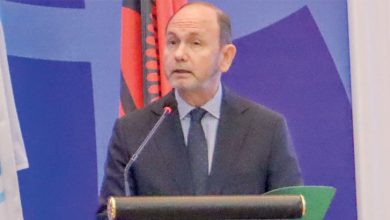
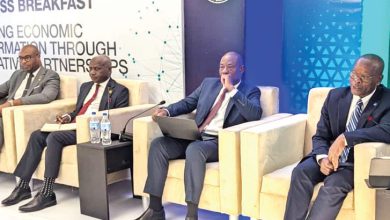
Malawi Minister of Mining John Bande on Monday said Malawi is still learning from other countries and experts on uranium development, saying capacity building remains crucial to the country’s chances of realising maximum benefits from minerals.
Speaking during an International Atomic Energy Agency (IAEA) regional workshop on uranium exploration, Bande said African countries cannot achieve sustainable mining development without first building and strengthening technical capacity of their mining sectors.
“We are still learning on uranium development. We have learnt the need to have experts who know the field and what the companies are doing so that we are not cheated. We need to have a good deal that benefits the company, government and the people where mining is taking place.
“We will ask the companies to do what we want them to do. If they can’t agree with us on what we want, we will ask them to go home,” said Bande.
He said government has recently sent some Malawians to study various mining courses in Botswana, Netherlands, United Kingdom and other countries as part of the efforts to build capacity for sustainable management and development of the country’s mineral resources.
“Malawi has, since independence, been heavily dependent on agriculture as the mainstay of the economy. This has been happening while Malawi has abundant and diverse mineral resources that could sustainably be exploited for social and economic development of the country,” he said.
He cited coal, vermiculite, graphite, limestone, bauxite, rare earths and uranium as some of the mineral resources the country has, adding government is currently conducting a wide airborne geophysical survey to generate high resolution geophysical information on the country’s mineral resources.
“It is envisaged that the development of the mineral sector will be greatly enhanced by this geophysical airborne survey. It is further expected that the geophysical survey will be a catalyst for indigenisation of mining activities under the artisanal and small mining sub-sector,” said Bande.
One of the uranium experts, Henry Schnell also said a better mining deal should, among others, put the welfare of the community in which mining activities are taking place at the centre.