Malawi’s commercial banks are increasingly partnering the Malawi Government to finance strategic road projects, a shift financial experts say could unlock new pathways for infrastructure development.
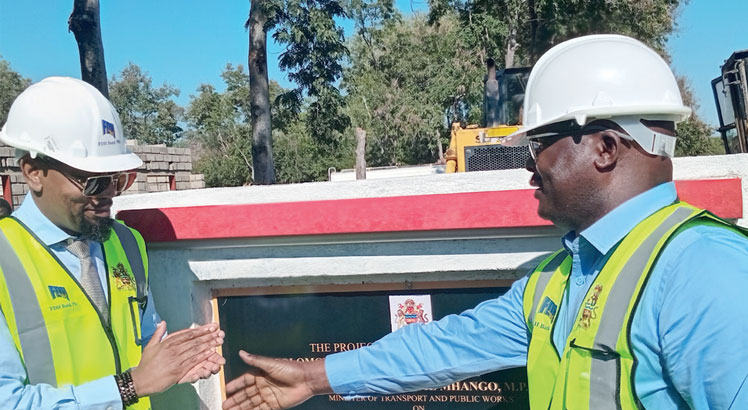
The latest is that of Malawi Stock Exchange-listed banks, FDH Bank plc and National Bank of Malawi plc, who have each set aside K100 billion to finance 58.4 kilometre (km) Golomoti-Monkey Bay Road through a credit facility.
The project is being implemented in two lots, with the first covering a 30km stretch financed by FDH Bank plc from Chantulo Trading Centre in Mangochi to Monkey Bay Turn-off or Mtakakata Turn-Off to be undertaken by Unik Construction Company while the lot 2, which stretches from Chantulo to Golomoti Trading Centre, a distance of 28.4km will be constructed by Mota-Engil. The two projects are expected to be undertaken in 24 months.
Experts say the financing model builds on earlier collaborations in Lilongwe where MSE-listed NBS Bank plc supported the Parliament to Bingu National Stadium dual carriageway and the Area 18 Traffic Interchange while Standard Bank plc and Old Mutual Malawi Limited funded the six-lane Saulos Klaus Chilima Highway and Mzimba Street.
In an interview on Friday, Nico Capital Limited chief executive officer Misheck Esau welcomed the development, saying that local banks are liquid enough to manage such huge investments.
He said while banks typically rely on short-term funding, road projects are being financed through cash flows, making them viable on short to medium-term structures.
“Overall this is a welcome development and it needs to be encouraged,” he said.
Finance expert Moffat Ngalande, who is also Institute of Chartered Accountants in Malawi former president, in an interview said that banks could also leverage development finance arms and capital markets platforms to structure infrastructure bonds.
Finance expert and investor Benedict Nkhoma said infrastructure financing is becoming an important asset class for banks because well-structured road projects generate broad economic benefits by improving trade, tourism and agricultural market access.
“The key, however, is ensuring that these projects are commercially viable, transparently managed and supported by reliable repayment mechanisms,” he said.
Speaking last week during the launch of the phase two of the project in Dedza last week, Minister of Transport and Public Works Jappie Mhango said the initiative forms part of the government’s broader programme to rehabilitate key roads that have deteriorated due to inadequate maintenance and climate change.
Roads Authority technical advisory committee chairperson Engineer Newton Kambala said the road is a vital link connecting communities to tourism and fishing areas around Mangochi, making its rehabilitation important for economic activity and implementation of the Malawi 2063, the country’s long-term plan that seeks to turn Malawi into a lower middle-income economy by 2030 by an upper middle-income by 2063.