In the thick of the populous Ndirande Township in Blantyre, everyday life unfolds with a raw mix of hardship and resilience.
Temporary homes made of unbaked bricks and rusty iron sheets crowd narrow, unpaved alleys where children predominantly play barefoot near open drains and families share tiny, dimly lit rooms.
Water and electricity supply in the clustered setting are luxuries, rarely guaranteed. Unemployment is high, making informal piecework and illegal vending norms for many low-income earners grappling to survive.
However, within the densely populated, under-resourced slum, there beats a quiet determination, people are punching above their weight to stay afloat, survive another day, educate their children and claim a better future against the odds.
The sound of hammers and shovels on a quiet morning signals the battle for survival.
Builder Matias George, 35, oversees a growing team of construction workers, a humble start that is changing his life.
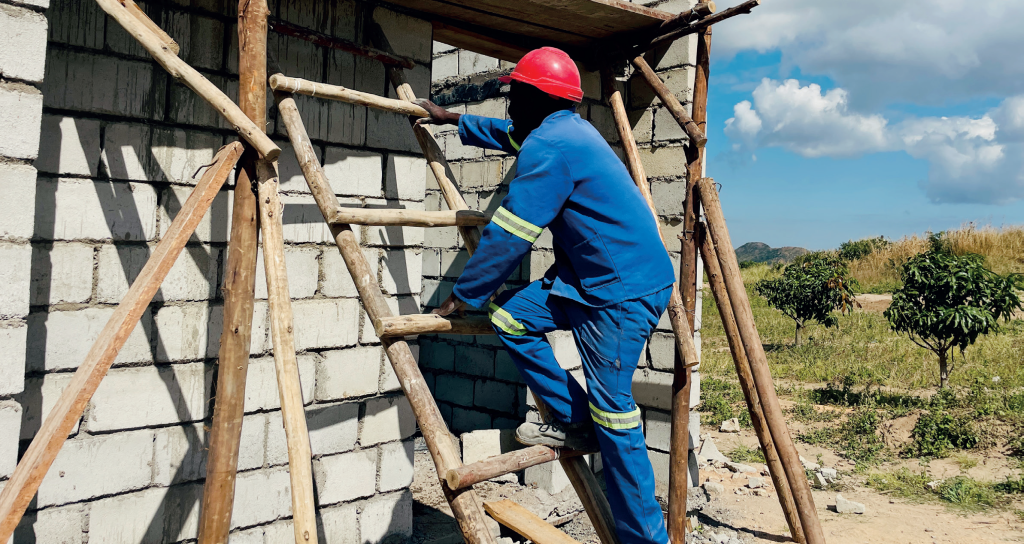
Just three years ago, he was like many young Malawians—skilled and eager, but unemployed.
Humble beginnigs George learned his trade working on small community projects, often going months without pay.
“I sometimes went to work with nothing in my pocket,” he recalls. “No lunch, no transport money.
Just hope.”
In 2023, Malabada Primary School Management Committee asked local artisans to bid for a the construction of a two-classroom school block under the Malawi Education Reforms Programme (Merp). George said he consulted a peer with procurement background who helped him tender a winning bid.
“I was delighted when I got the call. It felt like a dream,” he says.
The K6 million contract was the break he was waiting for, an endorsement of his skills.
With the offer letter in hand, George registered his business officially, opened a bank account and hired seven peers from his community.
Together, they did not just build a school, but gave each other a hand up.
Peter Pendeke, 23, switched from odd jobs at Ndirande Market to mixing mortar and bricklaying.
“The job gave me a reason to wake up with hope and income to support my siblings,” he says.
Similarly, Rachel Nsiku supplies building blocks for the classroom block at Jombo Primary School in Chikwawa District.
She has added a new block-compressing machine to boost her business.
“People trust me to do their projects because they see me handling a bigger project,” she says.
In the rural setting, Martha John, 56, sells rocks to suppliers at Jombo Primary School.
This has given her an economic boost.
She narrates: “We used to gather stones at the construction site, but no customer would buy from us.
“Now, we break as many stones as we want, knowing that buyers will buy them all. I no longer have to worry about today’s food because my stones will sell.”
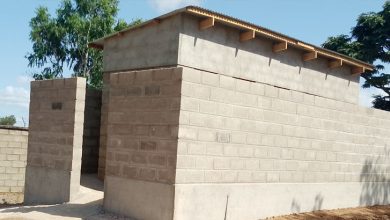
The school block at Jombo serves over 180 learners who once learned in tree shades and overcrowded classrooms. Malabada’s block is still under construction.
Malabada primary school deputy headteacher David Jalazi says the building taking shape will help learn in a safe environment.
“We will reduce the shift system that we introduced to reduce overcrowding. We will accommodate all learners to learn in an enabling teaching and learning environment.”
George is now the talk of his hometown as the economic benefits of his work ripple through the community.
“Real development comes when a young man feeds his family, supports others and contributes to his community. That is George’s story,” says Malabada SMC chairperson Soldier Dayisoni.
Looking ahead
George plans to establish a construction training centre to empower more youth with life-changing skills and business knowledge. “If we wait for jobs, we’ll keep waiting,” he says. “We need to prepare ourselves to build our future brick by brick.”
The Ministry of Education is implementing Merp with funding from the World Bank. The four-year project aims at improving learning environments for students in public primary schools.