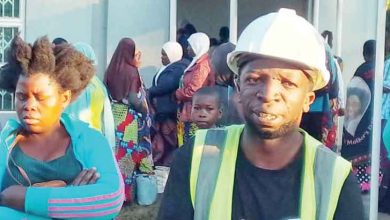
Alexander Kapira is marking a pile of exercise books on shaky wooden desk in a rutted classroom at Msongolera Primary School in Chitipa District.
Dim light and dust filter through cracked windows, as the teacher’s tireless eyes plough through pupils’ crooked handwritings.
He has done this for 15 years—teaching, correcting and shaping young minds in a seemingly forgotten corner of Malawi.
However, as he ticks correct answers and circles mistakes, Kapira is worried how he will receive his January salary.
“The month is almost over, but I don’t know when I will find a good Samaritan to go and fetch my salary from Chitipa Boma,” he says, gazing at a rusty roof.
His school is located near Nthalire, at leatst 15 kilometres east of Chitipa Boma where banks are confined.
For Kapira and his community, payday never dawns until they make the long journey on the bumpy road. It is a gamble. Sometimes, a loss.
There is no bank or auto teller machine at the rural growth centre along Malawi’s border with Zambia.
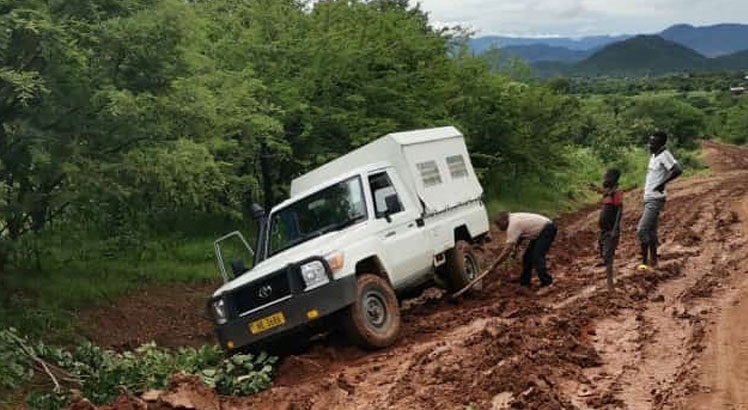
To access salaries, workers, including public servants, have to surmount the neglected, rocky road where a return trip has spiked from K160 000 to K200 000 with the recent fuel pump price increase.
“Our misery worsens during rainy season when vehicles go to Chitipa Boma once or twice a week. You wait days to get to the bank,” Kapira says.
In 2005, government upgraded Nthalire to a rural growth centre alongside Jenda in Mzimba and Neno.
However, rugged roads make the remote town-in-making unattractive to investors, businesses and change agents that were envisioned to reduce the exodus of young Malawians to cities and towns.
Two decades on, Nthalire still waits for growth despite having electricity, piped water, mobile phone coverage and a battered tarmac that takes travellers nowhere.
For many civil servants, the absence of banks turns simple transaction into calculated risks.
Teachers, health workers and extension officers pool their ATM cards and entrust one person with passwords, hoping the chosen one will return safely with everyone’s money.
“If that person is robbed or delayed, we all suffer,” Kapira says.
For others, access to formal financial services is limited to mobile money agents, even though exorbitant transaction fees eat into their meagre earnings.
Salome Lwinga, teacher at Kajaliro Primary School, says even mobile money has become unreliable and expensive.
“Several times my money has just hung after transferring from the bank to Airtel Money,” she says. “You wait. You call. Nothing happens for days.”
At times, Lwinga has to travel to Chitipa Boma to follow up on transactions.
“My humble salary ends up paying for transport,” she laments.
For farmers, financial exclusion turns their sweat into tears as trading in Nthalire is largely barter-based.
In the markets, maize is exchanged for salt, soap, cooking oil, buckets and utensils. Cash is rare. Businesses survive by swapping goods, not saving.
With nowhere safe to bank, people stash cash in homes.
Ephraim Sichinga lost K2 million last year when thieves broke into his house.
“They took everything,” he says. “There is no safe place.”
Such stories are common in a rural economy where savings cannot be secured and insurance or credit is limited.
Banking services confined to urban zones have locked rural farmers into subsistence even where commercial potential exists.
Like many rural areas where 84 percent of Malawians live, Nthalire farmers struggle to access seasonal loans, inputs financing and savings accounts.
This forces many to sell produce cheaply soon after harvesting.
Ironically, Nthalire’s stagnation persists amid plenty. The stunted rural growth centre lies along the North Rukuru River on the fringes of the Nyika National Park, giving it enormous irrigation and tourism potential. Streams and wetlands crisscross the area, offering year-round water supply.
According to the 2018 census, Nthalire is home to 53 472 people—nearly four times that of Likoma District.
Group village head Mtembani says the long search for banking services constitutes contempt of the population size and the area’s economic potential.
Paradoxically, Malawi 2063 promotes inclusive growth, rural development and wealth creation to turn the country into a self-reliant middle-income economy by the centenary of self-rule
Former Chitipa district commissioner Frank Mkandawire said most irrigation remains small-scale and the lack of banking services limits farmers’ ability to invest in equipment, storage and mechanisation.
“I have been talking to some banks. Many are uncomfortable due to poor roads. However, proper financing and infrastructure could unlock the area’s potential to produce all year round,” he said.
Beyond agriculture, Mkandawire says Nthalire’s proximity to the Nyika Plateau and Luangwa Valley in neighbouring Zambia puts it in a lucrative tourism corridor.
“Even tourists would be camping here if we had good lodges. From here, visitors can easily access Nyika,” he adds.