The Catholic Commission for Justice and Peace (CCJP) says Malawi has become dangerously accustomed to living through one crisis after another, warning that the growing acceptance of such challenges is becoming a bigger problem than the crises themselves.
In a statement issued yesterday, the commission cited superstition-related killings, counterfeit medicines, unresolved abductions, political cronyism, foreign exchange shortages and a court case that has dragged on for 28 years.
“The danger lies not only in these crises themselves, but in our growing acceptance of them as ordinary features of national life,” reads part of the statement.
CCJP acknowledged strides made since the current administration came to power, including reduced inflation, improved maize affordability, and a reduction in the number of principal secretaries and diplomatic appointments.
“However, more needs to be done urgently to uplift people’s lives from the dehumanising conditions described by our bishops in their recent Pastoral Letter titled The Sad Story of Malawi, the commission said.
“We need to completely get out of the Bagamoyo situation as soon as possible.”
The commission said Malawi has, for more than a decade, been trapped in repetitive, unproductive and, at times, self-defeating cycles.
“In such an environment, amid resignation, constant blame and finger-pointing, it has become easy to overlook one important truth—our resilience as a nation,” the statement reads.
It further argues that much of the damage stems from collective failure rather than geopolitical factors.
“Too often, we have shifted blame,” the commission said.
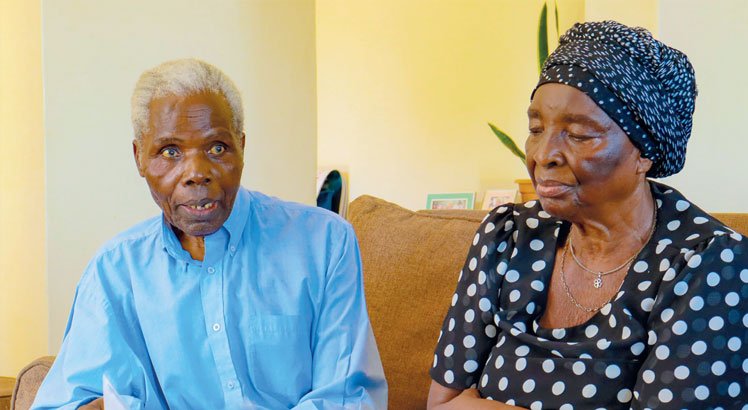
CCJP expressed concern over a court case reported in the May 30 edition of Weekend Nation involving Rodwell Zimba, an 89-year-old former undersecretary who was detained without charge for 13 months in 1976 and whose civil case has remained unresolved for more than 28 years. The commission described the situation as “a complete embarrassment to judicial integrity”.
The commission commended government for appointing the Judicial Service Commission, saying the task before it is clear given public concerns that the Judiciary has lost integrity.
On medicines, CCJP alleged that expired insulin was relabelled and distributed after being stolen from hospital storage facilities. It also cited a 2024 study by Kamuzu University of Health Sciences, which found that nearly 14 percent of essential medicines, including antibiotics, failed to meet quality standards. The commission said sanctions against offenders remain inadequate and indicated its readiness to engage authorities on the matter.
CCJP also recalled incidents of mass hysteria in Chikwawa and Nsanje, where rumours about shrinking male genitalia sparked mob violence that claimed at least eight lives. The commission further reported that 12 elderly people have been killed in witchcraft-related attacks during the first four months of 2026, following 22 such killings in 2025.
“These incidents reflect a broader social breakdown in trust, reason and the protection of human dignity,” CCJP said.
The commission applauded government for conducting civic education campaigns in Nsanje and Chikwawa and called on traditional leaders, religious institutions and civil society organisations to continue educating the public.
CCJP also raised concern over the lack of transparency surrounding the abduction of Sameer Sacranie, managing director of Crossroads Hotel in Lilongwe, who was allegedly seized by armed men on February 6, 2026, and held for 33 days. The commission further referenced the killings of Dr Victoria Bobe, Lizzie Nyson and Paul Mtenje, saying limited public communication on such cases has “deepened fears over insecurity, weakened trust in institutions and reinforced a growing sense of uncertainty within the country”.
On public appointments, CCJP said competent personnel have been replaced while positions continue to be filled through political patronage.
“This has been the trend in the past three or four governments, in democratic desperation,” the commission said, adding that the practice violates Section 4 of the Public Service Act, which emphasises merit and professionalism.
On the economy, CCJP said current efforts to address the foreign exchange crisis remain inadequate and recommended intensifying the crackdown on illegal forex trading.
Meanwhile government spokesperson Shadrick Namalomba, who is also Minister of Information, has welcomed CCJP’s statement which was signed by national office coordinator Lewis Msiyadungu and representatives from all eight Catholic dioceses in the country.
“We thank the CCJP for their statement, which commends the government for the milestones it is achieving and also highlights areas requiring further attention. We have taken note of these concerns,” he said in a WhatsApp response.